
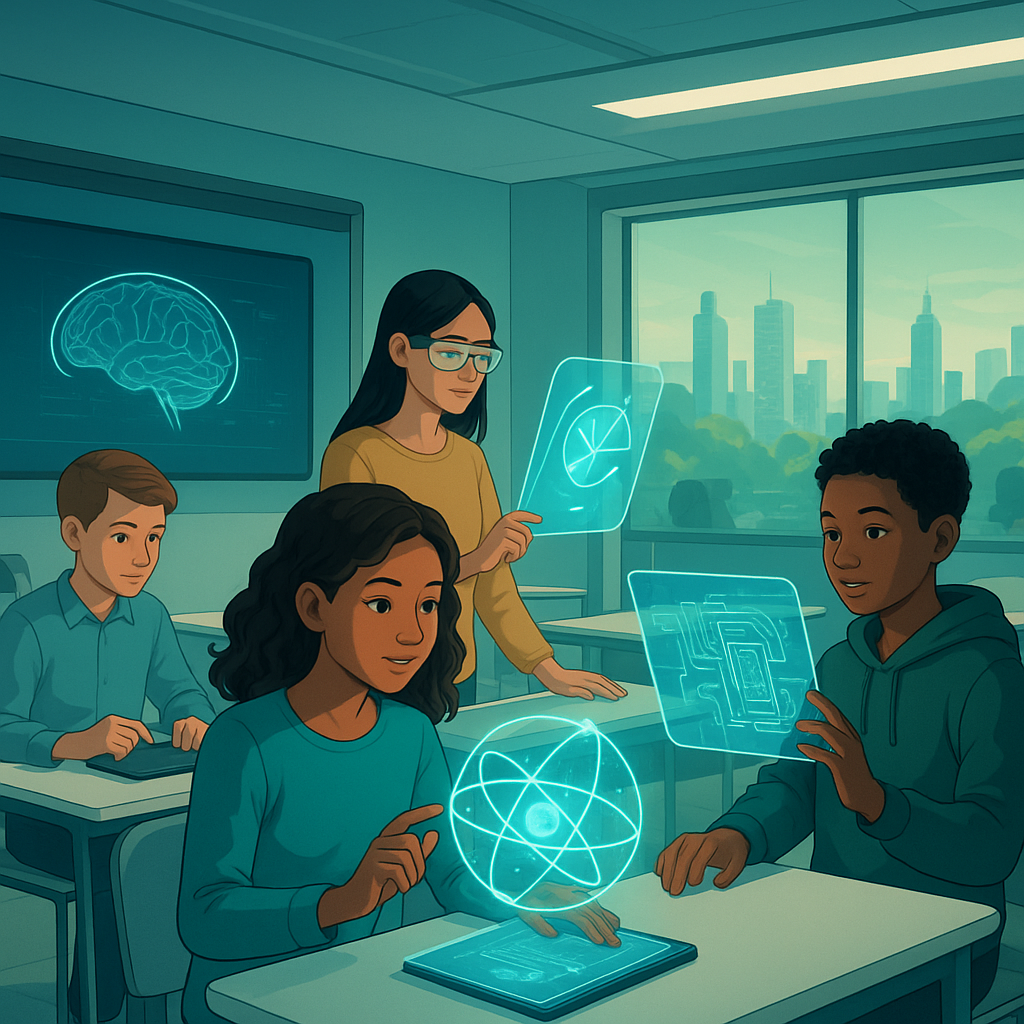
Reimagining Education Through Advanced EdTech Strategies
In 2026, the education ecosystem is witnessing a seismic shift, driven by a new generation of advanced EdTech strategies that are reshaping how knowledge is delivered, consumed, and measured. Consider the case of a rural school district in Iowa where adaptive AI-powered learning platforms have improved student mastery rates by over 40% in just two years. This is not an isolated success but a signpost of a global trend where data-driven personalization, immersive technologies, and AI integration are elevating education beyond traditional boundaries.
The urgency for such innovation is underscored by the increasing demand for lifelong learning and skills agility in the face of rapid technological and economic changes. According to UNESCO's 2026 Global Education Monitoring Report, nearly 65% of students worldwide will need retraining in emerging fields by 2030, pressing educators to adopt strategies that are flexible, scalable, and deeply engaging.
“Advanced EdTech strategies are no longer optional; they are essential for equipping learners with the skills and adaptability needed in a fast-changing world,” notes Dr. Lena Hartfield, Chief Innovation Officer at EduNext Solutions.
This article explores the most effective and forward-thinking approaches transforming EdTech today, analyzing data-driven personalization, AI and machine learning, immersive experiences, and hybrid learning models. It further examines how these strategies are being implemented globally and what education stakeholders must prioritize to stay ahead.
From Foundations to Frontlines: The Evolution of EdTech Strategies
Understanding the current landscape requires tracing the evolution of educational technology strategies over the past decade. The early 2020s marked the mainstreaming of basic digital tools — video lectures, LMS platforms, and elementary gamification. However, by 2023, leading institutions began pivoting towards integrating AI-based analytics and augmented reality (AR), setting the stage for more sophisticated applications.
Statista data indicates that global EdTech investment surged from $15 billion in 2020 to over $45 billion in 2025, reflecting growing confidence in technology's role in education. This influx of capital catalyzed innovations in adaptive learning systems and interactive content.
Yet, the journey was not without challenges. Issues such as digital equity, data privacy, and teacher readiness emerged as critical barriers. Addressing these complexities led to more nuanced strategies that married technology with pedagogical best practices.
Educational researcher Dr. Miguel Alvarez highlights, “The pivot to advanced EdTech is as much about cultural transformation as it is about technology adoption. Successful strategies embed new tools within existing teaching frameworks rather than replace them outright.”
By 2026, the emphasis has shifted to holistic ecosystem approaches that consider learners, educators, content, and infrastructure in concert.
Core Strategies Driving EdTech Innovation in 2026
The heart of advanced EdTech lies in a set of interrelated strategies that maximize technology’s potential to enhance learning outcomes. These include:
- Data-Driven Personalization: Leveraging AI and analytics to tailor content, pacing, and assessments to individual learner profiles.
- Immersive Learning Experiences: Utilizing VR, AR, and mixed reality to create engaging, contextualized learning environments.
- Hybrid and Blended Models: Combining synchronous and asynchronous delivery methods to balance flexibility with interaction.
- Competency-Based Education: Focusing on mastery of skills and knowledge rather than seat-time metrics.
- Collaborative Learning Platforms: Enabling peer-to-peer interaction and social learning at scale.
Recent studies from the International Society for Technology in Education (ISTE) show that institutions employing these strategies report up to a 35% increase in student retention and a 25% improvement in standardized test scores.
For instance, the University of Melbourne's rollout of an AI-driven adaptive platform for STEM courses has reduced dropout rates by 18% and increased pass rates by 22% within one academic year. The platform dynamically adjusts to students’ strengths and weaknesses, providing targeted resources and real-time feedback.
Meanwhile, immersive technologies are transforming vocational training in manufacturing, healthcare, and engineering fields. Companies like SimuLearn and VirtuEd are pioneering VR simulations that allow learners to practice complex procedures without real-world risks, shortening the learning curve and improving skill retention.
Emerging Trends and Developments Shaping EdTech in 2026
The current year has seen several notable developments that deepen the sophistication and reach of EdTech strategies. Among these, three stand out as particularly transformative:
- Generative AI Integration: Advanced generative AI systems are now creating personalized learning content, including quizzes, explanations, and even interactive dialogues, tailored to students’ needs. These AI tutors provide scalable, on-demand support, especially valuable in under-resourced settings.
- Edge Computing for Low-Latency Learning: To reduce dependence on centralized cloud infrastructure, especially in remote areas, edge computing is enabling faster access and smoother experiences for AR/VR applications.
- Blockchain Credentials: The adoption of blockchain for secure, verifiable digital credentials is increasing, facilitating seamless recognition of skills across borders and institutions.
Furthermore, the 2026 OECD Education Outlook highlights how hybrid learning models incorporating AI and immersive tech have become standard in over 70% of higher education institutions worldwide, a dramatic increase from 40% in 2022.
Government initiatives in countries such as South Korea, Canada, and Germany are funding large-scale EdTech pilot programs to bridge rural-urban divides and integrate lifelong learning frameworks, signaling institutional commitment to advanced technology adoption.
“The convergence of AI, immersive technology, and decentralized credentialing is setting the stage for a truly learner-centered education ecosystem,” says Professor Anika Shah, a leading EdTech futurist.
Expert Insights and Industry Impact
Leading voices in education technology emphasize that while technological possibilities are vast, successful implementation depends on human factors and systemic readiness. According to Dr. Haruto Nakamura, CTO of LearningForge, “EdTech must prioritize teacher empowerment, ensuring educators are equipped not only to use new tools but to integrate them pedagogically.”
Industry-wide, the ripple effects of advanced strategies extend beyond classrooms. Workforce development agencies are partnering with EdTech firms to create upskilling pathways aligned with labor market needs. Corporate training programs increasingly adopt VR and AI to personalize employee learning journeys.
At the policy level, frameworks for ethical AI use in education and data privacy protections are being developed collaboratively by governments, NGOs, and private sector stakeholders. This multi-sector engagement is crucial to build trust and ensure equitable access.
Real-world application examples include:
- Singapore’s National AI Education Initiative: Integrating AI tutors and AR labs nationwide, showing significant improvements in STEM engagement.
- EduGlobal’s Blockchain Credential Network: Connecting over 120 universities across continents, enabling students to carry verified skill portfolios.
- TechBridge’s Rural Learning Pods: Deploying edge computing-enabled immersive learning centers in underserved regions of Sub-Saharan Africa.
Summarizing the industry's trajectory, EdTech analyst Maria Guevara notes, “Advanced strategies are pushing education from a one-size-fits-all model to a dynamic, responsive system that anticipates and adapts to learner needs.”
Looking Ahead: What to Watch and Strategic Takeaways
As 2026 progresses, several key trends warrant close attention for educators, policymakers, and EdTech innovators aiming to harness advanced strategies effectively:
- Scalability of AI Solutions: Monitoring how AI-powered personalization scales without exacerbating digital divides.
- Interoperability Standards: Ensuring different EdTech platforms, content providers, and credentialing bodies can work seamlessly together.
- Human-Centered Design: Prioritizing user experience for both learners and educators to increase adoption and impact.
- Policy Frameworks for Ethical Use: Developing robust guidelines to manage privacy, bias, and transparency in AI-driven education.
Strategically, education leaders should focus on:
- Investing in professional development to build educator capacity for technology integration.
- Partnering with technology firms to pilot innovations with clear metrics for success.
- Engaging learners and communities in co-designing learning experiences.
- Leveraging data analytics to continuously refine instructional strategies and content.
For those interested in deeper insights, TheOmniBuzz’s Harnessing AI and Data: Advanced Strategies Transforming EdTech Today and Mastering EdTech: Proven Strategies Experts Swear By for Impactful Learning offer comprehensive analyses and practical frameworks.
In conclusion, the advanced strategies driving EdTech in 2026 are not solely about technology adoption but about creating adaptable, inclusive, and effective educational ecosystems. Stakeholders must align innovation with pedagogical integrity and equity to realize the full promise of this transformative moment.