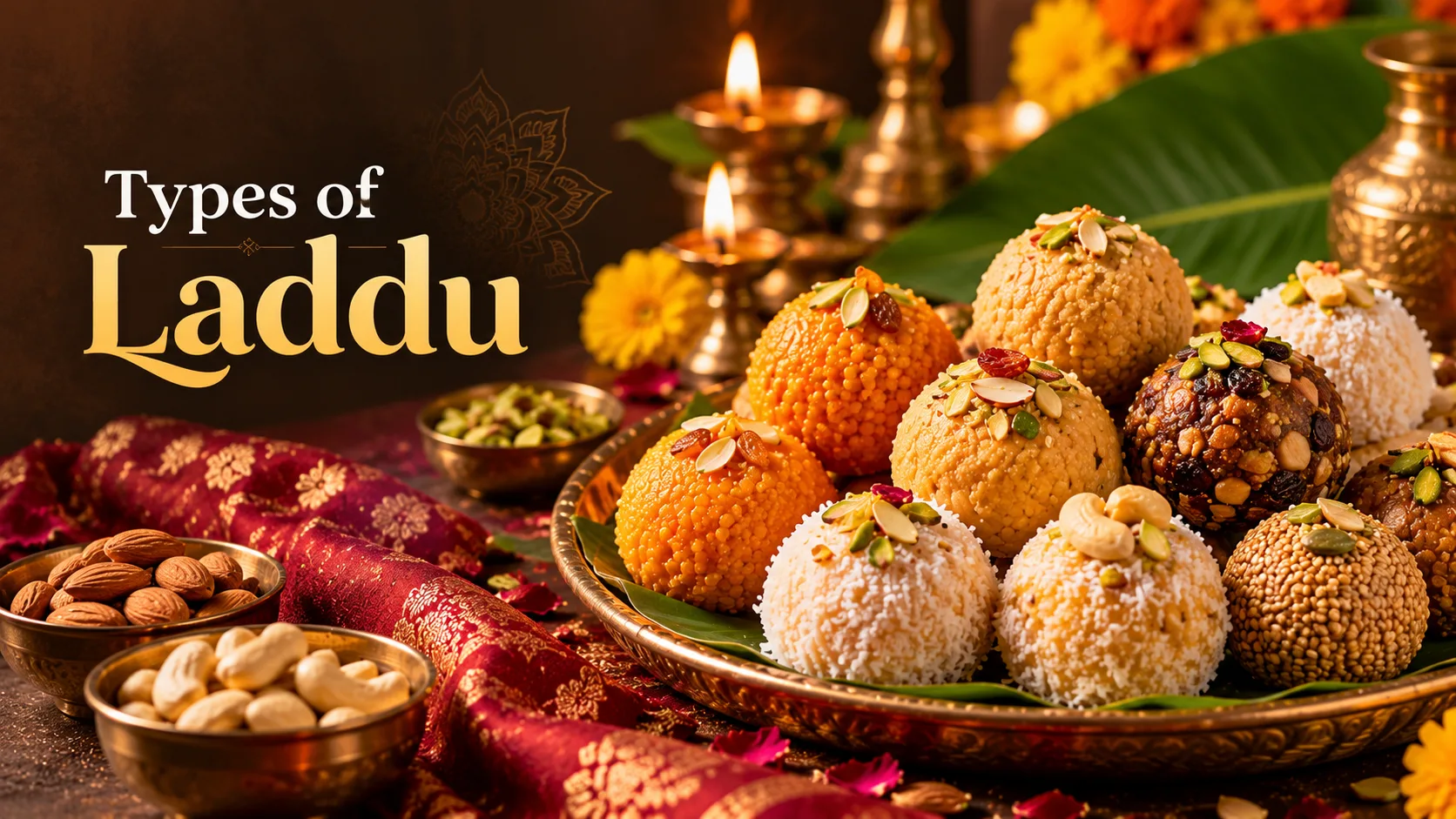
Laddu is one of the most popular traditional Indian sweets, prepared for festivals, religious celebrations, weddings, and family gatherings. The different types of laddu include besan laddu, motichoor laddu, boondi laddu, rava laddu, coconut laddu, atta laddu, and dry fruit laddu. Each variety has its own ingredients, texture, flavour, and preparation method, making laddu a favourite across different regions of India.
From soft, melt-in-the-mouth sweets to nutty homemade varieties, there is a laddu for almost every occasion. Understanding the different varieties can help you choose the right sweet for festive celebrations, gifting, and everyday enjoyment.
1. Besan Laddu
Besan laddu is a traditional Indian sweet made with gram flour, ghee, and sugar. The gram flour is roasted slowly in ghee until it develops a rich aroma and golden colour. Sugar and cardamom are added before the mixture is shaped into round balls.
Besan laddu is popular during Diwali, Navratri celebrations, weddings, and other special occasions. Its rich flavour and slightly grainy texture make it a favourite in many Indian households. Roasting the besan evenly is essential for achieving its characteristic taste.
2. Motichoor Laddu
Motichoor laddu is known for its small, delicate pearls and soft texture. It is prepared by frying tiny droplets of gram flour batter, soaking them in sugar syrup, and shaping them into round sweets.
Often coloured orange or saffron-yellow, motichoor laddu is commonly served at weddings, temple celebrations, and festivals. Some versions include cardamom, nuts, or a little edible camphor for additional flavour.
3. Boondi Laddu
Boondi laddu is made using small, fried gram flour droplets known as boondi. Unlike motichoor laddu, which generally uses finer pearls, boondi laddu often has a more noticeable texture.
The boondi is mixed with sugar syrup and flavourings such as cardamom before being shaped into balls. Cashews, raisins, and melon seeds may be added depending on the regional recipe. This variety is especially popular during religious functions and traditional celebrations.
4. Rava Laddu
Rava laddu, also called suji laddu, is prepared using semolina, sugar, ghee, and cardamom. Some recipes include grated coconut, cashews, and raisins for additional flavour and texture.
The semolina is roasted until fragrant, then combined with the remaining ingredients. A small amount of warm milk or ghee may be used to help bind the mixture, depending on the recipe.
Rava laddu is a practical choice for homemade festive sweets because it uses familiar pantry ingredients and does not require sugar syrup in many versions.
5. Coconut Laddu
Coconut laddu is a sweet made with grated coconut and a binding ingredient such as condensed milk, sugar syrup, or jaggery. The preparation method determines whether the final texture is soft, chewy, or slightly firm.
Fresh coconut creates a moist texture, while desiccated coconut is convenient for quick preparations. Cardamom is commonly used to enhance the flavour, and the finished laddus may be rolled in additional coconut.
Coconut laddu is popular during festivals, pujas, and family gatherings because it can be prepared in several simple variations.
6. Atta Laddu
Atta laddu is made from whole wheat flour, ghee, sugar or jaggery, and cardamom. The flour is roasted patiently in ghee until it develops a deep, nutty aroma.
Chopped almonds, cashews, and other nuts can be added for extra texture. Atta laddu is especially popular in North Indian households and is often prepared during winter, Diwali, and family celebrations.
Its flavour depends greatly on the roasting process. Cooking the flour thoroughly without burning it helps create a rich, balanced taste.
7. Dry Fruit Laddu
Dry fruit laddu combines ingredients such as dates, almonds, cashews, pistachios, raisins, and figs. Depending on the recipe, the fruits may provide enough stickiness to bind the mixture without requiring refined sugar.
Some preparations include seeds or desiccated coconut. Dry fruit laddu is popular as a snack and festive gift, although its nutritional value depends on the ingredients and portion size.
The mixture can be shaped into small balls after the chopped fruits and nuts are combined. These laddus are especially useful when you want a variety that highlights the natural flavours of nuts and dried fruits.
8. Til Laddu
Til laddu is made with sesame seeds and a sweetener such as jaggery. The sesame seeds are roasted to bring out their nutty flavour, then combined with warm jaggery syrup and shaped into balls.
This sweet is particularly associated with Makar Sankranti, Pongal-season traditions, and winter celebrations in different parts of India. Peanuts or roasted gram may also be included in some regional versions.
Because jaggery syrup hardens as it cools, the mixture needs to be shaped while it is still warm enough to handle safely.
9. Peanut Laddu
Peanut laddu is prepared using roasted peanuts and jaggery or sugar. The peanuts are usually peeled and crushed before being combined with the sweetener.
Some recipes rely on the natural oils in peanuts to help bind the mixture, while others use warm jaggery syrup. The result is a sweet with a distinct roasted flavour and a slightly crunchy texture.
This variety is popular in several Indian regions and can be prepared with a relatively short ingredient list.
10. Urad Dal Laddu
Urad dal laddu is a traditional sweet made from roasted urad dal flour, ghee, and powdered sugar or jaggery. Cardamom may be added for aroma, while nuts are optional.
The lentils are roasted carefully and ground into a fine powder before being mixed with the remaining ingredients. Ghee helps bind the mixture into smooth, round laddus.
This variety is enjoyed in different regional traditions and is often prepared for festivals and family occasions.
Choosing Laddu Varieties for Festivals
The best laddu for an occasion depends on the flavour, ingredients, preparation time, and preferences of the people you are serving. Besan and motichoor laddus are popular for celebrations, while coconut and rava laddus are convenient choices for home preparation. Dry fruit and peanut laddus offer alternatives with nut-based ingredients.
For more traditional Indian sweet ideas, read our guide to different types of Indian sweets. If you are planning festive preparations, our guide to Navratri sweets provides additional ideas for choosing sweets during the celebration.
When preparing sweets for religious fasting, always check the ingredients and follow the dietary rules observed by your household. Not every regular sweet or instant mix is suitable for every type of fast.