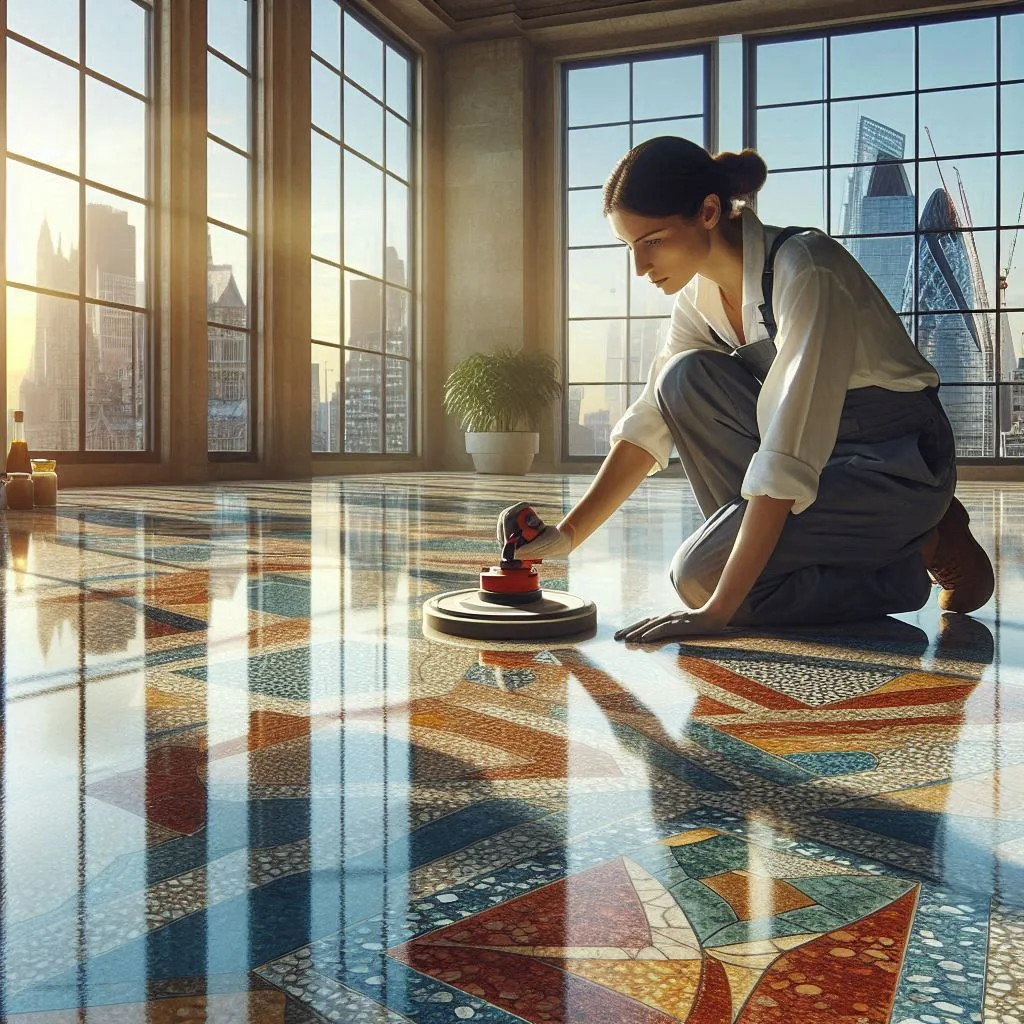
Travertine is known for its natural beauty, warm tones, and distinctive texture, making it a popular choice for floors, showers, countertops, patios, pool decks, and other residential and commercial surfaces. Over time, however, regular foot traffic, spills, moisture, improper cleaning products, and general wear can leave the stone looking dull, stained, scratched, or uneven.
Professional Travertine Restoration and Cleaning can help revive the appearance of natural stone while protecting its surface for continued use.
Why Travertine Loses Its Original Appearance
Travertine is a porous form of natural stone. Its composition makes it attractive and versatile, but it also means the surface can absorb liquids and become vulnerable to staining or etching.
Acidic substances such as vinegar, citrus juice, certain bathroom cleaners, and other harsh chemicals can react with the stone. This can create dull spots or visible marks that ordinary cleaning may not remove.
Dirt and sand can also act as abrasives. As these particles are repeatedly walked across a travertine floor, they may gradually create fine scratches and reduce the stone's original finish.
Cleaning Versus Restoration
Routine cleaning and stone restoration serve different purposes.
Regular cleaning focuses on removing surface dirt, dust, oils, and residue. A pH-neutral cleaner designed for natural stone is generally preferred because aggressive household cleaners can damage travertine.
Restoration is a more detailed process. Depending on the condition of the surface, it may involve deep cleaning, honing, polishing, filling small holes, addressing scratches, repairing damaged areas, and applying an appropriate sealer.
For this reason, Travertine Restoration and Cleaning should be approached according to the condition and finish of the specific stone rather than using the same treatment for every surface.
How Travertine Restoration Works
The restoration process usually begins with an inspection. A professional may evaluate the type of travertine, existing finish, level of wear, stains, cracks, holes, and previous sealers or coatings.
Honing may be used to reduce scratches, etching, and uneven areas. This process uses specialized abrasives to create a more consistent finish across the surface.
If a polished appearance is desired, additional polishing techniques may be used after honing. For travertine with naturally occurring holes or damaged fill, restoration may also include filling selected areas to create a smoother and more uniform surface.
The exact process depends on whether the desired result is polished, honed, matte, or another finish.
The Role of Sealing
After cleaning or restoration, sealing may help protect porous travertine from absorbing liquids and oils.
A penetrating sealer works below the surface rather than creating a heavy coating over the stone. Although sealing can improve resistance to staining, it does not make travertine completely stain-proof.
Spills should still be cleaned promptly, especially in kitchens, bathrooms, dining areas, and other spaces where moisture or staining substances are common.
Maintaining Travertine After Restoration
Proper maintenance can help preserve the results of restoration.
Using soft microfiber mops or cloths, removing grit regularly, avoiding acidic cleaners, and cleaning spills quickly can reduce unnecessary surface damage. Furniture pads and entrance mats may also help minimize scratching in high-traffic areas.
Periodic professional evaluation can determine whether deep cleaning, polishing, or resealing is needed.
Restoring the Natural Beauty of Stone
Worn travertine does not always need to be replaced. In many cases, professional Travertine Restoration and Cleaning can dramatically improve the appearance of an existing surface while extending its useful life.
With the right combination of cleaning, restoration, sealing, and ongoing maintenance, travertine can continue to provide the elegant and timeless character that makes natural stone such a desirable feature in homes and commercial properties.