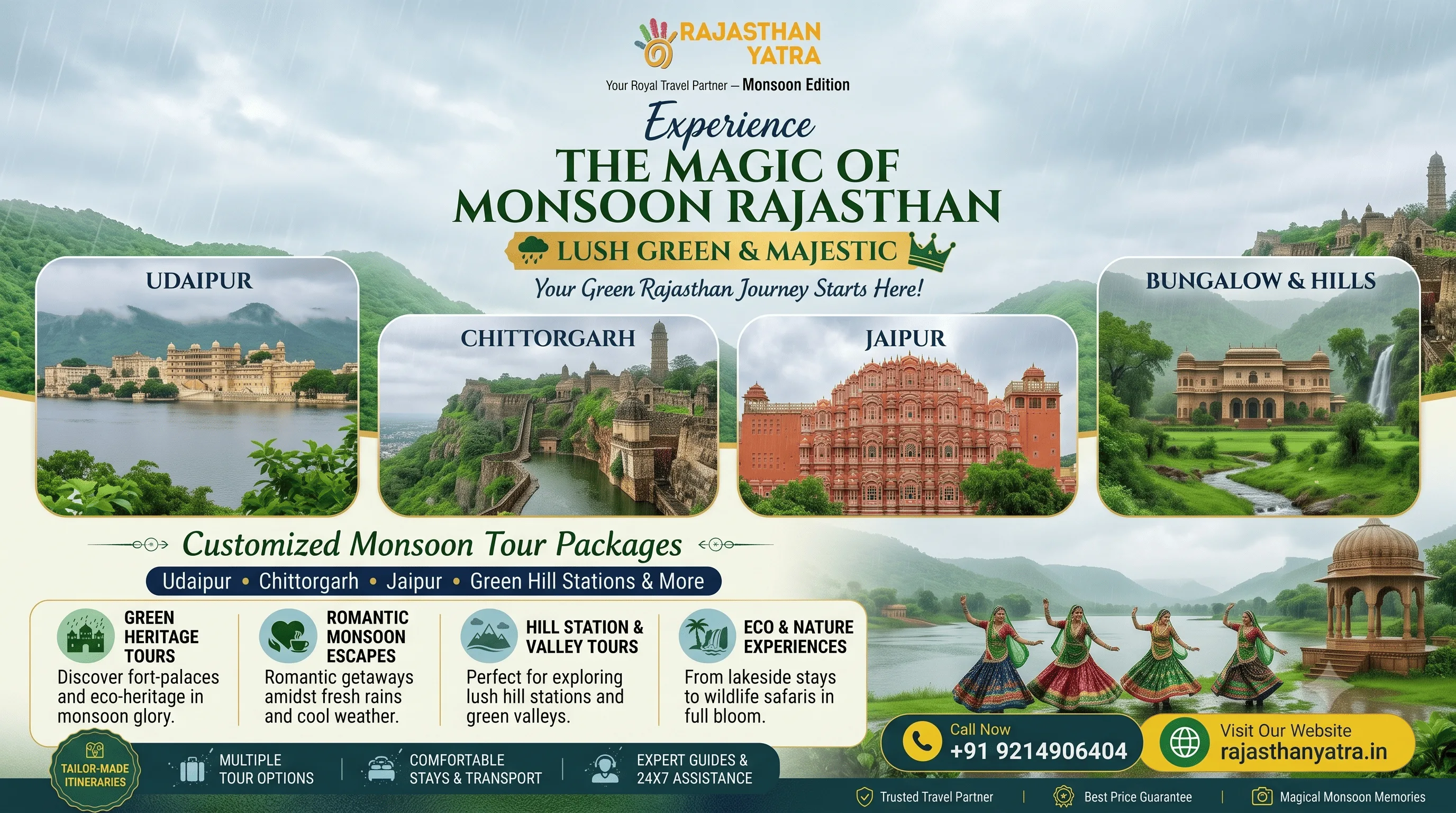
When the monsoon clouds roll over the Indian subcontinent between July and September, Rajasthan sheds its sun-baked golden hues and wraps itself in a vibrant cloak of lush emerald green. The ancient Aravalli mountain range—one of the oldest geological formations in the world—wakes up to the gentle patter of raindrops, filling dry riverbeds, awakening hidden waterfalls, and coaxing rare wild flora into full bloom. While most travelers associate the desert state with historic forts and desert dunes, seasoned trekkers and nature lovers know that monsoon is the most magical time to explore Rajasthan on foot.
Lacing up your boots to walk through rain-kissed forest canopies provides a intimate, ground-level perspective on the region's diverse ecosystem. Whether you are traversing mist-shrouded hilltops or walking alongside gushing streamlets, taking guidance from a local expert like Rajasthan Yatra - Rajasthan travel agency ensures a safe, well-planned trek through the state's finest nature trails. Below are the top scenic nature trails in Rajasthan that truly come alive during the monsoon season.
1. The Misty Trails of Mount Abu: Bailey's Walk to Guru Shikhar
As Rajasthan’s sole hill station, Mount Abu undergoes a dramatic metamorphosis during the rainy season. The entire plateau becomes blanketed in dense fog, with moss-covered granite boulders and roaring mountain streams defining the landscape.
One of the most serene routes is Bailey’s Walk, a historic trail crafted during the British era that winds from Nakki Lake through rocky outcrops and dense subtropical pine and bamboo forests. The damp earth smells rich with pine needles and wet soil, while indigenous orchids and wild ginger plants carpet the trail sides.
For those seeking high-altitude views, the trek toward Guru Shikhar—the highest peak in the Aravallis at 1,722 meters—is unforgettable. As you ascend the cloud-covered paths, dramatic cloud bursts reveal glimpses of deep valleys and green ridges below. The atmospheric charm of Mount Abu makes it a popular stop for couples booking a romantic Rajasthan tour, who wish to combine tranquil nature walks with cozy lakeside evenings.
2. Kumbhalgarh Wildlife Sanctuary Trail: Fort to Ghanerao
Connecting the towering ramparts of Kumbhalgarh Fort to the quiet village of Ghanerao, this 15-kilometer forest trail cuts right through the heart of the Kumbhalgarh Wildlife Sanctuary. During the monsoon, the sanctuary’s dry deciduous forest transforms into a jungle brimming with life.
The trail follows old horse tracks along the river valley, shaded by thick canopies of dhok, salai, and banyan trees. Monsoons bring out an abundance of wildlife; attentive hikers often spot Indian gazelles, sloth bears, chinkara, and a vast array of resident and migratory birds such as grey jungle fowl and paradise flycatchers. Walking past rainwater streams and natural waterholes like Thandi Beri, trekkers can experience raw wilderness far removed from urban noise.
3. Hathni Kund Trail, Jaipur
Located in the rugged hills of the Northern Aravallis near Jaipur, the Hathni Kund trek (often called the Water Valley trail) is a favorite seasonal hike for nature enthusiasts in Central Rajasthan. During dry months, the valley remains quiet and arid, but the monsoons turn it into a verdant corridor filled with flowing cascades.
Starting near the foot of the hills near Amber, the trail meanders through narrow ravines, rocky stream beds, and dense shrubs. Hikers ascend toward an ancient Hanuman temple nestled deep within the valley, where a seasonal waterfall cascades over smooth rock faces into a clear pool. The trail offers sweeping vantage points over rain-washed valleys and distant fort ruins, providing an ideal micro-adventure for travelers exploring the Pink City during the monsoon.
4. Sajjangarh to Tiger Lake Trail, Udaipur
Udaipur is celebrated worldwide as the City of Lakes, but its surrounding wilderness offers equally compelling nature walks. The trail connecting the foothills of the Sajjangarh Monsoon Palace to Badi Lake (also known as Tiger Lake) offers an accessible hike through the Sajjangarh Wildlife Sanctuary.
The route winds along gentle hill slopes covered in vibrant green foliage, offering panoramic vistas of the monsoon clouds hovering over Lake Pichola and Badi Lake. The crisp air, ambient sounds of chirping birds, and cool rain breezes create a relaxing environment. Travelers seeking to combine these nature excursions with royal heritage stays, private guided walks, and opulent lakefront resorts often choose a luxury Rajasthan tour to experience the region's wilderness in complete comfort and elegance.
Essential Guidelines for Monsoon Trekking in Rajasthan
To ensure a safe and sustainable trekking experience in the Aravallis during the rains, keep the following practical insights in mind:
- Footwear and Grip: Rocks and mossy trails can become extremely slippery after heavy showers. Wear sturdy trekking shoes with deep lug soles and waterproof ankle support.
- Weather Tracking and Flash Floods: Mountain streams and seasonal ravines can swell rapidly during sudden rainstorms. Always check local weather forecasts and hire a certified local guide who knows the terrain.
- Hydration and Insect Protection: Monsoon humidity can cause dehydration despite cooler temperatures. Carry adequate water, eco-friendly insect repellent, and lightweight rain gear.
- Leave No Trace: Monsoon ecosystems are fragile. Carry out all plastic waste and respect the wildlife inhabiting these sanctuaries.
Exploring Rajasthan's nature trails in the rainy season uncovers a side of the royal state that few get to witness—where rugged stone meets fresh green life, and ancient hills breathe under misty skies.