
When you think of developing a mobile app for your startup, the first thing to remember is the type. The type of mobile app you build can impact many aspects, such as cost, user experience, and even target audience. For example, if you make a native app for one platform only, like Android, your audience will be restricted.
This is where hybrid app development approach helps. It allows you to target customers across platforms, providing cross-platform capabilities. However, developing a hybrid app needs a structured approach.
Hybrid app frameworks offer a structured approach to mobile application development. They help cut costs, streamline operations, and ensure cross-platform compatibility. You can also leverage these frameworks to blend web and mobile technologies to create a unique user experience.
This blog provides a list of the top hybrid app development frameworks, their advantages and disadvantages, and tips on choosing the best option.
What is a Hybrid App Framework?
A hybrid app development framework is a set of tools for building mobile apps using web technologies that run on multiple platforms. Compared to other technologies, hybrid app development frameworks provide optimized performance and streamlined workflow for startups, small businesses, and enterprises. They also make hardware features like accelerometers, GPS, and cameras accessible.
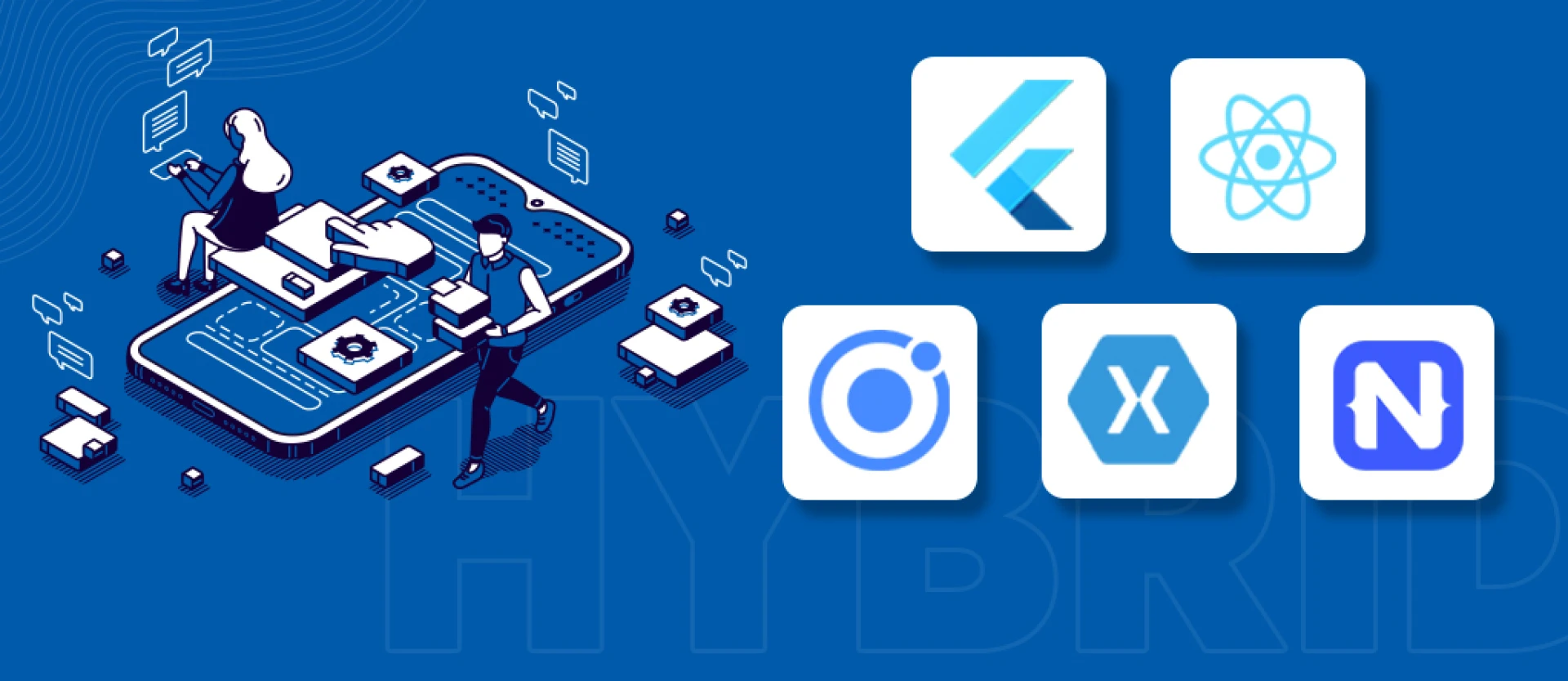
In 2025, you can consider some of the best hybrid app development technologies, such as Flutter, React Native, Xamarin, NativeScript, Ionic, and many more. When combined with an agile app development approach, these frameworks help give your business more flexibility, scalability, cost efficiency, and faster time to market.
Hybrid App Development Framework: Advantages & Disadvantages
Now that you know what a hybrid app framework is, let’s explore its advantages and disadvantages in the table below.
Advantages:
Simple, one codebase for multiple platforms
Lower Cost & Easier Maintenance
Easy to Build
Wider Market Research
Faster Development & Time to Market
Disadvantages:
Poor Performance
Testing Complexity
Limited Access to Native Features
Dependency on Third-Party Apps
UI may not Match Platform-specific Design Guidelines
5 Best Hybrid App Frameworks You Can Check Out
Let’s explore the top 5 hybrid app development frameworks transforming app development.
Flutter: Launched by Google in 2017, Flutter is a popular cross-platform framework for building hybrid apps on iOS and Android. It uses the Dart Programming Language and features pre-designed widgets that meet Material Design and Cupertino standards. The hot reload feature allows developers to view real-time app changes. Notable apps built with Flutter include Google Ads, Hamilton, and Pairing.
Benefits
- It’s a free and open source
- Makes beautiful apps simple and easy to use
- Google’s Closure compiler provides 60fps on Android devices
- Reusable Codes
React-Native: Developed by Facebook, React Native is a leading hybrid app framework known for robust performance and efficiency. Its use of lightweight languages like JavaScript allows for a native-like experience with a single codebase. Hot reloading and a large community simplify code sharing across web and mobile apps.
Benefits
- 95% cross-platform compatible, single code base
- High Performance with Upscaled GPU
- Higher Flexibility
- Useful Reload Feature
Ionic:
This is also one of the popular hybrid app development frameworks. In affiliation with AngularJS, this helps businesses quickly build cross-platform applications. This framework can integrate with Capacitor using native functionality. Ionic is used in popular mobile applications like McDonald’s Turkiye, JustWatch, and Sworkit.
Benefits
- Quick Response Rate
- Supports AngularJS & allows building plugins like Cordova
- High-End UI Components & Gestures
- Uses Web-Components
PhoneGap/Apache Cordova:
This hybrid app framework, also known as Apache Cordova, allows developers to build mobile applications that use common web technologies like HTML, CSS, and JavaScript. It has a massive number of plugins to access the native features of these devices. Some top apps using PhoneGap nowadays include Facebook, Instagram, Twitter, and many more.
Benefits
- A massive plugin library to get many native features onto the device
- Develop an array of apps for all iOS platforms using a single code base
- Larger plugin ecosystem
NativeScript
This hybrid app framework helps develop high-performing apps written in JavaScript, TypeScript, or Angular by delivering direct access to native APIs. NativeScript will also provide user-centric apps using its pre-designed native UI components for iOS and Android platforms.
Benefits
- Easier access to Cross-platform development
- Reuse of web-development skills
- Higher performance
- Great UI flexibility
How To Choose The Best Hybrid App Framework?
Choosing the proper framework depends on the projects, goals, budgets, and app requirements. Let’s consider some essential factors that will help you establish an ideal hybrid app development framework.
- Platform Compatibility: This ensures that your framework supports iOS and Android with a single code base to enhance efficiency and reduce cost. Some popular hybrid app frameworks, like React Native and Flutter, help you offer a broader level of compatibility with various platforms.
- Cost: You should make your decision based on the budget. Licensing fees, development charges, and continuous maintenance costs are framework expenses. Analyzing the financial limitations and evaluating every framework’s cost of ownership also gives you a great idea. Additionally, one also has to consider the long-term expenses, like maintenance.
- Performance: This is critical for a great user experience for your hybrid app. Flutter and React-Native are most popular for offering native code performance, especially for complex UI/UX-based apps.
- Development Speed & Cost: Hybrid frameworks can help speed development by reusing code. Frameworks like Flutter offer pre-built components and UI kits that minimize development time and cost.
- UI/UX Standards: Your hybrid apps should offer a seamless user experience. Frameworks like Flutter can help you build expressive UI components. React Native allows you to create highly customized UIs for your mobile app.
- Maintenance & Support: While choosing the right one, you must consider how easy it is to maintain and update the app. Hybrid frameworks simplify maintenance while having a supportive community that can enable you to address your app’s problems more quickly.
Conclusion
Finding the best one from the list of hybrid app frameworks for mobile app development is crucial. However, conducting a comprehensive analysis of your project’s needs and target audience is essential, and having a great team with expertise is critical.
So, while you compare the above popular frameworks, you can choose the best one for your business goals. Testing various prototypes with each framework can quickly provide great insight into performance and usability, making it an ideal choice for long-term success.