
In chemical manufacturing, blending is a critical process that directly impacts the quality and consistency of the final product. Whether producing pigments, catalysts, detergents, or specialty chemicals, achieving a uniform mix of raw materials ensures that each batch meets exact specifications and performs reliably. Proper blending not only improves product quality but also enhances downstream process efficiency, reducing waste, increasing yield, and maintaining regulatory compliance.
Uniform mixing is especially important because even minor inconsistencies can cause variations in chemical reactions, product potency, and stability. For example, uneven blending of active ingredients or additives can lead to product failures or safety risks. Therefore, selecting the right mixing equipment is essential for chemical plants aiming to optimize production processes and maintain a competitive edge.
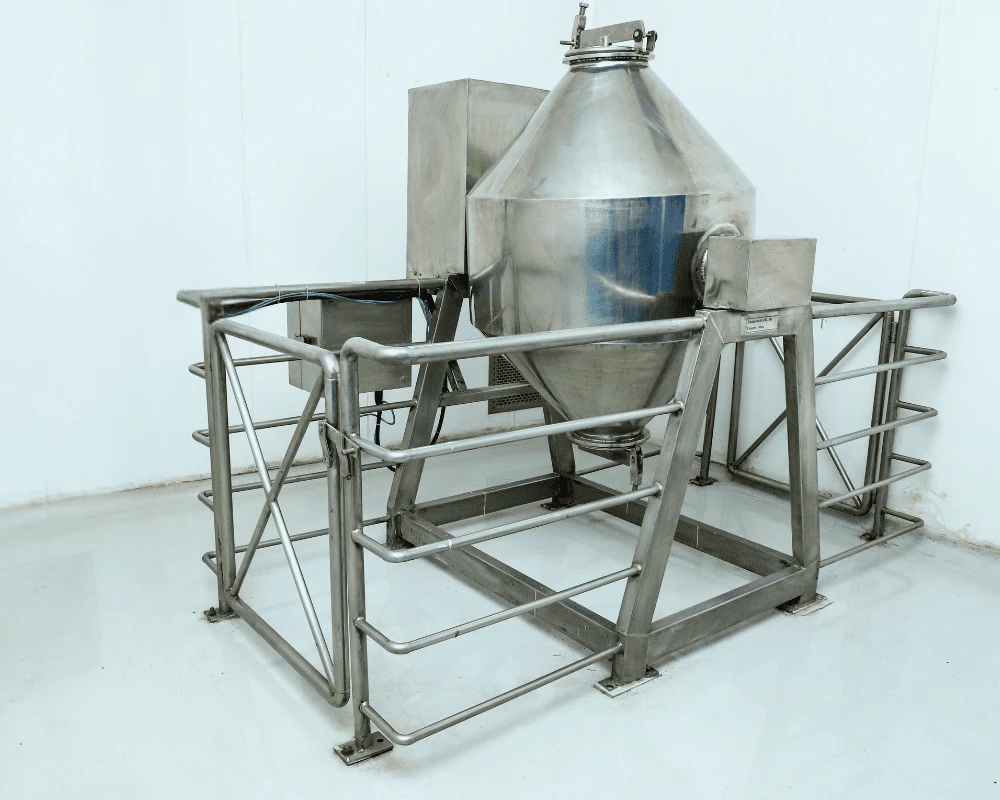
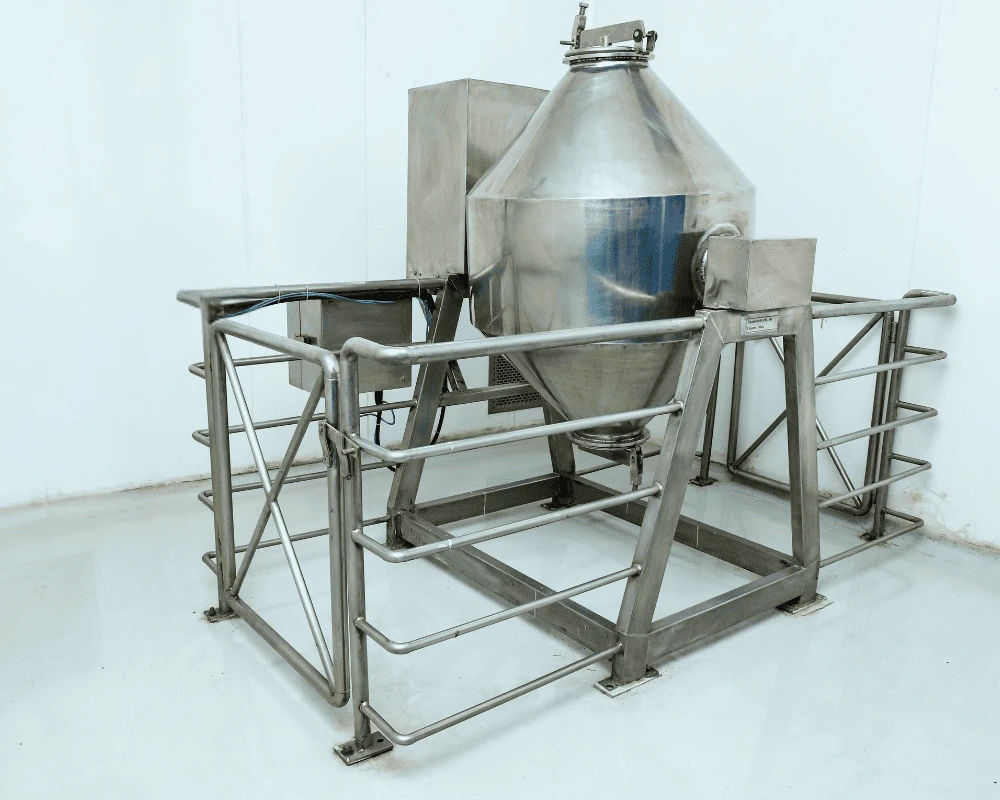
Among various mixing technologies, the double cone blender has become a preferred choice in chemical manufacturing. Its unique design—two conical sections joined at their bases—enables gentle and efficient tumbling action. This promotes thorough mixing without excessive shear forces, preserving the physical properties of sensitive powders and granules. The simplicity, versatility, and reliability of double cone blenders make them ideal for a wide range of chemical blending applications.
This blog will explore the top 7 advantages of using double cone blenders in chemical manufacturing. From achieving uniform mixing and energy efficiency to ease of maintenance and enhanced safety, discover why this equipment continues to be a favoured choice for industry professionals in 2025 and beyond.
1. Uniform and Homogeneous Mixing
The double cone blender features a unique design consisting of two conical sections joined at their bases that rotate around a central axis. This rotation creates a tumbling motion that gently lifts and folds the material inside, ensuring even distribution without damaging delicate particles. Unlike high-shear mixers, the double cone blender relies on this gentle tumbling to achieve thorough blending, making it ideal for powders and granules requiring careful handling.
This tumbling action continuously moves materials through different regions inside the blender, allowing each particle to blend uniformly with others. As a result, the final mixture achieves a high degree of homogeneity, which is critical in chemical manufacturing where precise formulation is essential.
Uniform mixing directly influences chemical reactions and product quality. Inconsistent blending can cause uneven reactions, product inefficiencies, or failures, especially when active ingredients or catalysts are involved. A homogeneous mix ensures every batch maintains consistent chemical properties, stability, and performance.
Materials such as pigments, catalysts, detergents, and specialty chemical powders benefit greatly from the double cone blender’s ability to produce uniform blends. This guarantees consistent quality and optimal functionality across various chemical manufacturing processes.
2. Gentle Blending Process
A key advantage of the double cone blender is its low shear mixing action, which gently blends materials without applying excessive mechanical stress. This is particularly important when handling fragile chemical compounds that can easily break down or lose their properties under harsh mixing conditions. The blender’s tumbling motion preserves the physical integrity of delicate powders, preventing degradation and maintaining their effectiveness.
Additionally, the gentle blending process reduces dust generation during mixing. Excess dust leads to material loss, poses health and safety risks for workers, and can contaminate the production environment. The closed design of double cone blenders helps contain dust, maintaining a cleaner, safer workspace.
This gentle handling makes double cone blenders especially suitable for sensitive and fine chemical powders, such as pharmaceutical intermediates, pigments, and catalysts, where preserving particle size and quality is crucial for achieving consistent, high-quality end products.
3. Versatility Across Different Materials
The double cone blender stands out for its exceptional versatility in handling a broad spectrum of chemical materials. Its design enables efficient blending of powders, granules, and crystalline substances, making it a flexible solution for many chemical manufacturing processes. Whether materials are free-flowing or cohesive, the gentle tumbling action ensures thorough mixing without compromising material integrity.
This versatility is especially beneficial in chemical plants where multiple products or batches with differing physical properties need processing. For instance, free-flowing powders like pigments and detergents can be uniformly mixed without segregation, while more cohesive or sticky materials such as certain catalysts and specialty chemicals blend efficiently without clumping.
The double cone blender finds wide applications across diverse chemical sub-sectors. In catalyst manufacturing, it ensures consistent catalyst composition for optimal performance. In pigments and dyes production, it guarantees color uniformity, and in detergent manufacturing, it blends multiple components into a stable, homogenous product. This adaptability makes double cone blenders a trusted choice for chemical manufacturers seeking one blending solution for various material types and applications.
4. Efficient Mixing with Minimal Energy Consumption
The double cone blender uses a gentle rotational movement to mix materials, requiring significantly less power compared to high-shear or agitator mixers. This energy-efficient design helps chemical manufacturers reduce operational costs by lowering electricity consumption during blending.
Beyond cost savings, the reduced energy demand contributes to improved plant sustainability by minimizing the carbon footprint associated with production. In today’s environmentally conscious industry, using energy-saving equipment like double cone blenders supports green manufacturing initiatives while maintaining high-quality blending performance.
5. Easy Cleaning and Maintenance
Double cone blenders are designed with simple construction and smooth internal surfaces that prevent material buildup, making cleaning quick and efficient. This minimizes downtime, allowing manufacturers to maintain high productivity levels.
The blender’s easy disassembly provides quick access to all parts, facilitating thorough cleaning and routine maintenance. In chemical manufacturing, where cross-contamination can lead to product defects and safety issues, easy and effective cleaning is crucial. Rapid cleaning between batches ensures compliance with stringent industry standards, maintaining product purity and quality.
6. Scalability and Customization
Double cone blenders are available in a range of sizes, allowing manufacturers to select models perfectly suited to their batch size requirements, from small-scale lab use to large industrial production.
Moreover, these blenders offer customizable features such as jacketed shells for precise heating or cooling during blending, integrated safety devices, and automation options to improve process control. This flexibility enables seamless integration with other equipment in production lines, making double cone blenders adaptable to diverse workflows.
Scalability and customization ensure manufacturers optimize blending efficiency while meeting specific operational and regulatory needs.
7. Improved Safety and Compliance
Safety is paramount in chemical manufacturing, where operators handle hazardous and potentially toxic substances. The double cone blender’s design significantly enhances workplace safety by minimizing operator exposure. Its a closed system that ensures powders and dust remain contained during operation, reducing inhalation or contact risks.
Double cone blenders comply with stringent industry standards and regulations, featuring pressure relief valves, safety interlocks, and explosion-proof motors where required. Compliance with agencies like OSHA, ATEX, and other international bodies ensures legal adherence and safer working environments.
From a plant safety management perspective, these blenders reduce risks related to spills, dust explosions, or contamination. Choosing equipment that prioritizes safety and compliance improves operational reliability, protects workers, and helps avoid costly fines or shutdowns, making double cone blenders valuable assets for production and safety.
Conclusion
In summary, double cone blenders offer numerous advantages that make them indispensable in chemical manufacturing. They provide uniform and homogeneous mixing to ensure consistent product quality while preserving fragile powders through gentle blending. Their versatility enables processing a wide range of materials, and their energy-efficient design helps reduce operational costs and environmental impact.
Easy cleaning and maintenance prevent cross-contamination, which is critical for chemical plants. Scalability and customization options allow seamless integration with diverse production lines. Most importantly, double cone blenders enhance plant safety and ensure compliance with industry regulations.
For manufacturers looking to optimize blending operations and achieve reliable, consistent results, investing in high-quality double cone blenders is essential. Padmatech Industries, a leading manufacturer of double cone blenders, offers state-of-the-art equipment designed to meet the rigorous demands of today’s chemical industry. With a strong focus on innovation, reliability, and safety, Padmatech Industries delivers customized solutions that enhance both product quality and operational efficiency.
Contact Padmatech Industries today to learn how their double cone blender solutions can elevate your chemical manufacturing process.