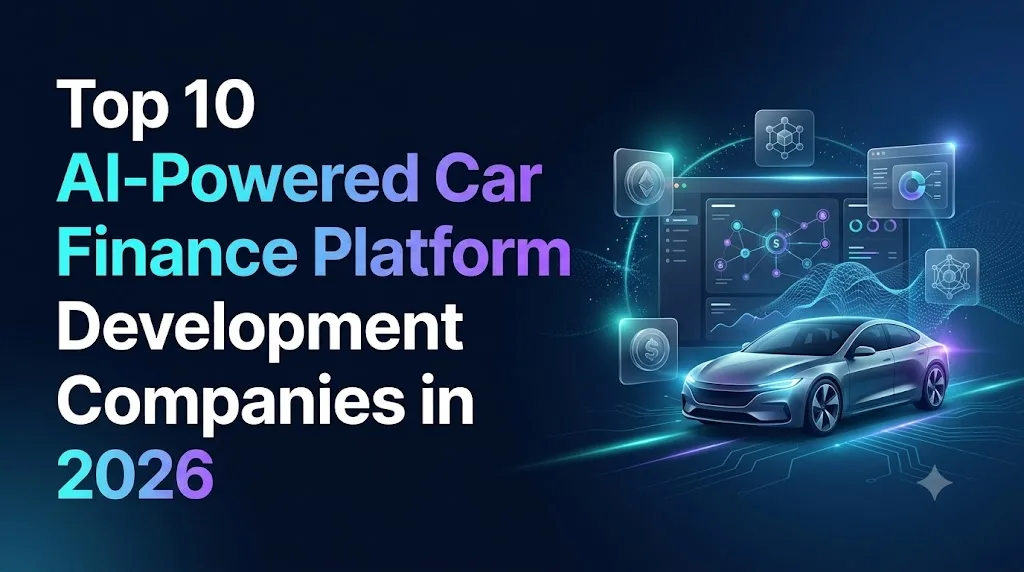
The automotive lending sector operates under intense structural pressure. Elevated vehicle acquisition costs, fluctuating interest rates, and rising consumer credit volatility have strained traditional dealership finance and insurance (F&I) offices. For decades, indirect auto lenders evaluated loan applications through rigid, batch-processed credit bureau scorecards. This legacy approach creates two severe operational bottlenecks: it rejects millions of creditworthy thin-file and non-traditional earners, while introducing days of administrative lag as human underwriters manually verify paper paystubs, calculate debt-to-income ratios, and validate vehicle collateral values.
To eliminate deal drop-off in dealer showrooms and digital automotive storefronts, financial institutions and automotive retailers are investing heavily in custom software engineering. An AI-powered car finance platform rebuilds the entire origination pipeline into an automated, real-time workflow. By connecting directly to open banking data feeds, parsing unstructured tax documents via computer vision, and applying explainable machine learning models to cash-flow telemetry, modern lending software evaluates credit and collateral risk in seconds rather than days.
However, developing financial software for the automotive sector requires specialized technical expertise. An enterprise lending platform must execute sub-second credit decisioning, integrate bidirectionally with Dealer Management Systems (DMS), detect sophisticated document fraud, and maintain strict compliance with federal lending frameworks like the Equal Credit Opportunity Act (ECOA) and the Fair Credit Reporting Act (FCRA).
This market report evaluates the top 10 software development companies specializing in automotive fintech, examining their engineering architectures, AI capabilities, and financial IT integrations.
How We Selected These Companies
Evaluating software development partners for automotive lending platforms requires looking beyond standard web and mobile application engineering. We evaluated candidates using specific technical, financial, and regulatory benchmarks:
- Algorithmic Underwriting & Explainable AI (XAI): The technical capacity to build machine learning credit models that analyze cash-flow velocity, banking telemetry, and employment stability while generating compliant adverse action notices required by financial regulators.
- Intelligent Document Processing (IDP): Engineering expertise in optical character recognition (OCR) and computer vision pipelines capable of parsing, cross-referencing, and fraud-checking unstructured paystubs, tax filings, bank statements, and vehicle titles.
- Financial Data Aggregation & Open Banking: Proven integration experience with consumer financial data networks (such as Plaid, MX, and Yodlee) to verify liquid assets, detect undisclosed liabilities, and calculate real-time debt servicing capacities.
- Automotive Ecosystem Interoperability: Software architecture capable of connecting to credit aggregators (like RouteOne and Dealertrack), vehicle valuation indices (Kelley Blue Book, Black Book), and major Dealer Management Systems (CDK Global, Reynolds & Reynolds).
- Security & Regulatory Governance: Strict engineering compliance with SOC 2 Type II, ISO 27001, GLBA, and PCI DSS Level 1 standards, ensuring complete data security across all borrower and dealer touchpoints.
Top 10 AI-Powered Car Finance Platform Development Companies
1. Idea Usher
Best suited for: End-to-end custom auto loan origination systems (LOS), smart dealer-lender integrations, and real-time deal structuring.
Idea Usher designs and builds custom AI-Powered Car Finance platforms, specializing in complex software architectures for automotive lenders, digital car marketplaces, and captive finance networks. Their engineering team develops full-cycle lending ecosystems that connect consumer pre-qualification portals, automated loan origination backends, and multi-tenant dealer management interfaces. Rather than offering rigid off-the-shelf templates, Idea Usher constructs modular microservices architectures that adapt to each lender's proprietary credit policies and underwriting criteria.
Their technical standout is their real-time deal structuring engine. The company builds software pipelines that ingest vehicle identification number (VIN) data, live vehicle valuation indices, and applicant financial metrics simultaneously. When a borrower adjusts their down payment or loan duration, the platform recalculates risk-based interest rates and loan-to-value (LTV) limits in milliseconds. Idea Usher integrates automated document extraction tools that verify paystubs and driver’s licenses instantly, alongside secure HL7- and FHIR-style data pipelines adapted for banking. Their solutions feature end-to-end encryption, automated adverse action generation, and bidirectional API connectors for major dealer networks.
- Core Strengths: Custom LOS and LMS architecture, real-time dynamic deal structuring, automated document verification pipelines, and multi-tier dealership portal engineering.
2. Intellivon
Best suited for: Explainable AI credit underwriting, alternative data risk scoring, and predictive default analytics.
Intellivon operates at the intersection of enterprise artificial intelligence and specialized financial software engineering, building custom machine learning models for auto finance institutions. In automotive lending, relying solely on static FICO scores often leads to mispriced risk or the rejection of creditworthy gig-economy and independent contractor applicants. Intellivon solves this by engineering predictive underwriting models that evaluate non-traditional cash-flow telemetry, transaction volatility, and historical repayment behaviors.
Their engineering team prioritizes algorithmic transparency, developing Explainable AI (XAI) models using SHAP (SHapley Additive exPlanations) frameworks to ensure full regulatory compliance. When an application is evaluated, Intellivon’s models generate exact decision factor weights, enabling lenders to defend their risk classifications during regulatory audits and automatically populate compliant adverse action notices. Furthermore, Intellivon builds predictive servicing algorithms that monitor post-origination account health, identifying early warning signs of payment distress to allow proactive loan restructuring before default occurs.
- Core Strengths: Explainable AI credit decisioning models, alternative cash-flow underwriting engines, predictive default monitoring, and automated regulatory reporting modules.
3. Vention
Best suited for: Scalable fintech engineering, open banking integrations, and cloud-native digital lending architectures.
Vention provides dedicated software engineering teams for high-growth fintech companies and established financial enterprises. Their engineering practice brings deep expertise in building cloud-native, high-throughput financial platforms capable of handling large application volumes during peak automotive retail cycles.
Their developers specialize in building decoupled microservices architectures hosted on AWS and Microsoft Azure. For automotive lending platforms, Vention engineers secure API orchestration layers that connect core loan engines to open banking aggregators, credit reporting agencies, and identity verification services. Their teams prioritize automated continuous integration and deployment (CI/CD) pipelines, enabling financial institutions to update underwriting business rules and user-facing application flows without interrupting active origination workflows.
- Core Strengths: Cloud-native microservices architecture, open banking API orchestration, automated deployment pipelines, and high-throughput transaction processing.
4. Appinventiv
Best suited for: Consumer-facing automotive retail apps, mobile digital onboarding, and microservices-based lending engines.
Appinventiv is a global digital product engineering agency that builds custom mobile applications and enterprise financial software. Their fintech team focuses on the user experience layer of automotive financing, designing mobile-first origination flows that minimize drop-off rates during vehicle purchasing.
Their developers build digital onboarding modules featuring biometric identity verification (facial recognition matching against government IDs), mobile document scanning, and real-time bank linking. Appinventiv constructs the underlying backend services to support soft-pull credit checks that allow car buyers to view pre-qualified financing options before visiting a dealership lot. Their systems maintain strict compliance with mobile application security standards and PCI DSS regulations.
- Core Strengths: Mobile-first loan origination UI/UX, biometric identity verification, soft-pull pre-qualification engines, and secure mobile data encryption.
5. Simform
Best suited for: Cloud-native loan origination architectures, serverless financial microservices, and enterprise AWS/Azure fintech deployment.
Simform is an enterprise software engineering company that specializes in cloud-native application development, microservices architecture, and financial systems modernization. Their engineers work with mid-market lenders and automotive finance enterprises to replace monolithic legacy lending software with modular, cloud-hosted architectures.
When developing auto finance platforms, Simform implements event-driven, serverless computing patterns (such as AWS Lambda and Azure Functions) to manage asynchronous loan processing tasks. This design allows tasks like document OCR processing, third-party credit bureau calls, and fraud screening to execute in parallel without creating processing bottlenecks. Simform’s technical teams also implement robust observability frameworks that track system latencies and API response times across the entire lending infrastructure.
- Core Strengths: Serverless and event-driven architectures, asynchronous data processing pipelines, legacy software decoupling, and enterprise cloud infrastructure management.
6. LeewayHertz
Best suited for: Custom AI agents, financial document parsing, and automated loan agreement verification.
LeewayHertz is an established software development company that specializes in artificial intelligence, generative AI agents, and enterprise software engineering. Their fintech division focuses on deploying specialized machine learning models that automate complex, document-heavy workflows within financial institutions.
In automotive lending, LeewayHertz builds intelligent agentic pipelines that ingest complex loan packages—including multi-page dealership contracts, insurance binders, and proof-of-income documents. Their natural language processing models extract contractual terms, cross-check interest rate figures against origination agreements, and flag missing stipulations before funds are disbursed. This automated audit layer significantly reduces the time required for post-approval quality control and contract funding.
- Core Strengths: Custom AI agent development, intelligent document verification, automated contract auditing, and natural language data extraction.
7. Fingent
Best suited for: Enterprise financial workflow automation, Dealer Management System (DMS) middleware, and legacy core modernization.
Fingent provides custom software engineering and enterprise consulting, operating specialized practices in financial technology and workflow automation. Their engineering practice focuses on connecting disparate enterprise systems to create unified digital operations for commercial and consumer lenders.
For automotive finance platforms, Fingent excels at developing custom integration middleware that links modern digital loan origination engines with legacy Dealer Management Systems (DMS) and core banking databases. Their developers construct secure data pipelines that automate the bidirectional transfer of applicant details, vehicle valuations, and contract statuses between dealership finance offices and institutional lenders. This integration eliminates manual re-entry errors and speeds up the vehicle delivery process.
- Core Strengths: DMS integration middleware, enterprise workflow orchestration, legacy banking core connectivity, and secure data pipeline engineering.
8. ValueCoders
Best suited for: Custom auto loan management engines, automated eKYC/AML pipelines, and secure payment reconciliation.
ValueCoders delivers custom software development services across financial services and retail technology. Their engineering teams build dedicated loan management systems (LMS) that handle the post-origination servicing lifecycle for auto lenders and equipment finance firms.
Their developers build core accounting engines that manage complex amortization schedules, multi-tier interest calculations, automated payment processing, and escrow management for vehicle insurance. ValueCoders implements automated Know Your Customer (eKYC) and Anti-Money Laundering (AML) verification checks that screen applicants against global sanction watchlists during the initial onboarding flow. Their systems provide comprehensive audit logging to support internal and external financial compliance audits.
- Core Strengths: Loan management and servicing software, automated eKYC/AML screening, payment gateway integration, and financial ledger accounting modules.
9. DICEUS
Best suited for: Core banking synchronization, automated credit decisioning rules, and audit-ready lending platforms.
DICEUS is a technology consulting and custom software development company with a strong focus on the banking, insurance, and lending industries. The company develops secure, high-compliance digital lending platforms that adhere to international financial software standards.
Their technical team specializes in building automated credit decisioning rule engines that execute complex, multi-tiered underwriting logic. DICEUS connects auto finance platforms with core banking systems, allowing retail banks and credit unions to offer auto financing while keeping general ledger accounts synchronized in real time. Their engineering practices follow strict test-driven development methodologies to ensure data consistency across every step of the loan lifecycle.
- Core Strengths: Core banking integration, deterministic credit rule engines, test-driven financial software engineering, and audit-ready data architectures.
10. Itransition
Best suited for: Enterprise financial data lakes, vehicle collateral valuation pipelines, and legacy IT integration.
Itransition is an international software development company that delivers enterprise IT solutions, data management platforms, and custom software architectures. Their financial services practice focuses on large-scale data integration, enterprise analytics, and digital transformation for established financial institutions.
In automotive finance, Itransition specializes in building unified data warehouses that aggregate transaction histories, portfolio performance metrics, and dealer performance data across millions of loans. Their developers build automated collateral valuation pipelines that track real-time wholesale vehicle market fluctuations, helping lenders monitor portfolio-wide Loan-to-Value (LTV) exposure and adjust underwriting risk thresholds accordingly.
- Core Strengths: Enterprise financial data engineering, portfolio-wide risk analytics, vehicle collateral valuation pipelines, and legacy system modernization.
Comparison of Top AI-Powered Car Finance Platform Development Companies
CompanyBest Suited ForCore Technical StrengthIdea UsherFull-Cycle Auto Finance EcosystemsCustom LOS/LMS, real-time deal structuring & automated document pipelinesIntellivonExplainable AI Underwriting & AnalyticsSHAP-governed risk models, alternative data scoring & default predictionVentionScalable Cloud-Native FinTechMicroservices architecture, open banking API orchestration & CI/CD pipelinesAppinventivMobile Origination & Retail UXMobile-first onboarding, biometric identity verification & soft credit checksSimformServerless Cloud ArchitecturesEvent-driven microservices, asynchronous task handling & cloud scalabilityLeewayHertzAI Document Agents & Contract AuditingIntelligent document processing, automated contract checks & NLP pipelinesFingentDMS Integration & Workflow AutomationCustom middleware for Dealer Management Systems & legacy core connectionsValueCodersLoan Servicing & eKYC ModulesCore servicing engines, automated AML screening & payment reconciliationDICEUSBanking Core & Decision Rule EnginesDeterministic underwriting logic, core banking sync & test-driven softwareItransitionEnterprise Data Lakes & Collateral ModelsLarge-scale portfolio data lakes, wholesale vehicle analytics & LTV modelingCore Technical Architecture for an AI-Powered Car Finance Platform
An enterprise auto finance platform requires a distributed, modular software architecture that connects the borrower's digital application with third-party financial networks and dealer systems.
1. Multi-Channel Ingestion & Open Banking Telemetry
The front-end tier provides dedicated interfaces for consumers, dealership finance managers, and internal underwriters. When an applicant begins the process, the software connects directly to consumer permissioned open banking APIs. Instead of relying solely on self-reported figures, the platform extracts 90 to 180 days of verified transaction history to calculate net income velocity, identify non-traditional revenue streams (such as ride-sharing or freelance contracts), and verify existing recurring debt obligations.
2. Machine Learning Underwriting Engine
The decisioning layer combines deterministic credit policies with predictive machine learning models:
- Alternative Data Scoring: Machine learning models evaluate hundreds of behavioral and cash-flow variables, scoring applicants who lack extensive credit bureau histories.
- Explainability Framework: The system utilizes SHAP values to explain every risk tier calculation. If an application falls outside acceptable parameters, the model outputs the exact contributing factors required for regulatory adverse action notices.
- Document Fraud Detection: Computer vision algorithms inspect uploaded documents for pixel anomalies, altered fonts, or manipulated metadata before passing data to underwriters.
3. Collateral Risk & VIN Valuation Service
Automotive financing is secured lending; the vehicle itself represents the primary collateral. The platform integrates with VIN decoding engines and real-time market data providers (such as Black Book and Kelley Blue Book). The software analyzes historical depreciation curves, regional auction sales data, and mileage adjustments to determine an accurate wholesale asset value, ensuring the loan-to-value (LTV) ratio remains within safe risk boundaries.
4. Regulatory Compliance & e-Contracting Subsystem
Once approved, the system generates compliant Truth in Lending Act (TILA) disclosures and prepares electronic contracts. Integrated e-signature engines capture legally binding signatures. For declined or counter-offered applications, the compliance subsystem automatically formats and delivers Equal Credit Opportunity Act (ECOA)-compliant adverse action notices with the primary denial reasons, maintaining an unalterable audit log for regulatory inspections.
Strategic Evaluation Guide: How to Select an Auto Lending Development Partner
Selecting an engineering firm to develop an automotive lending platform requires assessing specialized capabilities across financial integrations, algorithmic fairness, and automotive retail systems:
Explainability vs. Black-Box Machine Learning Models
Financial institutions cannot deploy opaque "black-box" neural networks for credit decisioning. Consumer protection regulations require lenders to explain why an applicant was rejected or offered specific interest rates. Ensure your prospective development partner has verified experience engineering explainable AI architectures (such as gradient boosted decision trees paired with SHAP or LIME explainability layers) that output mathematically defensible decision factors.
Deep Experience with Dealer Management Systems (DMS)
If your lending platform involves indirect financing through auto dealerships, software adoption hinges on seamless DMS integration. Dealership finance managers will avoid platforms that require manual data duplication between their internal software and your lending portal. Verify that your development partner understands the API structures and communication protocols for platforms like CDK Global, Reynolds & Reynolds, RouteOne, and Dealertrack.
Collateral Depreciation & Residual Value Modeling
Auto loans differ fundamentally from unsecured personal loans because collateral value fluctuates over time. Your engineering partner must understand how to build systems that model vehicle depreciation curves, wholesale market volatility, and loan amortization simultaneously. A partner with automotive retail experience will properly structure collateral risk algorithms to protect your capital reserves against market downturns.
Full Intellectual Property Transfer & Architecture Independence
Ensure your development contract provides full, unencumbered ownership of all custom source code, database architectures, machine learning models, and proprietary underwriting rules. Avoid agencies that build on proprietary, closed-source runtime frameworks that charge recurring transaction fees or restrict your ability to bring platform maintenance in-house.
Frequently Asked Questions
What is an AI-powered car finance platform?
An AI-powered car finance platform is a specialized financial technology software suite that automates the automotive loan origination, credit underwriting, and loan servicing lifecycle. By combining machine learning models, open banking APIs, and document computer vision, the software evaluates borrower creditworthiness, verifies income documents, values vehicle collateral, and issues instant financing decisions.
How does artificial intelligence reduce default rates in auto lending?
Artificial intelligence reduces default rates by analyzing multidimensional financial data beyond static credit scores. Machine learning models assess real-time cash-flow volatility, spending consistency, employment history, and vehicle depreciation trends simultaneously. This broader analysis allows lenders to identify high-risk spending patterns that traditional credit scorecards miss while safely approving creditworthy non-traditional earners.
How much does it cost to build a custom AI car finance platform?
Developing a custom AI-powered car finance platform typically ranges from $95,000 to $310,000+, depending on technical scope and integration requirements. A basic digital origination portal with standard credit bureau integrations sits at the lower end of the spectrum. Enterprise-grade platforms featuring real-time open banking telemetry, computer vision document fraud checks, DMS middleware, and automated loan servicing modules require higher investment.
What regulations govern automated automotive lending software?
In the United States, automated auto lending software must comply with the Equal Credit Opportunity Act (ECOA/Regulation B), the Fair Credit Reporting Act (FCRA), the Truth in Lending Act (TILA/Regulation Z), and the Gramm-Leach-Bliley Act (GLBA). Additionally, cloud-hosted platforms must adhere to SOC 2 Type II security frameworks, and systems processing payments must maintain PCI DSS Level 1 compliance.
Building the Future of Automotive Retail Finance
Automotive lending is shifting decisively from fragmented, manual dealership negotiations toward instant, data-driven digital decisioning. By integrating open banking telemetry with explainable machine learning models, modern auto finance platforms eliminate the operational bottlenecks that slow down vehicle transactions, enabling lenders to fund loans faster while maintaining precise control over credit and collateral risk.
Successfully engineering a compliant, high-throughput auto finance platform requires a development partner that combines technical excellence in machine learning with deep domain expertise in financial IT and dealership systems. Whether building an AI-driven credit underwriting engine, a high-conversion consumer origination portal, or a scalable loan management system, selecting an experienced engineering team ensures your software delivers measurable operational efficiencies while protecting enterprise capital.