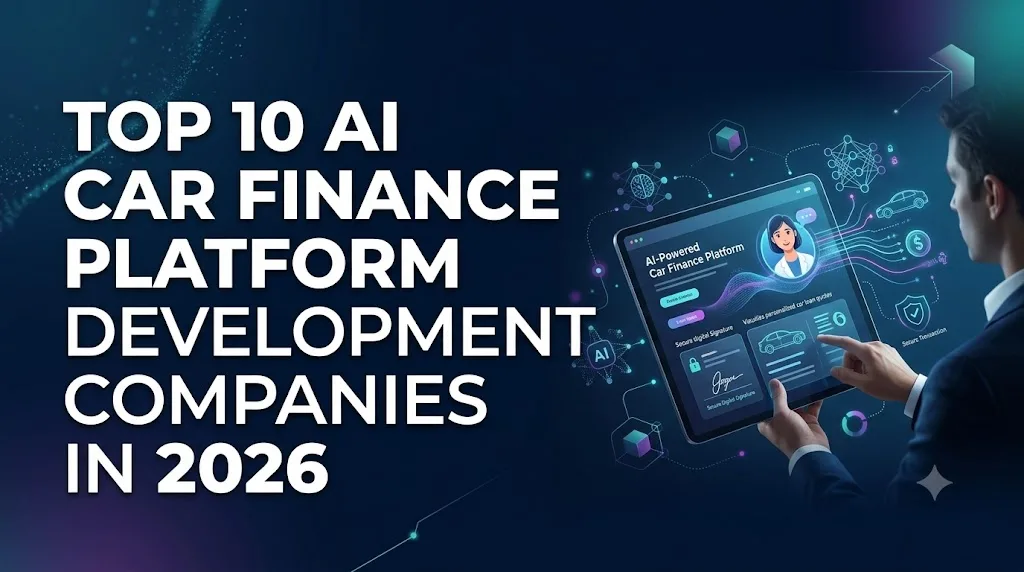
The automotive retail and financing market faces a structural efficiency crisis. Traditional auto lending workflows rely heavily on fragmented dealer networks, manual document inspection, and rigid, batch-processed credit bureau scorecards. When a prospective car buyer enters a dealership or applies through an online automotive marketplace, the financing journey often stalls for hours—or days—while finance and insurance (F&I) managers negotiate with indirect lenders, manually verify paper paystubs, and reconcile vehicle equity figures. This administrative lag inflates origination costs, limits lending margins, and drives high application abandonment rates across digital retail channels.
Automotive lenders, digital dealerships, and fintech innovators are resolving these bottlenecks by investing in AI car finance platform development. By connecting modern loan origination systems (LOS) directly to consumer-permissioned open banking data, computer vision document extraction pipelines, and machine learning underwriting engines, these platforms compress the auto financing process into an instantaneous transaction. Modern platforms evaluate borrower cash flow, verify income authenticity, value vehicle collateral dynamically, and structure compliant loan terms in seconds.
However, developing an enterprise-grade automotive lending platform requires specialized engineering that spans complex regulatory frameworks and legacy systems. An auto finance platform must execute sub-second credit decisioning, integrate bidirectionally with Dealer Management Systems (DMS), detect sophisticated document fraud, and maintain compliance with the Equal Credit Opportunity Act (ECOA) and the Fair Credit Reporting Act (FCRA).
This guide evaluates the top 10 software engineering companies specializing in automotive fintech and custom lending platforms, analyzing their technical capabilities, development methodologies, and market differentiators.
How We Selected These Companies
Evaluating software engineering firms for automotive fintech requires assessing technical capabilities that extend beyond standard web and mobile application development. We analyzed candidate firms using five core benchmarks:
- Automated Underwriting & Machine Learning Risk Models: Demonstrated expertise in building predictive credit models that evaluate traditional credit bureau data alongside real-time open banking telemetry, cash-flow velocity, and gig-economy earnings.
- Intelligent Document Processing (IDP) & Tampering Detection: Proven capability to engineer optical character recognition (OCR) and computer vision pipelines capable of parsing, cross-referencing, and fraud-checking unstructured paystubs, tax filings, bank statements, and vehicle titles.
- Collateral Risk & VIN Valuation Integration: Technical capacity to connect directly with real-time automotive market databases (such as Black Book, Kelley Blue Book, and automated VIN decoders) to calculate depreciation curves and loan-to-value (LTV) limits dynamically.
- Dealership Ecosystem & DMS Interoperability: Software architecture capable of bidirectional synchronization with major Dealer Management Systems (CDK Global, Reynolds & Reynolds), credit aggregators (RouteOne, Dealertrack), and core banking ledgers.
- Security & Regulatory Governance: Strict engineering compliance with SOC 2 Type II, ISO 27001, GLBA, and PCI DSS Level 1 standards, including explainable AI frameworks (such as SHAP values) for automated adverse action reporting.
Top 10 AI Car Finance Platform Development Companies
1. Idea Usher
Best suited for: Full-cycle custom auto lending platforms, modular LOS/LMS architectures, and connected dealer-lender networks.
Idea Usher designs and builds AI Car Finance Platform Development platforms, specializing in complex software architectures for automotive lenders, digital car marketplaces, and captive auto finance enterprises. Their engineering team develops full-cycle lending ecosystems that connect consumer pre-qualification portals, automated loan origination backends, and multi-tenant dealer management desks. Rather than relying on rigid off-the-shelf software packages that limit operational customization, Idea Usher constructs modular microservices architectures tailored to each lender's proprietary risk parameters and credit policies.
Their technical standout is their real-time dynamic deal-structuring and repricing engine. Idea Usher builds data pipelines that ingest vehicle identification number (VIN) feeds, live vehicle valuation indices, and applicant banking telemetry simultaneously. When a borrower adjusts their down payment, loan tenure, or insurance add-ons, the platform recalculates risk-based APRs and approval odds in milliseconds. Idea Usher integrates computer vision models that verify uploaded paystubs and government IDs for digital tampering, cross-referencing extracted figures against direct bank deposit records. Their platforms feature automated adverse action notice generation, role-based dealership interfaces, and bidirectional API connectors for major auto retail networks.
- Core Strengths: Custom auto LOS and LMS architecture, real-time dynamic deal structuring, automated document verification pipelines, and multi-tenant dealership portal engineering.
2. Intellivon
Best suited for: Explainable AI credit decisioning models, alternative cash-flow scoring, and predictive default analytics.
Intellivon operates at the intersection of enterprise artificial intelligence and specialized financial software engineering, building custom machine learning models for automotive finance institutions. When automating vehicle loan underwriting, Intellivon addresses the limitations of traditional credit scores by deploying predictive machine learning models that evaluate non-traditional data—including continuous cash-flow volatility, recurring gig-economy earnings, and historical debt-servicing velocity.
Their engineering team prioritizes algorithmic transparency, developing Explainable AI (XAI) models using SHAP (SHapley Additive exPlanations) frameworks to ensure full regulatory compliance. When an auto loan application is scored, Intellivon’s models generate detailed feature importance breakdowns that clearly document why an applicant was assigned a specific risk tier or denied credit. Furthermore, Intellivon engineers predictive servicing algorithms that monitor active loan portfolios, analyzing real-time repayment telemetry to identify early indicators of financial distress and trigger proactive, personalized loan restructuring workflows before default occurs.
- Core Strengths: Explainable AI credit underwriting, alternative data risk scoring, predictive default modeling, and financial transaction anomaly detection.
3. RaftLabs
Best suited for: Full-stack automotive product development, telematics data pipelines, and dealer sales automation.
RaftLabs is a specialized product development firm that builds full-stack software and data-driven applications for the automotive and transportation sectors. Their engineering teams focus on shipping scalable digital platforms that bridge connected-car telematics with retail operations and financing workflows.
When developing automotive finance software, RaftLabs excels at building high-volume data pipelines that process vehicle telemetry alongside applicant financial data. Their developers build modular sales tools and dealer customer relationship management (CRM) integrations that streamline the handoff between vehicle selection and credit pre-approval. RaftLabs focuses on creating low-latency data architectures that allow auto retailers to present customized financing options to prospective car buyers in real time.
- Core Strengths: High-volume automotive data pipelines, connected-car telematics integration, dealer sales automation, and full-stack digital product engineering.
4. ScienceSoft
Best suited for: Enterprise financial IT architecture, ISO 27001 data governance, and core banking integrations.
ScienceSoft brings over three decades of financial IT consulting and custom software development experience to automotive lending. The company operates under strict ISO 27001 information security standards and provides custom lending solutions for retail banks, credit unions, and independent automotive financing organizations.
Their engineering teams develop scalable loan underwriting platforms that manage multi-tiered risk rating, automated policy checks, and collateral tracking. ScienceSoft specializes in building secure data warehouses and enterprise analytics backends that aggregate transaction histories across high-volume loan portfolios. Their software frameworks integrate directly with core banking systems (such as Fiserv and FIS), ensuring that automated auto loan decisioning engines remain synchronized with enterprise general ledgers and risk-weighted capital reserve systems.
- Core Strengths: Core banking integration, ISO 27001-certified development, enterprise loan servicing architecture, and automated credit rule engines.
5. HES FinTech
Best suited for: Modular loan origination platforms, automated credit decisioning workflows, and proprietary AI scoring engines.
HES FinTech is a dedicated financial software development company that builds digital lending platforms and automated loan origination software for commercial and consumer finance providers. Their core architecture combines digital onboarding, automated underwriting, and loan servicing into a modular, configurable platform.
Their technical standout in underwriting is their proprietary AI scoring engine, GiniMachine, which can be integrated into custom lending workflows. For automotive lenders, HES FinTech configures automated decisioning pipelines that combine deterministic credit scorecards with predictive machine learning models. Their systems feature no-code workflow builders that allow credit risk officers to modify underwriting rules, risk tiers, and approval thresholds without requiring ongoing developer intervention.
- Core Strengths: Configurable credit decisioning workflows, proprietary machine learning scoring engines, no-code business rule builders, and end-to-end lending modules.
6. Praxent
Best suited for: Embedded auto lending workflows, legacy LOS decoupling, and high-conversion digital origination UX.
Praxent is a specialized financial software development consultancy with deep domain expertise in automotive fintech and loan origination software. The firm focuses on helping automotive lenders and credit unions modernize legacy lending cores by engineering high-conversion digital origination workflows and embedded financing APIs.
Their engineering teams excel at building embedded underwriting features that integrate directly into online car-shopping interfaces. Praxent builds lightweight, API-driven widgets that allow car buyers to view soft-pull pre-qualification rates and customized monthly payments directly on vehicle listing pages without affecting their credit score. Their software architecture decouples monolithic lending systems into modern, cloud-native microservices, drastically reducing loan processing times and improving conversion rates for online auto retailers.
- Core Strengths: Embedded automotive lending widgets, legacy LOS modernization, cloud microservices architecture, and soft-pull pre-qualification tools.
7. Simform
Best suited for: Serverless financial microservices, high-throughput loan origination, and event-driven data architectures.
Simform is an enterprise software engineering company that specializes in cloud-native application development, serverless computing, and digital transformation for financial service providers. Their developers work with mid-market lenders and automotive finance platforms to build scalable, event-driven backends capable of processing high application volumes during peak retail periods.
When developing automotive lending software, Simform designs asynchronous microservices architectures that handle parallel data enrichment tasks. When an applicant submits a loan request, their platform triggers serverless routines that execute credit bureau pulls, fraud screening, and vehicle valuation queries simultaneously without creating bottlenecks. Simform’s engineering practice emphasizes high availability, continuous integration, and comprehensive observability across all financial API endpoints.
- Core Strengths: Serverless auto loan processing, event-driven data architectures, asynchronous credit bureau orchestration, and enterprise cloud infrastructure.
8. LeewayHertz
Best suited for: Custom AI financial agents, automated document fraud verification, and intelligent contract analysis.
LeewayHertz is an established software engineering agency specializing in artificial intelligence, generative AI agents, and enterprise automation. Their financial technology practice designs custom machine learning pipelines that automate complex, document-intensive workflows for automotive lenders and captive finance companies.
In the automotive finance domain, LeewayHertz builds intelligent agentic pipelines that ingest complete dealership funding packages—including retail installment sales contracts, proof of insurance, and income verification documents. Their natural language processing (NLP) and computer vision models extract contractual terms, verify APR calculations against approved underwriting parameters, and detect fraudulent image alterations before funds are released. This automated audit layer significantly reduces the time and manual labor required for post-approval contract verification.
- Core Strengths: Autonomous AI verification agents, document tampering detection, automated contract auditing, and natural language financial data extraction.
9. Vention
Best suited for: Cloud-native fintech development, open banking data pipelines, and cross-platform mobile lending clients.
Vention delivers dedicated software engineering teams for high-growth fintech companies and established automotive financing enterprises. Their practice specializes in developing scalable, cloud-native digital lending software that connects car buyers, automotive dealers, and capital providers in real time.
Their engineers have deep expertise in building open banking data pipelines, integrating consumer-permissioned APIs that pull verified payroll, banking, and tax data directly from financial institutions. Vention builds intuitive cross-platform mobile applications (utilizing Flutter and React Native) that feature biometric authentication, digital document scanning, and real-time application tracking. Their modular architectures allow auto lenders to rapidly launch localized financing products across diverse regional markets.
- Core Strengths: Open banking API integration, cross-platform mobile client engineering, modular lending microservices, and secure financial data streaming.
10. Chetu
Best suited for: Dealer Management System (DMS) integration, loan servicing middleware, and credit aggregator connectivity.
Chetu delivers custom software engineering and systems integration services, operating dedicated practices across automotive retail technology, consumer finance, and accounting software. Chetu specializes in building the critical integration middleware that connects modern digital auto finance apps with established dealership and banking systems.
Their developers build custom API connectors for major Dealer Management Systems (DMS) such as CDK Global, Reynolds & Reynolds, and Dealertrack. For automotive lenders, Chetu develops middleware that automates the transfer of funded deal data into core accounting platforms, payment processors, and loan servicing software. Their engineering focus ensures that digital auto finance features integrate cleanly into existing showroom operations without requiring dealership staff to re-enter customer data across multiple systems.
- Core Strengths: DMS integration middleware (CDK Global, Reynolds & Reynolds), loan servicing integration, payment gateway automation, and legacy software modernization.
Comparison of Top AI Car Finance Platform Development Companies
CompanyBest Suited ForCore Technical StrengthIdea UsherFull-Cycle Auto LOS & Deal StructuringCustom underwriting engines, real-time repricing & automated document verificationIntellivonExplainable AI Underwriting & AnalyticsSHAP-governed risk models, alternative cash-flow scoring & default predictionRaftLabsAutomotive AI Products & PipelinesConnected-car data integration, dealer sales automation & workflow toolingScienceSoftCore Banking & Financial ITISO 27001 data governance, core banking sync & enterprise loan servicingHES FinTechConfigurable Lending PlatformsModular origination workflows & proprietary machine learning scoring enginesPraxentEmbedded Auto Lending ModernizationEmbedded vehicle card financing widgets & cloud-native LOS microservicesSimformHigh-Throughput Serverless ArchitecturesEvent-driven microservices & asynchronous credit bureau orchestrationLeewayHertzAI Document Agents & Contract AuditingIntelligent document tampering detection & automated contract verificationVentionScalable FinTech & Open BankingOpen banking API pipelines & cross-platform mobile client developmentChetuDealer Management System IntegrationCustom DMS middleware (CDK, Reynolds & Reynolds) & accounting syncAI Car Finance Platform Development Cost Breakdown
Estimating the cost of building an AI-powered auto finance platform requires analyzing the complexity of its underlying subsystems, API integrations, and regulatory compliance requirements. Custom development projects generally range between $85,000 and $320,000+, depending on the intended scope of automation and operational architecture.
Development Cost by Scope and Complexity
Platform TierEstimated Cost RangeTypical TimelineIncluded CapabilitiesBasic Origination MVP$85,000 – $140,0003 – 5 MonthsConsumer pre-qualification portal, single credit bureau integration (soft/hard pull), basic static underwriting rules, standard document upload, and basic administrative dashboard.Advanced Mid-Market LOS$145,000 – $230,0005 – 8 MonthsMulti-bureau orchestration, open banking cash-flow ingestion (Plaid/MX), OCR document extraction, dynamic LTV/PTI deal calculator, automated adverse action engine, and basic DMS integration.Enterprise AI Lending Ecosystem$235,000 – $320,000+8 – 12+ MonthsCustom explainable AI credit scoring models (SHAP/XAI), real-time document forensic fraud detection, full bidirectional DMS synchronization (CDK/Reynolds), multi-lender waterfall routing, loan servicing core (LMS), and automated secondary market syndication pipelines.Primary Architectural Cost Drivers
Understanding where capital is allocated during platform engineering helps organizations budget effectively and avoid scope creep:
1. Machine Learning Model Engineering and Explainability
Building a compliant credit decisioning engine requires more than deploying generic predictive models. Engineers must build explainable AI architectures (using SHAP or LIME frameworks) that mathematically identify the exact factors influencing every approval, counter-offer, or denial. Building, training, and validating these models against historical loan datasets to prevent algorithmic bias represents a significant portion of engineering investment.
2. Financial API Orchestration and Bureau Credentialing
Integrating with traditional credit reporting agencies (Experian, Equifax, TransUnion) and open banking aggregators requires complex asynchronous API handling, robust caching strategies, and strict security protocols. Engineering the middleware to handle rate limits, network timeouts, and bureau credentialing audits requires specialized backend development.
3. Intelligent Document Processing (IDP) and Forensic Fraud Detection
Basic OCR tools extract text, but financial-grade document pipelines must verify authenticity. Building computer vision algorithms that detect font tampering, altered PDF metadata, and synthetic paystub layouts adds engineering complexity but protects lenders against multi-million-dollar fraud rings.
4. Dealer Management System (DMS) Middleware
Indirect auto lending requires platforms to communicate with dealership software like CDK Global, Reynolds & Reynolds, and Dealertrack. Engineering custom middleware that translates deal terms and customer information bidirectionally across proprietary dealership protocols adds development time but is essential for dealer adoption.
Core Technical Architecture for an AI-Powered Car Finance Platform
An enterprise auto finance platform requires a distributed, modular software architecture that connects the borrower's digital application with third-party financial networks and dealer systems.
+-----------------------------------------------------------------+ | USER INTERACTION LAYER | | Borrower Web/Mobile App | Dealer Portal | Lender Admin Console | | - Soft-Pull Credit Check & Interactive Payment Structuring | | - Mobile Document Upload (Paystubs, Tax Forms, Photo ID) | | - Instant Pre-Approval Dashboards with Transparent Rates | +-----------------------------------------------------------------+ | Secure API Gateway (mTLS / OAuth 2.0 / REST) v +-----------------------------------------------------------------+ | AI UNDERWRITING & DATA ENGINE | | - Open Banking Telemetry (Plaid, MX: Cash Flow & Liabilities)| | - Computer Vision / OCR (Document Tampering & Extraction) | | - Credit Bureau Multi-Pull (Experian, Equifax, TransUnion) | | - Vehicle Collateral Valuation (VIN Decoding, Black Book) | | - Explainable Machine Learning Underwriting (SHAP Framework) | +-----------------------------------------------------------------+ | Asynchronous Event Bus (Apache Kafka / RabbitMQ) v +-----------------------------------------------------------------+ | CORE LENDING & COMPLIANCE PLATFORM | | - Loan Origination System (LOS Automated Decision Engine) | | - DMS Middleware (CDK Global, Reynolds & Reynolds, RouteOne) | | - Loan Management System (LMS Amortization & Repayments) | | - Automated Adverse Action & Fair Lending Compliance Engine | | - Electronic Vault (e-Contracting, E-Signatures, Encrypted) | +-----------------------------------------------------------------+
Strategic Evaluation Guide: How to Select an Auto Lending Development Partner
Selecting an engineering firm to develop an automotive lending platform requires assessing specialized capabilities across financial integrations, algorithmic fairness, and automotive retail systems:
Demand Explainable AI Over Black-Box Models
Financial institutions cannot deploy opaque "black-box" neural networks for credit decisioning. Consumer protection regulations require lenders to explain why an applicant was rejected or offered specific interest rates. Ensure your prospective development partner has verified experience engineering explainable AI architectures (such as gradient boosted decision trees paired with SHAP or LIME explainability layers) that output mathematically defensible decision factors.
Verify Dealer Management System (DMS) Experience
If your lending platform involves indirect financing through auto dealerships, software adoption hinges on seamless DMS integration. Dealership finance managers will avoid platforms that require manual data duplication between their internal software and your lending portal. Verify that your development partner understands the API structures and communication protocols for platforms like CDK Global, Reynolds & Reynolds, RouteOne, and Dealertrack.
Confirm Full Intellectual Property Ownership
Ensure your development contract provides full, unencumbered ownership of all custom source code, database architectures, machine learning models, and proprietary underwriting rules. Avoid agencies that build on proprietary, closed-source runtime frameworks that charge recurring transaction fees or restrict your ability to bring platform maintenance in-house.
Frequently Asked Questions
What is AI car finance platform development?
AI car finance platform development is the process of engineering custom digital lending software that automates vehicle loan origination, credit underwriting, document verification, and loan servicing. By combining machine learning models, open banking APIs, and computer vision, these platforms evaluate borrower creditworthiness, verify income documents, calculate collateral risk, and issue instant financing decisions.
How much does it cost to build an AI car finance platform?
Developing a custom AI-powered car finance platform typically ranges from $85,000 to $320,000+, depending on technical scope and integration requirements. A basic digital origination portal with standard credit bureau integrations sits at the lower end of the spectrum, while an enterprise-grade platform featuring real-time open banking telemetry, computer vision document fraud checks, DMS middleware, and automated loan servicing modules requires higher capital investment.
How does AI reduce auto loan default rates?
AI reduces default rates by analyzing multidimensional financial data beyond static credit scores. Machine learning models assess real-time cash-flow volatility, spending consistency, employment history, and vehicle depreciation trends simultaneously. This broader analysis allows lenders to identify high-risk spending patterns that traditional credit scorecards miss while safely approving creditworthy non-traditional earners.
What compliance regulations govern automotive lending software?
In the United States, automated auto lending software must comply with the Equal Credit Opportunity Act (ECOA/Regulation B), the Fair Credit Reporting Act (FCRA), the Truth in Lending Act (TILA/Regulation Z), and the Gramm-Leach-Bliley Act (GLBA). Additionally, cloud-hosted platforms must adhere to SOC 2 Type II security frameworks, and systems processing payments must maintain PCI DSS Level 1 compliance.
Engineering the Future of Automotive Retail Finance
Automotive lending is shifting decisively from fragmented, manual dealership negotiations toward instant, data-driven digital decisioning. By integrating open banking telemetry with explainable machine learning models, modern auto finance platforms eliminate the operational bottlenecks that slow down vehicle transactions, enabling lenders to fund loans faster while maintaining precise control over credit and collateral risk.
Successfully engineering a compliant, high-throughput auto finance platform requires a development partner that combines technical excellence in machine learning with deep domain expertise in financial IT and dealership systems. Whether building an AI-driven credit underwriting engine, a high-conversion consumer origination portal, or a scalable loan management system, selecting an experienced engineering team ensures your software delivers measurable operational efficiencies while protecting enterprise capital.