A high-quality mattress is one of the most substantial investments you will make in your home and personal wellbeing. Premium pocket-spring, latex, or hybrid mattresses in Australia routinely cost anywhere from hundreds to several thousands of dollars. Yet, night after night, that valuable investment remains exposed to moisture, microscopic allergens, accidental spills, natural body oils, and shedding skin cells.
Without an effective barrier in place, even the most luxurious mattress will degrade prematurely. This is why a premium mattress protector is not merely an optional bedding accessory; it is an indispensable shield that preserves sleep hygiene, maintains manufacturer warranties, and optimizes restorative rest across Australia’s diverse climates.
Whether you are coping with sweltering, humid summers in Queensland, chillier winters in Victoria, or simply looking to safeguard your bed from messy morning flat whites and pet accidents, this comprehensive guide covers everything you need to know.
What Exactly Is a Mattress Protector and How Does It Work?
A mattress protector is a tailored layer of fabric designed to wrap around or cover the sleep surface of your mattress. Unlike a mattress topper—which primarily exists to dramatically change the firmness or plushness of your sleep surface—a protector serves a structural, protective, and hygienic purpose.
Modern mattress protectors work through multi-layered fabric engineering. The upper surface provides tactile comfort, softness, and moisture absorption, while an engineered inner membrane blocks moisture, particulate matter, and pests from penetrating into the core comfort foams and inner springs.
Advanced modern designs achieve this without the rigid, noisy plastic feel of decades past. Today’s top-tier Australian mattress protectors utilize breathable, microporous polyurethane laminates (often called TPU). These microscopic pores are small enough to prevent liquid water droplets, dead skin flakes, and dust mites from migrating down, yet large enough to allow trapped air and heat vapor to escape upward. The result is a silent, undetectable layer of defense that shields your bed while preserving your mattress's original contouring performance.
Core Benefits of Using a Mattress Protector in Australian Homes
Investing in a quality protector pays dividends across health, economics, and overall lifestyle.
1. Guarding Against Accidental Spills and Moisture Damage
The human body naturally releases up to half a liter of perspiration and insensible water loss every single night. Over months and years, that untreated moisture accumulates inside foam layers and batting. Add accidental coffee spills in bed, toddler nighttime accidents, or wet pet paws, and a bare mattress quickly becomes a sponge. A reliable waterproof barrier stops liquids dead in their tracks before they can seep into internal layers where cleaning is impossible.
2. Safeguarding Your Mattress Warranty
Most major Australian bedding manufacturers include strict clauses regarding structural warranties. If an inspection technician discovers a single water mark, beverage spill, or sweat ring on the fabric casing, the entire ten- or fifteen-year manufacturer warranty is often voided instantly—even if the issue is a defective pocket spring or faulty edge support. Using an approved protector ensures that your structural warranty remains airtight.
3. Dust Mite, Mould, and Allergen Defence
Australia has one of the highest prevalences of allergic rhinitis and asthma in the world, largely driven by the common house dust mite (Dermatophagoides pteronyssinus). Dust mites thrive in warm, humid microclimates where dead human skin cells accumulate—making a bare mattress their ideal breeding ground. A high-density mattress protector with a micro-pore barrier physically cuts off their food supply and prevents colonies from settling inside deep foam layers, dramatically cutting down morning congestion, sneezing fits, and skin irritation.
4. Resisting Mould and Mildew in Humid Climates
From coastal New South Wales to tropical Far North Queensland, humidity poses a constant threat of fungal proliferation. When mattress foams absorb warm environmental moisture combined with human sweat, dark mattress interiors can develop black mould and mildew spores. A breathable, moisture-wicking protector keeps surface moisture moving away and prevents dampness from becoming trapped inside dense latex or memory foam.
5. Prolonging Structural Durability and Cleanliness
Dust, sweat acids, and skin oils actively accelerate the oxidation and breakdown of polyurethane foams and adhesives. By serving as an easily washable, sacrificial protective barrier, a protector prevents oils from degrading mattress materials. Instead of attempting costly and cumbersome upholstery cleaning, you simply strip the protector off and run it through a standard washing machine.
Types of Mattress Protectors by Style and Fit
Mattress protectors come in distinct construction styles. Choosing the right design depends on your lifestyle, physical mobility, and the level of hazard protection you require.
Fitted Sheet Style
The fitted sheet protector is the most popular style across Australian bedrooms. Designed identically to a standard fitted sheet, it features a protective top sleep panel joined to a stretchy fabric skirt that slips over the corners of your mattress. High-grade models come with deep elastic hems (often accommodating depths between 40 cm and 50 cm) to securely hug pillow-top and extra-deep mattresses.
This style is effortless to take off and replace on laundry day, making it perfect for everyday household use, master bedrooms, and routine guest room setups.
Fully Encase (Zippered) Protectors
A zippered encasement covers all six sides of your mattress: top, bottom, and all four vertical edges. It slides around the mattress entirely and seals shut with a heavy-duty, micro-toothed zipper. Many encasements include protective fabric flaps or Velcro seals over the zipper termination point to ensure no microscopic openings remain.
Zippered encasements provide the absolute highest tier of bio-security. They are the gold standard for full dust mite isolation, severe asthma management, and bedbug protection. Because installing or stripping a zippered encasement requires lifting the entire mattress, many homeowners put an encasement on as a permanent base shield and layer a simple fitted protector over the top for routine weekly washing.
Elastic Strap (Anchor Band) Protectors
Elastic strap protectors consist of a flat, padded protective pad featuring heavy elastic bands stitched across each of the four corners. You anchor the straps around the underside of the mattress corners to keep the pad centered.
While strap protectors do not protect the vertical side walls of your mattress from scuffs or dust, they offer outstanding ventilation along the sides. They are particularly popular for campervans, caravans, adjustable bases that bend dynamically, or extra-thick custom-built beds where standard fitted skirts fail to stretch far enough.
Popular Mattress Protector Materials: Matching the Australian Climate
The performance, tactile feel, and heat regulation of your protector depend directly on the textile fibers used on its top sleep surface. Here is how the most common materials compare in Australian conditions.
Natural Cotton
Cotton remains a timeless favorite for Australian sleepers. As a natural plant fiber, cotton provides exceptional airflow, a soft hand feel, and natural moisture absorption. Pure cotton and cotton-japara quilted protectors feel familiar under crisp linen sheets, ensuring zero synthetic crackle. They are gentle on sensitive skin, handle frequent hot washing well, and offer moderate temperature regulation for temperate southern regions.
Bamboo Viscose
Bamboo fabric protectors has exploded in popularity across Australia, and for good reason. Derived from bamboo pulp, this fiber possesses natural silky softness, high tensile durability, and rapid moisture wicking. Bamboo mattress protectors can absorb up to three times its weight in water, pulling humidity away from your body as you sleep. Because bamboo feels cool to the touch and naturally resists odor-causing bacteria, it is one of the best choices for humid coastal regions and hot sleepers.
Tencel (Lyocell)
Tencel is a sustainable botanic fiber crafted from sustainably farmed eucalyptus wood pulp using a closed-loop solvent spinning process. It features an exceptionally smooth, microscopic fibril structure that prevents mechanical skin abrasion. Tencel manages moisture dynamically: it absorbs perspiration rapidly and releases it efficiently into the surrounding atmosphere, preventing dampness from lingering. For sleepers prone to eczema, night sweats, or hot flushes, Tencel paired with a breathable waterproof membrane represents the cutting edge of temperature-neutral sleep gear.
Quilted Wool Fill
Australian wool has long been celebrated as nature’s premier smart fiber. Quilted wool mattress protectors combine a natural cotton casing protectors with pure wool batting inside the top quilting. Wool fibers are naturally crimped, creating millions of tiny air pockets that create active microclimate thermoregulation. Wool wicks away vapor before it condenses into liquid, keeping you warm during crisp winter evenings in Canberra or Melbourne, while staying surprisingly dry and breathable through moderate summer nights. Furthermore, pure wool is naturally hypoallergenic and flame-resistant.
Polyester and Microfibre
Polyester-faced protectors and microfibre blends offer an economical, hard-wearing entry point. They resist wrinkling, dry very quickly on the washing line, and withstand repeated laundering cycles without shrinking. While high-tech microfibres can feel remarkably plush, standard polyester does not match the innate breathability or active moisture absorption of cotton, bamboo, or Tencel. As a result, budget polyester covers are best deployed in infrequently used spare rooms, short-stay rental properties, or kids' transition beds.
Mattress Protectors vs. Mattress Toppers vs. Mattress Pads
It is common to confuse these three distinct bedding layers. While they often sit in adjacent aisles, they fulfill fundamentally different roles.
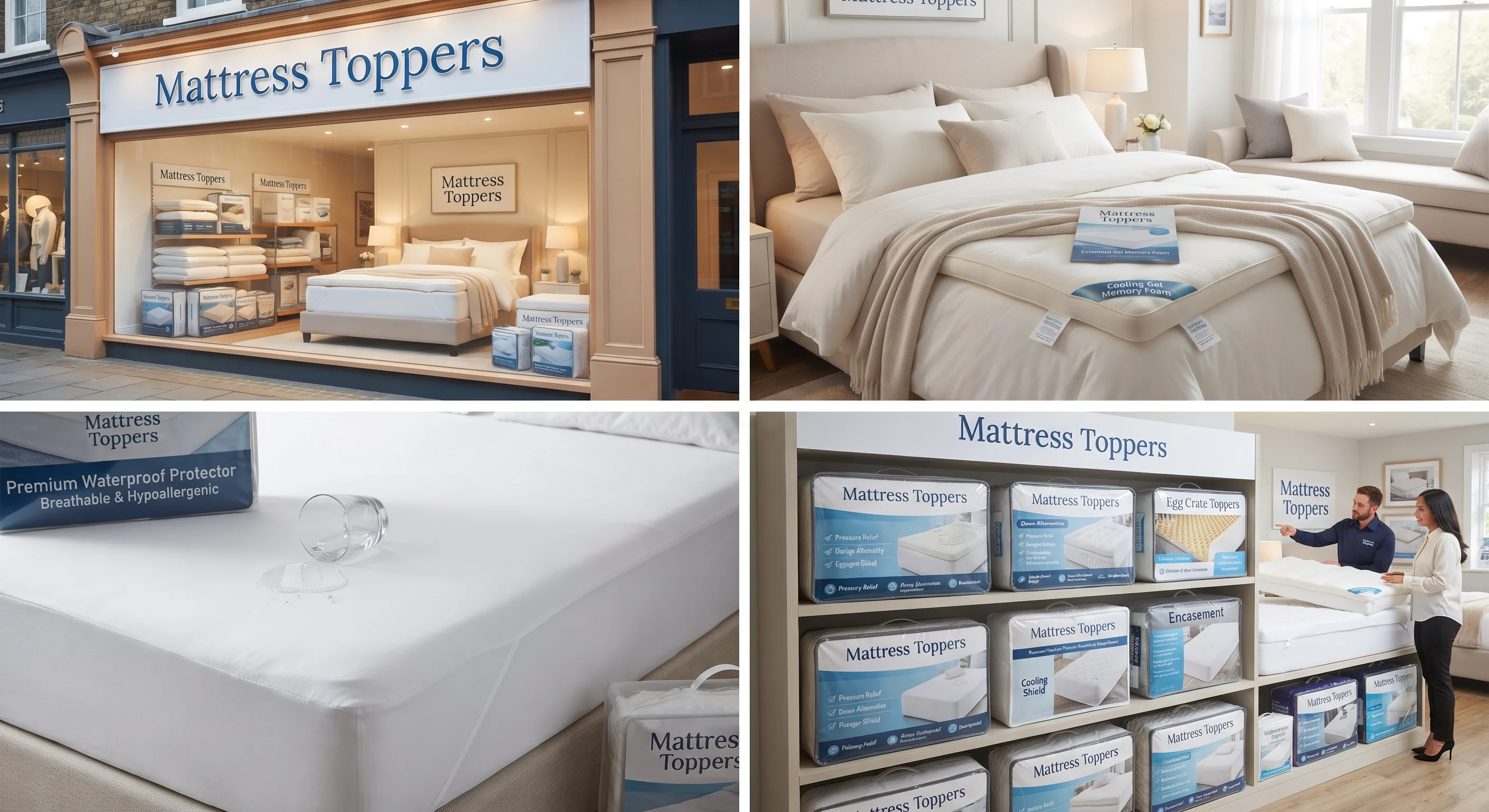
A mattress protector is primarily an operational hygiene and waterproofing shield. It is usually slender (often less than a centimeter thick) and engineered specifically not to alter the contouring dynamics of your underlying mattress. It acts as an impermeable barrier against spills, oils, and pests.
A mattress pad provides light to medium surface cushioning, typically featuring a quilted fiberfill layer around one to two centimeters thick. Its primary purpose is to add subtle surface plushness and light protection against superficial scuffs, though most standard pads lack reliable waterproof membranes.
A mattress topper is a substantial, heavy comfort slab—usually measuring anywhere from five to ten centimeters in thickness. Crafted from dense memory foam, natural latex, or thick feather-and-down channels, a topper is purchased specifically to alter the comfort profile of a bed that feels too firm, too rigid, or worn out.
For the ultimate bedding setup, proper layering order is critical: place your mattress on the frame, add your mattress topper directly over the mattress to adapt comfort, pull your mattress protector over both layers to seal them against spills and sweat, and finish with your fitted bed sheet on top.
Australian Mattress Protector Size and Fit Guide
One of the most frequent mistakes Australian shoppers make is purchasing overseas sizing online. Beds in the United States and the United Kingdom follow completely different dimensions than standard Australian bed sizes. Ensuring an exact match prevents unsightly bunched fabric, loose sliding, or popped corners in the middle of the night.
Standard Australian mattress sizes are:
- Single: 92 cm wide by 188 cm long
- Long Single: 92 cm wide by 203 cm long
- King Single: 107 cm wide by 203 cm long
- Double: 138 cm wide by 188 cm long
- Queen: 153 cm wide by 203 cm long
- King: 183 cm wide by 203 cm long
- Super King: 203 cm wide by 203 cm long
Beyond the width and length, pay careful attention to mattress depth (wall height). Modern pillow-top, multi-layer memory foam, and hybrid pocket-spring mattresses often measure between 30 cm and 45 cm deep. If you also use a secondary mattress topper, total height can easily exceed 45 cm. Always check that the protector's fitted skirt specifies an extra-deep drop (typically 40 cm to 50 cm) with heavy-duty all-around elastic so that it tucks securely under the mattress base without snapping back off.
Expert Care, Washing, and Maintenance Tips
A premium waterproof protector can easily last five to seven years if maintained properly. However, incorrect laundering is the number one cause of premature membrane delamination. Follow these professional care guidelines to maximize its lifespan:
Wash Before First Use
Laundering your mattress protector before slipping it onto your bed softens the surface fibers, removes any lingering factory starch, and enhances fabric absorbency.
Keep Water Temperatures Moderate
Always check your product care label. While cotton mattress covers can occasionally handle warm water to kill dust mites, the waterproof TPU backing should never be exposed to boiling or scorching water. Wash on a gentle, cool-to-warm cycle (ideally 30°C to 40°C) using a mild, bleach-free detergent.
Avoid Harsh Chemicals and Fabric Softeners
Bleach, solvent-based stain removers, and chlorine degrade the microporous polyurethane membrane, turning it brittle, cracked, and leaky. Furthermore, avoid liquid fabric softeners; softeners deposit an oily, water-repellent coating over natural bamboo and cotton fibers, severely crippling their natural moisture-wicking and cooling capabilities.
Line Dry in Shade Whenever Possible
Australia’s sunshine is a potent natural disinfectant, but intense midday summer heat directly over a clothesline can melt or warp synthetic waterproof films. Hang your protector with the fabric side facing outward and the waterproof membrane shaded, or dry it on a breezy outdoor line away from harsh midday glare.
Low Heat Only for Machine Drying
If you must use a tumble dryer during rainy spells, select a delicate, low-heat or air-fluff setting. Never dry a mattress protector on high heat, and never iron it. Intense direct heat will fuse the waterproof backing to itself, instantly destroying the protector.
Frequently Asked Questions
Do mattress protectors make a crinkly noise when moving?
Older mattress protectors backed with cheap PVC or stiff vinyl plastic were notorious for loud rustling sounds whenever a sleeper shifted. Modern premium protectors utilize whisper-quiet thermoplastic polyurethane (TPU) membranes bonded directly to pliable cotton, bamboo, or knit jerseys, making them completely silent beneath your sheets.
Will a waterproof mattress protector make me sleep hot?
Low-end non-breathable plastic sheets trap body heat and generate a swampy sleep environment. However, mattress protectors made with moisture-wicking top fibers like Tencel or bamboo paired with microporous TPU membranes facilitate air and vapor transmission while blocking bulk liquids, ensuring you remain comfortable even through warm Australian nights.
How often should I wash my mattress protector?
Under normal conditions, wash your mattress protector every four to six weeks. If you suffer from severe airborne allergies, share your bed with pets, or experience night sweats, increase washing frequency to every two to three weeks. In the event of an active spill or accident, strip and wash the protector immediately.
Can I put a mattress protector on an electric blanket?
Yes. When using an electric blanket during cold winter months, fit the electric blanket securely to the mattress base first, place your breathable mattress protector directly over the electric blanket, and top with your fitted bed sheet. This safeguards both the delicate electric elements and the mattress from liquid spills without impeding heat transfer.
A top-grade mattress protector represents one of the simplest, most cost-effective investments you can make for your sleep sanctuary. By shielding your mattress against moisture, keeping dust mites at bay, and safeguarding your manufacturer warranty, the right protector ensures your bed remains fresh, hygienic, and wonderfully supportive for years to come.