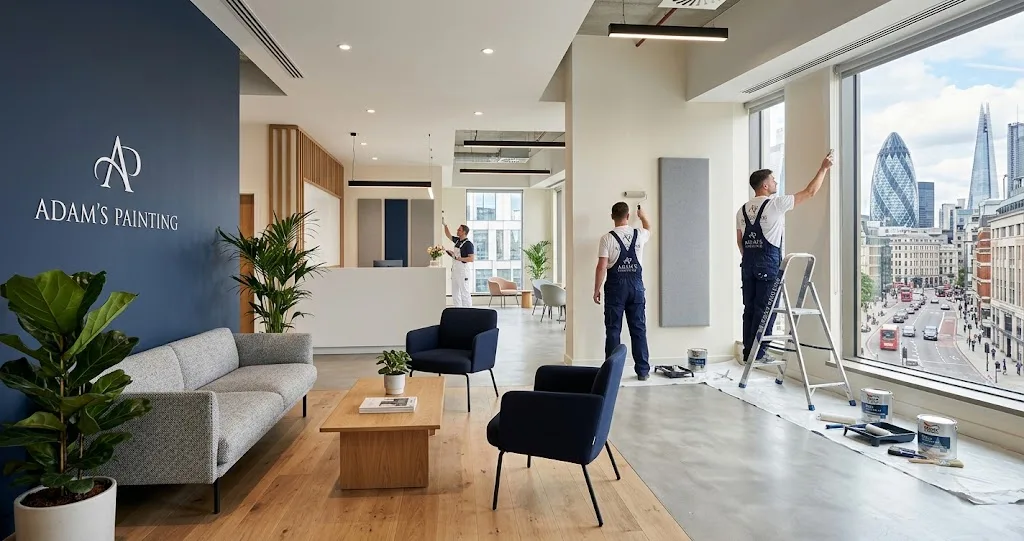
In the fast-moving business world, a company's physical premises are far more than mere bricks and mortar. Whether it is an expansive office floor in Canary Wharf, a boutique retail outlet in Mayfair, or a heritage property in Westminster, your workspace is a multi-sensory extension of your corporate brand. The visual condition of your building influences client perceptions, employee morale, and long-term property values.
Executing a high-end property refurbishment in a busy urban centre requires a deliberate approach that balances technical execution with absolute logistical efficiency. For facilities managers, managing directors, and landlords alike, selecting a qualified commercial decorator in London is the single most critical decision in ensuring a project is delivered successfully, on schedule, and in complete compliance with local building standards.
The Strategic Return on Investment of Professional Decorating
Far too often, commercial building maintenance is categorized purely as an operational expense. In reality, modern workplace design principles prove that high-quality surface transformations act as a major catalyst for corporate growth.
Influencing Client Perception and Trust
First impressions are forged the exact second a client or investor walks through your doors. Flaking woodwork, outdated colour schemes, or scuffed reception walls subtly communicate a lack of attention to detail. Conversely, pristine, architectural finishes project stability, professionalism, and success.
Boosting Workforce Productivity
The relationship between environment and cognitive performance is well-documented. Drab, uninspiring interiors can contribute to workplace lethargy, whereas well-planned color palettes, enhanced light reflection, and balanced aesthetics improve daily engagement. By implementing ergonomic design principles, a specialized commercial decorator in London can help cultivate a workspace that mitigates sensory fatigue and keeps employees focused.
Technical Nuances: The Commercial Difference
Commercial painting and decorating diverges significantly from residential work. The sheer volume of pedestrian traffic, severe wear-and-tear, and structural diversity of commercial assets require industrial-grade knowledge.
Substrate Preparation and Durable Formulations
Commercial surfaces face constant friction from furniture, luggage, and cleaning chemicals. Standard retail emulsion will fail rapidly under these conditions. Professional decorators rely heavily on cross-linking acrylics and heavy-duty polyurethanes that resist scuffing and tolerate rigorous washing. Furthermore, correct surface preparation—including mechanical dust-extraction sanding and specific primer applications—accounts for roughly 70% of a coating's ultimate lifespan.
Statutory Compliance and Health & Safety
Commercial environments are tightly regulated by UK safety bodies. Every professional project must operate under a strict framework, including:
- Site-Specific RAMS: Comprehensive Risk Assessments and Method Statements detailing clear operational protocols.
- COSHH Regulations: Precise management of Control of Substances Hazardous to Health, ensuring hazardous vapors or materials are safely contained.
- Working at Height Safeguards: Strict compliance with the use of mobile scaffolding towers, micro-powered access platforms, and heavy-duty steps to prevent fall hazards.
Navigating Complex Logistics and Minimizing Downtime
The most daunting aspect of corporate refurbishment is the risk of operational disruption. In a busy metropolitan landscape, shutting down an active corporate headquarters or a retail showroom for consecutive days means severe financial losses.
Managing this friction requires precise logistical staging. Top-tier providers overcome these issues using targeted operational strategies:
- Out-of-Hours Execution: Deploying highly synchronized night shifts and weekend crews so that spaces are prepped, painted, and cured outside normal operating hours.
- Phased Sectional Handovers: Dividing extensive office spaces into separate zones. This allows staff to be systematically relocated internally while work progresses seamlessly behind temporary, dust-proof partitions.
- Intelligent Low-Emission Logistics: Coordinating material deliveries to strictly comply with London’s Ultra Low Emission Zone (ULEZ) guidelines and local council parking restrictions, avoiding costly transport delays.
Contemporary Trends Impacting Commercial Interiors
The year 2026 has introduced highly defined trends within commercial environments, shifting away from generic minimalism and focusing intensely on well-being and practical sustainability. When consulting with an experienced commercial decorator in London, businesses are actively prioritizing spaces that meet the demands of hybrid work models.
Biophilic Elements and Earthy Palettes
The era of stark, cold greys and clinical whites has officially ended. Modern workspaces are rapidly adopting warm neutrals, clay tones, terracotta, and soft sage greens. These organic palettes reduce stress levels, simulate natural environments, and provide a visually welcoming aesthetic that helps encourage workers back into the physical office.
Advanced Ecological and Legal Compliance
Sustainability is no longer a corporate buzzword; it is tightly bound to UK regulations. Stricter legislation regarding indoor air quality and chemical emissions has pushed eco-friendly paints to the forefront.
Critical Safety Note: The transition toward high-durability, ultra-low formaldehyde systems and zero-VOC (Volatile Organic Compound) paints is crucial. These high-performance coatings cure rapidly without releasing toxic chemical odours, meaning a commercial environment can be safely reoccupied by workers immediately the next morning without health risks.
Vetting a Professional Commercial Decorator
Given the significant legal and financial responsibilities tied to commercial property management, selecting a contractor based solely on the lowest quote is a high-risk strategy. Businesses must carefully look for clear markers of professional competence.
Essential Accreditations
Ensure your chosen decorating partner holds prominent, up-to-date industry credentials. Look for absolute verification of CHAS (Contractors Health and Safety Assessment Scheme), SafeContractor approval, or explicit accreditation from the Painting and Decorating Association (PDA). These badges confirm that the contractor is audited regularly and maintains stringent safety practices on every commercial site.
Comprehensive Commercial Insurance
A residential public liability policy is completely inadequate for complex commercial work. A dedicated contractor must hold extensive Public and Employer's Liability Insurance (typically capped at a minimum of £5 million to £10 million for city center structures) to completely protect your assets, staff, and members of the public from unexpected site complications.
Seamless Project Execution
To help visualize how these distinct technical, aesthetic, and logistical factors integrate into a live corporate environment, review this structured phase-by-phase framework employed during a professional refurbishment project:
Phase 1: Pre-Contract Assessment and Asset Auditing
Before a single drop of paint arrives on-site, a detailed survey of the building's structural state must be conducted. This includes testing older properties for historical lead-paint foundations or hidden asbestos hazards, alongside analyzing surface dampness levels to prevent future coating adhesion failure.
Phase 2: High-Performance Surface Conditioning
Once assets are protected with heavy-duty flame-retardant sheeting, preparation begins. Teams utilize advanced, industrial M-class dust-extraction units linked directly to orbital wall sanders. This contains over 99% of airborne particles, ensuring sensitive computer networks, server rooms, and air conditioning systems remain completely free of fine stone and plaster dust.
Phase 3: Precision Coating Application
Depending on the specific architectural layout, modern airless spraying technologies are utilized alongside traditional brush and roller techniques to deliver an absolutely uniform, stroke-free finish over expansive drywall surfaces. Airless spraying ensures incredibly rapid application times, which is essential for hitting compressed weekend handover deadlines.
Conclusion
Transforming an active business venue requires an intricate balance of logistical foresight, deep technical understanding of specialized coatings, and strict compliance with national health and safety laws. Property managers can insulate their investments from operational delays and substandard finishes by carefully selecting an accredited, fully insured partner who deeply understands the rapid pace of the capital.
When you require an uncompromised blend of aesthetic luxury, absolute regulatory safety, and structural durability, choosing the right commercial decorator in London is the definitive step to safeguarding your corporate property. By trusting your environment to a dedicated team like Adam's Painting, you ensure your workspace reflects the exceptional standards of your business. For your next major project, connect with Adam's Painting to arrange a comprehensive on-site technical consultation and obtain a clear, fixed-price quote tailored to your business goals.
Frequently Asked Questions
1. How do you prevent paint odors from disrupting employees in an office?
To completely prevent chemical odors, high-quality projects strictly utilize advanced water-based, zero-VOC (Volatile Organic Compound) coatings. These specialized commercial paints dry and cure rapidly without off-gassing the harsh solvent fumes associated with traditional oil-based paints, allowing staff to safely occupy the workspace the following morning.
2. Can commercial decorating projects be carried out entirely out-of-hours?
Yes. Professional commercial decorators routinely structure their operations around out-of-hours execution, including overnight shifts, bank holidays, and weekend windows. This ensures all disruptive prep work and major applications are completed while your business is closed, resulting in zero operational downtime.
3. What is the average lifespan of a professional commercial paint finish?
In typical high-traffic office corridors, reception areas, and retail venues, a premium commercial finish will last between 3 to 5 years before requiring a maintenance refresh. Using specialized scuff-resistant coatings can extend this timeline, whereas lower-grade residential paints will often show significant wear within 12 to 18 months.
4. What legal safety documents must a decorator provide before starting work?
Every reputable commercial contractor must legally provide a site-specific Risk Assessment and Method Statement (RAMS), up-to-date COSHH sheets for all chemical compounds brought on-site, and verified proof of comprehensive commercial public liability insurance cover.