
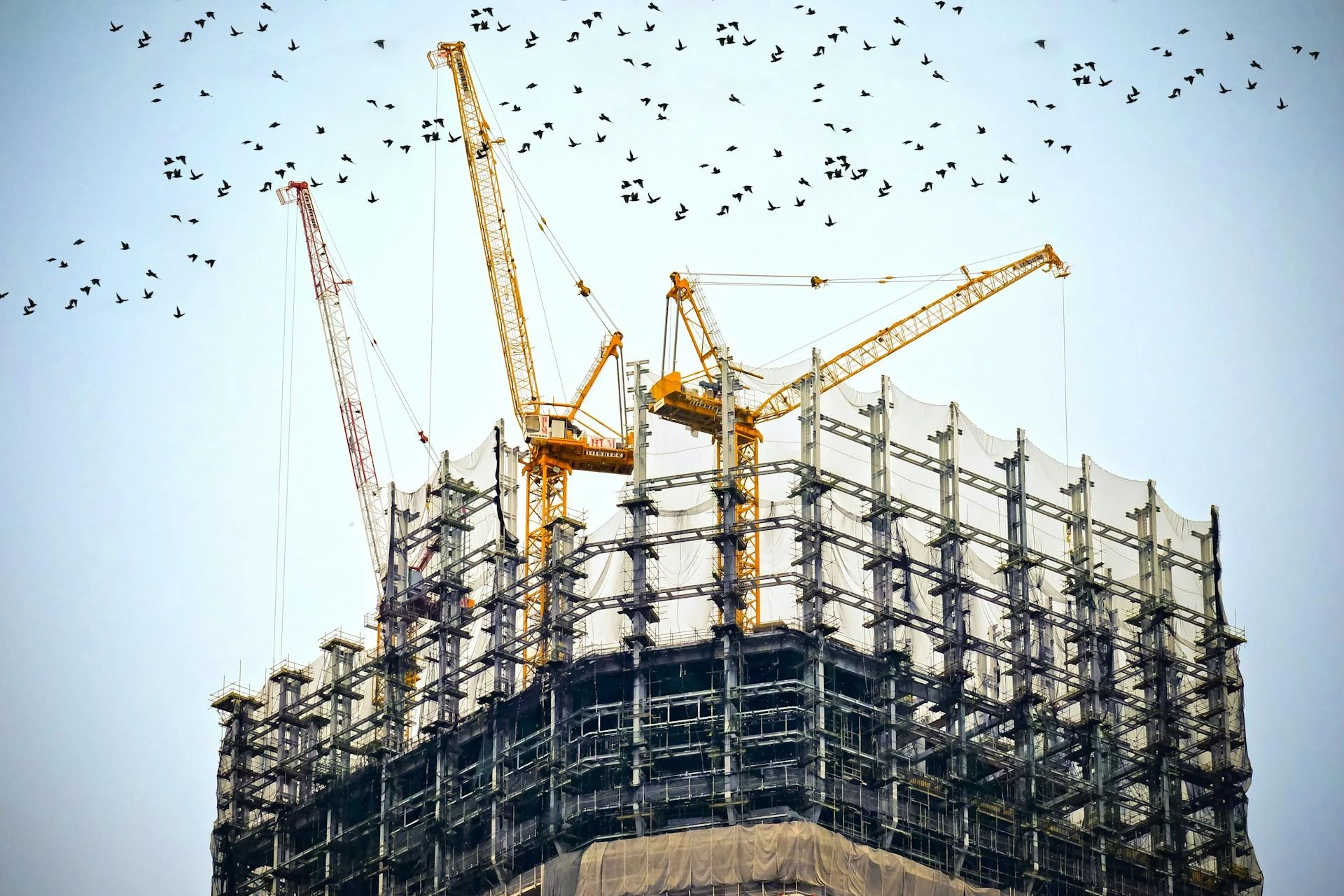
Today, construction is not merely about erecting a structure. Modern construction is a blend of innovation, technology, and sustainability that is changing the way we live, work, and interact with our environment. Although most people perceive construction as a matter of construction cranes, cement, and blueprints, innumerable hidden wonders remain unseen. In this write-up, we discuss the amazing side of modern construction, which is made possible by the interventions of construction companies.
1. Smart Buildings: The Future at Your Fingertips
Among the most encouraging developments within the construction sector is the emergence of smart buildings. Such buildings are characterized by the incorporation of modern technologies such as Internet of Things (IoT) sensors, automated lighting, cooling, and security systems. The integration of different systems within a structure enables it to enhance energy efficiency, reduce costs, and improve user comfort.
The top construction firms are now investing in designing not only taller but also smarter buildings. For example, sensors can control room lighting based on the number of people in the room, while HVAC systems can optimize energy use by learning occupants' behavior. Not only are such innovations cost-effective, but they also make cities healthier.
2. Green Construction: Building a Sustainable Future
Sustainability is no longer a buzzword but a need. Today, construction companies are adopting environmentally friendly green practices. Green construction is changing the face of the construction industry with practices such as the use of recycled materials.
The construction industry is changing, with innovations such as solar roofs, rainwater collection systems, green roofs, and energy insulation significantly reducing the industry's environmental impact. Not only are these solutions environmentally sound, but they are also cost-effective, and most construction businesses are taking advantage of them to make a difference.
3. Architecture Wonders That Go Against the Laws of
Certain modern Structures look almost impossible, but they exist as a tribute to human ingenuity. The types of bridges that cross over huge rivers, skyscrapers that reach for the clouds, or athletic stadiums that have complicated roofs that can be pushed back are all the product of clever design.
Modern construction firms now use state-of-the-art technologies such as Building Information Modeling (BIM) and 3D Printing to make such designs a reality. BIM is used to produce precise computer models of a structure to identify problems beforehand and optimize the construction process. On the other hand, 3D Printing is making it possible to produce complex parts that were unmanufacturable.
4. The innovations in Safety: Employee and Community Protection.
Despite the fact that the construction industry has always been a risky area, recent innovations have greatly improved safety. On construction sites, wearable technology, drone technology, and automated equipment are standard occurrences.
Wearable devices can also monitor a worker's vital signs and detect exhaustion, and drone vehicles can help monitor the area without considering human lives unworthy. Robotic construction, such as robotic bricklayers, also increases efficiency by reducing human error. Construction companies are embracing these technologies ahead of others, as they not only secure their human assets but also complete their projects on time and within financial limits.
5. The Magic of Prefabrication and Modular Construction.
Prefabrication and modular construction are transforming how construction is conducted, making it faster and more efficient. Prefabrication is a construction method that involves the preparation of structural elements in a factory setting, where they are delivered to the construction site.
The numerous merits of this include reduced wastage, reduced site disturbance, and faster project completion. Most construction companies are now, in reality, focusing on residential, office blocks, and even hospitals' modular construction. This is attributed to the fact that factory-made components are much more accurate, hence the high quality compared with site construction.
6. Urban Planning & Smart Cities
Construction is not just the building of a structure but the building of a community. The contemporary construction industry has been left to develop smart cities.
These projects are designed to improve the quality of life for people in transportation systems and green spaces, among other things. Cities are also using data solutions to address problems such as traffic congestion, pollution, and energy consumption. These contractors are literally building cities of the future in short order.
7. Indepreciable Structures: Generation of Inspiration.
Some modern developments have become landmarks that identify a city. As an example, we could take Burj Khalifa in Dubai, Shanghai Tower, or Sydney Opera House. Infrastructure is not just infrastructure; it is the pinnacle of innovation, aspiration, and the aesthetic.
Behind all iconic buildings, construction companies engage in dynamic engineering work, operate under strict regulatory control, and coordinate large teams. It is what motivates the generations of architects, engineers, and constructors to go higher and higher.
8. Efficiency that is technologically mediated: The part of AI and Robotics.
AI and robotics are no longer the objects of fantasy; they are already influencing the construction industry. AI helps project managers anticipate possible delays, allocate resources, and make decisions. Some of the activities robots can perform include laying bricks or pouring concrete.
The combination of AI and robotics can help the construction industry reduce costs and errors, as well as minimize the time spent on project completion. The technologies can also provide a high level of innovation by using computer simulations to create the design process prior to engaging in real-life construction.
9. Other Planets: Building Up To The Final Frontier.
The majority of constructions are made on Earth, and nowadays it is possible to construct in space as well. NASA and other commercial organizations are looking forward to constructing habitats on the Moon and Mars. There is a possibility of using 3D printing to construct habitats on other planets by utilizing readily available resources.
The current advances in the construction sector, and especially in modular construction and automation, may help man outgrow planet Earth in the future. This is the prospect released when innovation and construction expertise meet.
Conclusion
The construction industry is a wonderful field that integrates technology, sustainability, and innovativeness. Turning from a smart building to an epic skyscraper, green architecture to alien world sky-cities, there are so many unexplained miracles that no common observer makes out.
The rebuilding industry is the first sector to undergo this change, in which innovation is defining the world. This industry is not just erecting infrastructure; it is erecting the future.
Being a homeowner, an urban planner, or merely an obsessive, knowing such secrets of the world of modern development may lead a person to a new understanding of modern buildings.