
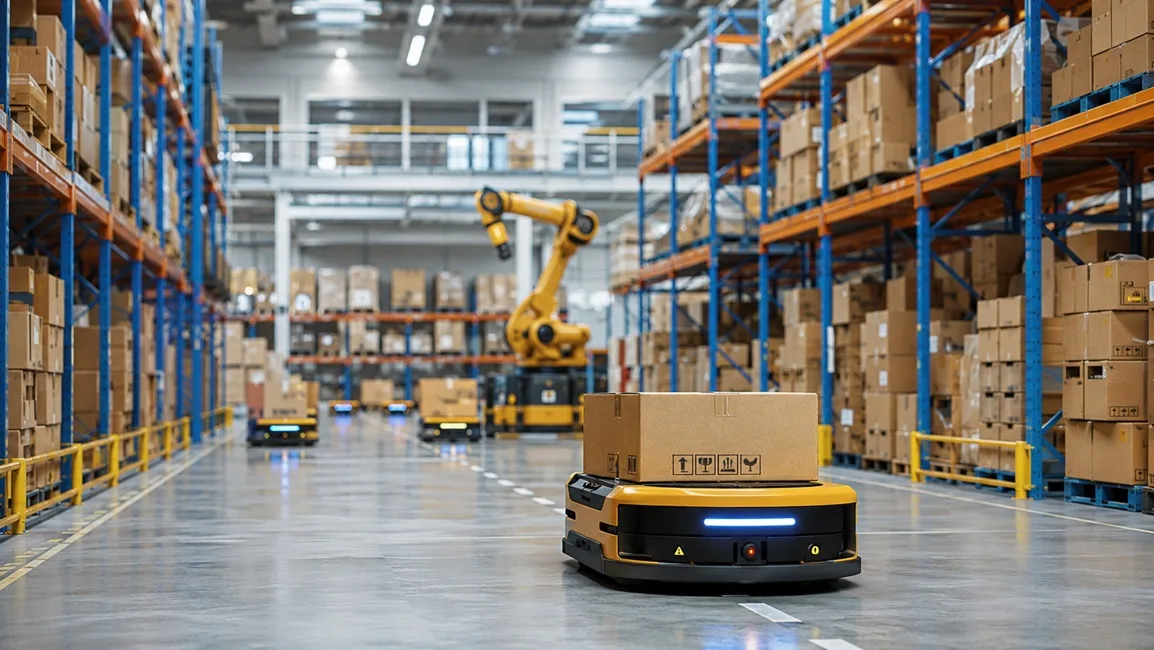
Warehouse operations have become a critical part of modern supply chains. Rising customer expectations, labor shortages, and growing order volumes have pushed businesses to adopt smarter technologies. AI trends in supply chain distribution are accelerating this shift by helping warehouses improve speed, accuracy, and operational efficiency. Modern warehouse automation software combines artificial intelligence, robotics, real-time analytics, and cloud technology to streamline daily operations while reducing manual effort. As industries continue to evolve, automated warehouse systems are becoming an essential investment for companies that want to remain competitive.
Why Warehouse Automation Is Becoming Essential
Warehouses have changed significantly over the past decade. Traditional facilities relied heavily on manual labor for inventory management, picking, packing, and shipping. While manual processes still exist, they often struggle to keep pace with increasing consumer demand and complex supply chains.
Warehouse automation software provides a centralized platform that manages inventory movement, employee workflows, equipment utilization, and shipping coordination. Instead of depending entirely on human decision-making, software analyzes data in real time and recommends the most efficient actions.
This results in:
- Faster order fulfillment
- Improved inventory visibility
- Fewer picking mistakes
- Better labor productivity
- Lower operational costs
Businesses of every size are now exploring automation because customers expect shorter delivery times and greater order accuracy.
Technologies Driving Modern Warehouse Automation
Warehouse automation software is no longer limited to barcode scanning and inventory tracking. Modern platforms integrate several advanced technologies that work together.
Artificial Intelligence
Artificial intelligence analyzes historical and real-time operational data to improve warehouse performance. It predicts inventory demand, identifies bottlenecks, optimizes picking routes, and recommends staffing levels based on workload.
Instead of reacting to problems after they occur, warehouse managers can address issues before they affect operations.
Robotics
Robotic systems continue to expand across warehouses worldwide. Automated mobile robots transport inventory between storage locations and packing stations, reducing unnecessary employee movement.
Collaborative robots also assist workers by handling repetitive lifting, sorting, and transportation tasks while employees focus on higher-value responsibilities.
Internet of Things (IoT)
Connected sensors provide continuous information about equipment, inventory, storage conditions, and facility performance.
Warehouse automation software collects this information and converts it into actionable insights that improve decision-making throughout daily operations.
Cloud Computing
Cloud-based warehouse management systems allow organizations to monitor multiple facilities from one platform.
Managers can access dashboards, inventory reports, and operational metrics from virtually any location, improving visibility across the entire warehouse network.
Warehouse Automation Is Expanding Worldwide
Industry research shows continued growth in warehouse automation investments.
According to Fortune Business Insights, the global warehouse automation market continues to expand as retailers, manufacturers, healthcare organizations, and logistics companies increase spending on automated technologies.
Grand View Research also projects strong long-term market growth, driven by rising e-commerce activity and increasing demand for faster fulfillment.
Several factors are supporting this expansion:
- Continued growth of online shopping
- Rising labor costs
- Increasing warehouse complexity
- Higher customer expectations
- Greater focus on operational resilience
These trends indicate that automation is becoming a long-term business strategy rather than a temporary technology upgrade.
Benefits Beyond Faster Operations
Many organizations initially invest in automation to increase warehouse speed. However, the long-term advantages extend much further.
Improved Inventory Accuracy
Inventory inaccuracies often create expensive problems including stock shortages, overstocking, delayed shipments, and lost sales.
Automation software continuously updates inventory records as products move throughout the warehouse. Real-time tracking significantly reduces discrepancies between physical inventory and system records.
Better Workforce Productivity
Warehouse employees spend considerable time walking between storage locations, searching for inventory, or performing repetitive tasks.
Automation software optimizes workflows by assigning work intelligently and reducing unnecessary movement.
Employees complete more orders with less physical strain while maintaining higher accuracy.
Lower Operating Costs
Although automation requires an initial investment, long-term savings can be substantial.
Companies often reduce expenses associated with:
- Manual inventory counts
- Order corrections
- Product returns
- Overtime labor
- Equipment downtime
Improved efficiency also increases warehouse capacity without requiring immediate facility expansion.
Predictive Analytics Is Changing Warehouse Management
Modern warehouse software increasingly relies on predictive analytics instead of historical reporting alone.
Rather than simply showing what happened yesterday, predictive systems estimate future inventory requirements, staffing needs, equipment maintenance schedules, and shipping demand.
For example, software can detect seasonal demand patterns months in advance, allowing businesses to prepare inventory before customer demand increases.
Predictive maintenance also reduces equipment failures by identifying early warning signs before breakdowns occur.
This proactive approach minimizes costly disruptions and keeps warehouse operations running smoothly.
Automation Supports Employee Safety
Warehouse safety remains a top priority across industries.
Heavy lifting, repetitive movement, and vehicle traffic create daily workplace risks.
Automation software contributes to safer operations by coordinating equipment movement, reducing manual handling, and monitoring high-risk areas through connected sensors.
Collaborative robots are specifically designed to work safely alongside employees while performing repetitive physical tasks.
Many organizations report fewer workplace injuries after introducing automated material handling systems.
Sustainability Is Becoming Part of Automation Strategy
Environmental responsibility has become an important consideration for warehouse operations.
Automation software helps organizations reduce waste through more efficient inventory management and optimized transportation planning.
Energy-efficient robotic systems consume less power than older industrial equipment, while intelligent routing minimizes unnecessary vehicle movement inside facilities.
Better inventory forecasting also reduces excess storage and product waste.
Many businesses now evaluate warehouse technology based not only on productivity improvements but also on environmental impact.
Integration Across the Supply Chain
Warehouse automation no longer operates as a standalone system.
Modern platforms connect directly with:
- Enterprise Resource Planning (ERP) systems
- Transportation Management Systems (TMS)
- Manufacturing software
- Customer relationship platforms
- E-commerce systems
This integration creates a continuous flow of information from suppliers to customers.
When inventory changes inside the warehouse, connected business systems automatically update purchasing, shipping, sales, and customer service information.
This level of connectivity improves decision-making across the organization.
Challenges Businesses Must Consider
Automation offers significant advantages, but successful implementation requires careful planning.
Organizations often face challenges including software integration, employee training, infrastructure upgrades, and data quality improvements.
Legacy systems may require modernization before advanced automation platforms can operate effectively.
Employees also need training to work alongside automated technologies instead of viewing them as replacements.
Companies that invest in change management alongside technology typically achieve stronger long-term results.
What the Future Looks Like
Warehouse automation software continues to evolve rapidly.
Future platforms will become more autonomous, requiring less manual supervision while making increasingly complex operational decisions.
Artificial intelligence will improve demand forecasting, labor planning, inventory optimization, and equipment coordination with even greater accuracy.
Digital twins are also gaining attention. These virtual warehouse models allow organizations to simulate operational changes before implementing them in physical facilities.
Autonomous mobile robots will become more intelligent, adapting dynamically to changing warehouse layouts and workloads.
Computer vision systems will improve quality inspections by identifying damaged products and packaging defects with greater precision.
Real-time analytics will continue expanding, giving warehouse managers immediate visibility into every aspect of facility performance.
As cloud computing, robotics, artificial intelligence, and connected devices continue advancing together, warehouse automation software will become increasingly accessible for both large enterprises and mid-sized businesses.
Conclusion
Warehouse automation software has moved beyond simple inventory management and barcode scanning. It has become the foundation of smarter, faster, and more resilient warehouse operations. Businesses are using advanced software to improve productivity, reduce operating costs, increase inventory accuracy, strengthen workplace safety, and prepare for future growth.
As technology continues to mature, warehouses will become more intelligent, connected, and data-driven. Organizations that embrace modern automation today will be better positioned to meet changing customer expectations, manage supply chain complexity, and remain competitive in an increasingly digital economy.