Most homeowners notice something is wrong before they know what to call it. The door feels heavier on one side. It moves unevenly. Or they spot something hanging loose near the bottom corner of the door that was not there yesterday. That something is usually the cable. And what it looks like tells a technician everything about what the repair involves.
Here is how to tell the difference, and why it matters.
What Does A Garage Door Cable Actually Do?
The garage door cable is part of the counterbalance system. It connects the bottom corner of the door to a drum at the top, which winds and unwinds the cable as the door moves. The cable works in tandem with the spring to carry the door's weight evenly on both sides.
Without the cable, the spring has nothing to transfer its tension through. The door becomes unbalanced, heavy, and in some cases completely inoperable. Everything else in the system depends on the cable doing its job correctly.
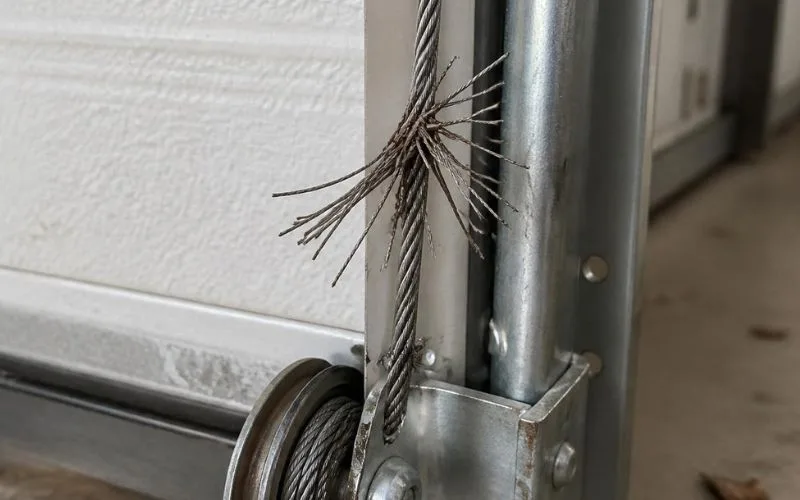
What Does A Frayed Garage Door Cable Look Like?
A frayed cable is failing gradually. It has not gone yet, but it is getting there with every open and close cycle.
Signs of a frayed cable:
- Wire strands sticking out or separating from the main cable
- Rust or corrosion along sections of the cable
- Visible thinning in one area compared to the rest
- Kinking or twisting near the drum
Common causes are age, humidity-driven corrosion, drum misalignment, and overloading from failing springs.
Is A Frayed Cable Still Safe To Use?
No. Each cycle puts more stress on fewer intact strands. The door may still open and close, but the cable can snap without warning. Stop using the door and book a repair as soon as fraying is visible.
What Does A Snapped Garage Door Cable Look Like?
A snapped cable is an immediate, complete failure. The signs are hard to miss:
- One side of the door drops lower than the other
- Cable is coiled on the floor or hanging loose from the drum
- Door will not open or opens only partially
- Door feels extremely heavy on the affected side
Snapping is sudden. The door goes from working to not working in a single cycle. When one cable snaps, the full weight shifts to the opposite cable, the track, and the spring. Secondary damage follows quickly if the door continues to be operated.
Why Does The Type Of Cable Damage Change The Repair?
Frayed cable:
- Cable replaced before full failure
- Low risk of secondary damage to drum, spring, or track
- Straightforward and lower cost
Snapped cable:
- Full replacement plus inspection of drum, spring, and track
- Secondary damage assessment required before new cable is fitted
- Wider repair scope and higher cost if other components are affected
Acting on a frayed cable is always cheaper than dealing with a snapped one.
Can You Repair A Garage Door Cable Yourself?
No. Cable replacement involves working near springs under extreme tension. Releasing or adjusting them without the correct tools and training causes serious injury. This is one job where professional help is the only safe option.
How Quickly Does A Frayed Cable Become A Snapped One?
There is no fixed timeline. A lightly frayed cable may last several weeks. A heavily frayed cable on a frequently used door can snap within days.
Brisbane's heat and humidity accelerate corrosion on steel cables faster than most homeowners expect. In established suburbs like Ascot, older homes with ageing garage systems are particularly vulnerable. Garage door repairs in Ascot are regularly called out for exactly this scenario. A frayed cable that looked manageable one week and snapped the next.
Treat a frayed cable as urgent. Do not wait for it to snap.
In areas like Hawthorne, where many homes still run original garage door systems, cable corrosion builds quietly for years. Garage door repairs in Hawthorne frequently uncover this during routine inspections before it becomes a breakdown.
Final Thoughts: Quick Cable Inspection Checklist
Check these from a safe distance before calling a technician:
- Look along both cables for fraying, rust, or thinning
- Check both sides of the door sit at the same height
- Watch for uneven movement or pulling to one side
- Check the drum area for loose or coiled cable
- Listen for unusual sounds during operation
A frayed cable caught early is a simple repair. A snapped cable with secondary damage is a much bigger job. The type of damage determines the repair, and catching it early is always the better outcome.