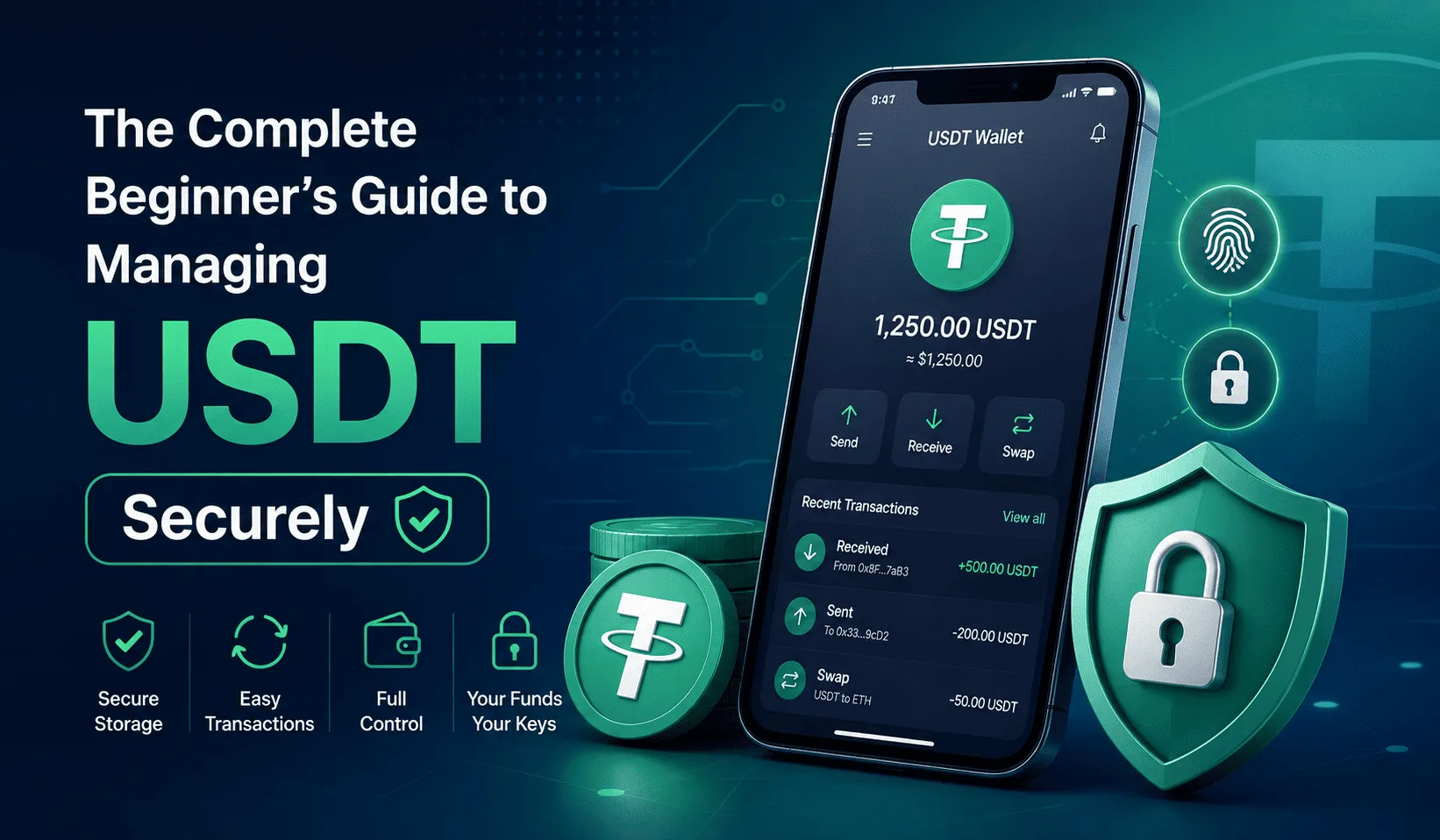
USDT is one of the most widely used cryptocurrencies in the world, yet many beginners hold it without fully understanding how to keep it safe. Because it is designed to track the US dollar, it often feels less risky than other crypto, but that sense of familiarity can lead to careless habits. This guide walks through what USDT actually is, the main risks to watch for, and simple habits that will help you manage it securely from day one.
What Is USDT and Why Do People Use It?
USDT, also known as Tether, is a stablecoin. Unlike Bitcoin or Ethereum, its value is designed to stay close to one US dollar, which makes it far less volatile than most other cryptocurrencies. Many people use USDT to move value between exchanges, avoid sudden price swings, or simply hold savings in a digital form without leaving the crypto world entirely. Because it behaves more like ordinary money than a speculative asset, it has become a common starting point for beginners.
The Networks USDT Runs On
One thing that catches beginners out is that USDT is not tied to a single blockchain. It exists on several networks, including Ethereum, Tron, and Solana, each with its own version of USDT. These versions are not automatically interchangeable, so sending USDT from one network to a wallet expecting another can result in lost funds. Always check which network your wallet or exchange supports before sending anything, and double check that the sender and receiver are using the same one.
Hot Wallets Versus Cold Wallets
Wallets generally fall into two categories. A hot wallet is connected to the internet, such as an app on your phone or a browser extension, which makes it convenient for everyday transactions. A cold wallet, often a physical device, stays offline and is far harder for anyone to access remotely. For beginners, keeping a small, spendable amount in a hot wallet and moving larger holdings into a cold wallet is a sensible balance between convenience and safety.
Common Risks When Managing USDT
Security issues with USDT rarely come from the coin itself. They usually come from how it is stored and moved.
Phishing remains one of the biggest threats. Fake websites and apps are designed to look like genuine wallets or exchanges, tricking people into entering their private details. Always type website addresses directly rather than clicking links from messages or emails you were not expecting.
Sending to the wrong network is another common mistake, as mentioned above. It is also worth remembering that moving USDT usually requires a small amount of that network's native token to cover gas fees, so a transaction can fail simply because your wallet does not hold enough of the right token to pay for it.
Finally, weak passwords and reused login details leave accounts vulnerable. A password used across multiple platforms is only as strong as the weakest one it appears on.
Best Practices to Keep Your USDT Safe
A few consistent habits go a long way towards protecting your USDT.
- Use a reputable wallet, and consider keeping the bulk of your holdings in a wallet you control rather than leaving everything on an exchange
- Turn on two factor authentication wherever it is offered, adding an extra layer of protection beyond your password
- Double check wallet addresses and network types before confirming any transaction
- Keep your recovery phrase written down somewhere safe and offline, never stored as a photo or a note on your phone
- Avoid public wifi when accessing your wallet or exchange account, since it can expose your connection to unwanted attention
- None of these steps are complicated, but together they significantly reduce the chances of losing funds through avoidable mistakes.
Final Thoughts
Managing USDT securely is less about technical skill and more about consistent habits. Understanding the network you are using, staying alert to phishing attempts, and keeping your login details unique all make a real difference over time.
If some of the terms in this guide felt unfamiliar, our article on 15 Common Cryptocurrency Terms Every Beginner Should Know is a useful next step, covering the basics that make the rest of the crypto world easier to understand. Building this knowledge gradually will leave you far better placed to manage USDT, and any other crypto, with confidence.