
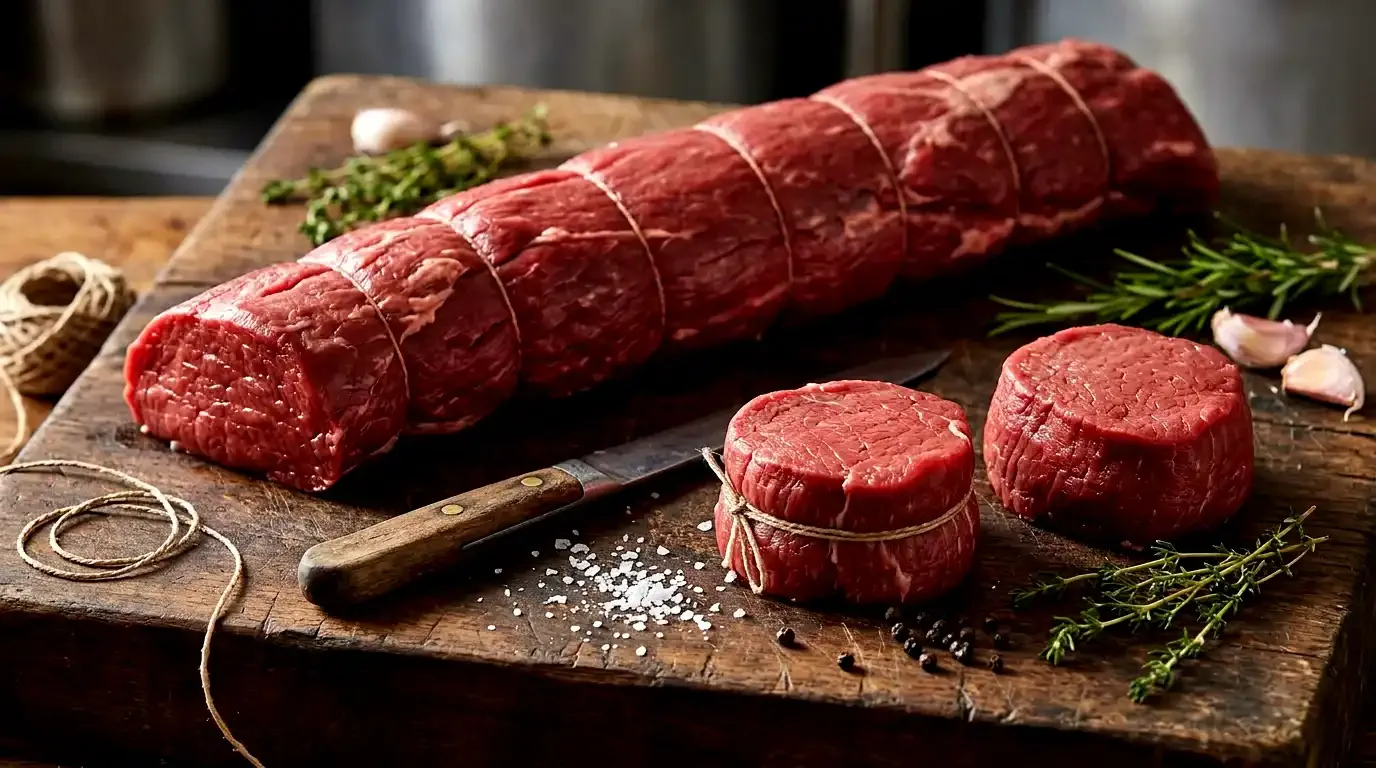
Order a filet mignon in one restaurant and the menu calls it a fillet. Ask a butcher for tenderloin steak and you may be handed the very same cut. The names are swapped so often that even keen home cooks are unsure what they are paying for. The short answer is that filet mignon is one part of the beef tenderloin, and the real differences lie in size, price and how you cook each one.
Is Tenderloin Steak the Same as Filet Mignon?
Not quite. Beef tenderloin is the whole muscle, while filet mignon is a steak cut from its narrower end. Every filet mignon is tenderloin, but not every piece of tenderloin is filet mignon.
In everyday use the terms overlap, because many shops and restaurants label any steak cut from the tenderloin as filet mignon. For the traditional version, look for a thick, neat, round steak from the tapered end, and ask where it was cut.
Beef tenderloinFilet mignonWhat it isWhole muscleSteak from the narrow endTypical size45 to 60 cm long5 to 7.5 cm acrossBest forRoasting, sharingIndividual portionsPrice per kiloUsually lowerUsually higherWhat Is Beef Tenderloin?
Where It Comes From
The tenderloin sits inside the loin, tucked beneath the backbone between the rib and the round. Picture a long, tapered cone, thick at one end and narrowing towards the front of the animal. A whole one runs roughly 45 to 60 cm, which makes it a natural centrepiece joint for a crowd.
Why It Is So Tender
This muscle does very little work, so it develops hardly any connective tissue and cuts almost like butter. The trade-off is flavour. With so little fat running through it, tenderloin tastes milder than a ribeye or rump, and it dries out quickly if you push it past medium.
Other Names for Tenderloin
In the UK it is usually sold as fillet or fillet steak. Australians and New Zealanders say eye fillet, and in the United States you will see tenderloin or simply filet. The centre portion is also known as chateaubriand.
Sections of the Tenderloin
Butchers usually divide the muscle into three. The thick butt end suits roasting or large steaks. The even centre cut gives chateaubriand, a thick piece for two. The tapering tail is the traditional home of filet mignon, while the very tip is often diced for dishes such as steak Diane.
What Is Filet Mignon?
What the Name Means
Filet mignon is French for a dainty or small fillet, and the name suits it. It is a petite, boneless steak with a fine, silky texture.
Size and Origin
Strictly, it comes from the narrow tail of the tenderloin. A typical steak is about 5 to 7.5 cm across, 4 to 5 cm thick and 170 to 225 g, a compact round shape that cooks evenly and suits a single portion.
Why Not Every Tenderloin Steak Is True Filet Mignon
Each tenderloin yields only a handful of genuine filets, so the cut is scarce. Because demand is high, the label is often stretched to cover steaks from the thicker centre. Those are still tender and delicious, just larger or differently shaped, so check that the price reflects what you are getting.
Tenderloin Steak vs Filet Mignon: Key Differences
Size and Portions
A whole tenderloin is a long muscle you can roast whole, carve or portion into steaks. Filet mignon is a single small round steak. A trimmed 1 kg tenderloin will usually serve around six, whereas filets are bought and cooked one per plate.
Tenderness and Texture
Both are exceptionally tender, and many cooks rate the tail end as the softest part. In practice, a well-cooked centre cut steak and a filet mignon are very close, so technique matters more than the name on the label.
Flavour
Neither cut has much marbling, so the flavour is gentle and clean with a buttery softness. A proper crust does much of the work, and sauces such as béarnaise or peppercorn give them extra character.
Price and Availability
Filet mignon usually costs more per kilo than whole tenderloin, because only a small part of the muscle qualifies and the butcher has done the trimming. Buying the whole piece is cheaper per kilo, though you will lose some weight to trimming. If you are unsure whether you like the texture, trying one at a Steakhouse in Singapore is a low-risk way to find out before you invest in a whole tenderloin.
How to Cook Filet Mignon
Pan-Seared and Butter-Basted
Take the steaks out of the fridge 30 to 45 minutes before cooking and pat them very dry. Season with salt just before they go in. Heat a heavy pan, ideally cast iron, until properly hot, add a thin film of high smoke point oil and sear for two to three minutes per side until deeply browned, edges included. Lower the heat, add a knob of butter, a crushed garlic clove and a sprig of thyme, and spoon the foaming butter over the steak for a minute or two. Steaks thicker than about 4 cm can finish in a 200C oven for three to six minutes. Rest for five minutes.
Reverse Sear
Cook the steaks on a rack at around 120C until they are about 10C below your target, which usually takes 25 to 35 minutes depending on thickness. Then sear them in a very hot pan for 60 to 90 seconds per side. You get an even pink centre and a thin, well-browned crust.
Doneness Guide
Take the steaks off the heat 3 to 5C below the final temperature, as they keep rising while they rest.
DonenessFinal temperatureRare50 to 52CMedium rare54 to 57CMedium60 to 63CMedium well65 to 68CFood safety agencies such as the USDA advise 63C with a three-minute rest for whole cuts of beef, so cook accordingly for pregnant guests, older people or young children.
Common Mistakes
The usual culprits are overcooking, cooking straight from the fridge, crowding the pan and skipping the rest. Filet has little fat to forgive errors, and it is unforgiving on a fierce grill. A probe thermometer fixes most of these problems.
How to Cook a Whole Beef Tenderloin
Roasting Basics
Trim off the silverskin, the shiny, tough membrane, with a thin, sharp knife. Tuck the thin tail under and tie the joint with butcher’s twine every 3 to 4 cm so it keeps an even thickness. Season, sear on all sides, then roast at 200 to 220C. Timing depends on thickness, so use a probe and take it out at 50 to 52C for medium rare. Rest for 10 to 15 minutes and slice about 1 cm thick.
Best Dishes
Beef Wellington is the classic showpiece. A chateaubriand carved at the table with béarnaise suits two to four, and tail ends make quick medallions for a pepper sauce.
Which One Should You Buy?
For a Dinner for Two
Choose filet mignon, or a chateaubriand if you enjoy carving at the table.
For a Crowd
Buy a whole tenderloin and allow 150 to 200 g per person.
Budget Tip
Buy it untrimmed and trim it yourself, then portion your own filets and freeze the extras. Trimming can cost a noticeable share of the weight, so factor that into the price comparison.
What to Ask Your Butcher
Ask which section the meat comes from, how thick the steaks will be (4 cm or more is ideal) and whether the tenderloin is trimmed.
Tenderloin and Filet Mignon vs Other Popular Steaks
Filet Mignon vs Ribeye
A ribeye is richly marbled, juicier and more robust in flavour. Filet wins on softness. Choose ribeye for flavour and filet for texture.
Filet Mignon vs Sirloin
Sirloin has a firmer bite, a beefier flavour and a lower price, which makes it a good everyday choice.
Tenderloin in T-Bone and Porterhouse
Both have tenderloin on one side of the bone and strip on the other. USDA standards require a larger tenderloin portion in a porterhouse than in a T-bone.
Cheaper Alternatives
Petite tender, from the shoulder, is lean, tender and better suited to grilling. Quality varies, so ask your butcher.
Final Thoughts
Filet mignon is a cut of the tenderloin, not another name for the whole thing. Choose filet for a single, elegant plate, and the whole tenderloin for a crowd or a showpiece roast. Cook either with a probe thermometer and a confident sear, and the cut will look after the rest.
FAQs
Is tenderloin the same as filet mignon?
Filet mignon is a steak cut from the tenderloin, usually from the narrower tail end.
Which is more tender, tenderloin or filet mignon?
Both are very tender. The tail end is often considered the softest part.
Why is filet mignon so expensive?
Only a small part of each tenderloin qualifies, it needs trimming, and demand is high.
Is filet mignon the best cut of steak?
It is the most tender, but not the most flavourful. Ribeye usually wins on taste.
Can I cook tenderloin steak like filet mignon?
Yes. Use the same methods and adjust the timing to the thickness.