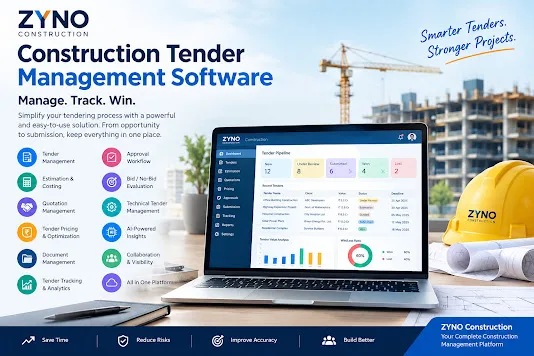
Construction projects begin long before work starts on-site. Contractors and engineering teams must evaluate tender opportunities, calculate project costs, collect supplier quotations, prepare technical proposals and meet strict submission deadlines. Managing these activities manually can lead to missed deadlines, inaccurate estimates and unnecessary administrative work.
Tendering software helps construction businesses organize tender information, manage estimates, track bidding activities and improve coordination between teams. By creating a more structured tendering process, businesses can make informed bidding decisions and prepare proposals more efficiently.
In this guide, we explain how tender management software works, which features matter most, how different industries use it and how ZYNO Construction can support construction businesses in managing pre-construction activities.
What Is Tendering Software?
Tendering software is a digital solution that helps businesses manage the activities involved in preparing and submitting bids. Depending on the platform, it can support tender tracking, cost estimation, supplier quotation management, document control, bid evaluation and reporting.
Businesses may also search for software for tender management, tender management system software or tender management software. Although these terms are closely related, each solution may offer different features depending on the business requirements.
For construction companies, construction tender management software can help connect tender preparation with estimation, procurement, budgeting and project planning. This allows teams to organize information in one workflow rather than relying on disconnected spreadsheets, emails and folders.
Why Do Construction Companies Need Tendering Software?
Construction tenders involve multiple documents, cost calculations, supplier inputs and technical requirements. As tender volumes increase, managing each activity manually can become time-consuming.
A structured tender management process helps construction businesses address several common challenges.
1. Centralized Tender Tracking
Tender tracking software helps teams maintain tender details, eligibility requirements, submission deadlines, responsibilities and bid status.
Instead of updating several spreadsheets, businesses can use a centralized process to monitor active opportunities and identify upcoming deadlines. This makes it easier to prioritize tenders and coordinate activities across departments.
2. Accurate Tender Estimation
Preparing a construction estimate requires accurate quantities, material rates, labour costs, equipment expenses and subcontractor quotations.
Tender estimation software helps estimators organize these cost components, review pricing assumptions and prepare structured estimates. Historical rate information can also help teams compare current estimates with previous projects.
Explore ZYNO Construction Tender Estimation Software to learn more about tender estimation workflows.
3. Better Bid Qualification
Not every tender is suitable for every contractor. Some projects may involve unrealistic deadlines, unsuitable payment conditions, complex technical requirements or limited commercial returns.
Bid no bid software supports tender qualification by helping businesses evaluate project suitability, eligibility, available resources, commercial risks and potential profitability before committing significant time to bid preparation.
4. Improved Document Management
Construction tender submissions may include drawings, specifications, bills of quantities, compliance certificates, method statements and financial schedules.
Technical tender management software can help teams organize these documents, review revisions and follow submission checklists. This reduces the likelihood of overlooking important requirements or working with outdated documents.
5. Better Team Collaboration
Tender preparation often involves estimation, engineering, procurement, finance and project management teams.
A structured tender management system helps businesses coordinate responsibilities, share information and monitor pending activities. This improves visibility throughout the tender preparation process.
Essential Features of Tender Management Software
Choosing the right platform requires understanding the features that directly support your bidding workflow.
Tender Opportunity Management
A tender management system should help teams organize opportunities, submission dates, eligibility requirements and tender status. Deadline reminders and task assignments can also help keep the process on schedule when supported by the software.
Tender Analysis and Cost Estimation
Tender analysis software helps businesses review cost components, pricing assumptions and project requirements before submitting a bid.
Useful capabilities may include quantity calculations, historical rate comparisons, cost breakdowns and scope reviews.
Supplier and Subcontractor Quotations
A tender quoting system helps businesses organize supplier and subcontractor offers for comparison. Teams can review prices, delivery timelines, specifications, exclusions and commercial terms before selecting suitable suppliers.
For related quotation management capabilities, explore ZYNO Procurement Quotation Management.
Technical and Commercial Compliance
Tender submissions frequently require technical documents, compliance declarations and commercial schedules. Document checklists and revision management help teams verify that the necessary information is available before submission.
Reporting and Performance Analysis
Tender reporting helps businesses understand the effectiveness of their bidding activities.
Important metrics include the number of tenders submitted, bid preparation time, win rate, reasons for lost bids and the profitability of awarded contracts.
Businesses can explore ZYNO Construction Reporting and Analytics to learn more about construction reporting workflows.
How Different Industries Use Tendering Software
Tendering requirements vary according to project size, industry and contract structure. Different businesses need different capabilities to manage their bidding activities.
Head Contractors
Head contractor tendering software helps organize subcontractor packages, supplier quotations, project estimates and submission schedules.
When multiple subcontractors contribute to a project, connecting tender workflows with subcontractor management can improve coordination and support a more organized pre-construction process.
EPC Firms
EPC bidding software supports engineering, procurement and construction firms preparing complex proposals involving equipment, engineering services, installation, subcontractors and project delivery.
A structured process helps teams consolidate technical inputs, commercial estimates and project requirements before finalizing a proposal.
Engineering and Civil Contractors
Engineering tender software helps engineering teams organize specifications, cost estimates, supporting documents and submission schedules.
Similarly, tender response software for engineering may provide reusable templates and document libraries that reduce repetitive proposal preparation.
An automated tender response for civil engineering workflow can help populate standard company information when supported by the platform. However, technical specifications, quantities and commercial commitments still require proper review before submission.
Renewable Energy Projects
Renewable energy project bid software workflows can help developers and contractors organize equipment quotations, engineering packages, installation costs and project-specific documentation.
Centralized tender tracking can be particularly useful when several suppliers, project packages and technical teams are involved.
Pharmaceutical Suppliers
Pharma tender tracking software helps pharmaceutical suppliers organize tender opportunities, pricing schedules, product documentation, eligibility requirements and submission deadlines.
Businesses should confirm that their selected solution supports the documentation and compliance processes relevant to their operations.
Businesses Operating Across DACH
Companies working in Germany, Austria and Switzerland may search for tender software DACH to support regional tendering processes.
Important considerations include language support, document management, data protection and the ability to accommodate applicable local procurement requirements.
Online Tendering Software vs. Manual Processes
Spreadsheets and email can work well for businesses managing a small number of straightforward tenders. However, manual processes can become difficult to maintain when tender volumes increase or several teams need to collaborate.
Evaluation areaSpreadsheets and emailOnline tendering softwareTender trackingManual updatesCentralized tracking, depending on featuresDocument managementSeparate folders and attachmentsStructured document management, where supportedCost estimationManual calculations and formulasStructured or integrated estimation workflowsTeam coordinationEmail and individual follow-upsWorkflow visibility and task assignments, where supportedQuotation comparisonManual comparisonsOrganized quotation management, if availableReportingManually prepared summariesBuilt-in reports, depending on the platformThe right choice depends on your tender volume, team size and business requirements. Before investing, identify which activities consume the most time and whether a more structured process would deliver measurable benefits.
Tendering and Contracting Software: From Bid Preparation to Project Delivery
Winning a tender is only the beginning of a construction project. Once a contract is awarded, the approved estimate becomes an important reference for budgeting, procurement, scheduling and cost monitoring.
Tendering and contracting software can help connect these activities when the platform supports the necessary workflows or integrations.
For example, tender information can support:
- Project budgeting: Establishing approved cost estimates and budget allocations.
- Procurement planning: Identifying materials, equipment and subcontracting requirements.
- Project scheduling: Coordinating project activities, milestones and resource requirements.
- Cost monitoring: Comparing actual expenses against planned costs.
- Document handover: Transferring relevant tender information to project teams.
ZYNO Construction provides solutions for budgeting and planning, procurement management and project planning.
Organizing these activities can help reduce repetitive data entry and improve visibility between pre-construction and project execution.
The Role of Machine Learning in Tendering
Machine learning tendering software may help businesses identify patterns in historical bids and use past performance data to support future decisions.
Potential applications include analyzing historical tender prices, identifying recurring estimation variations, highlighting unusual cost assumptions and reviewing trends in bid outcomes.
A tender estimator can use these insights alongside current supplier quotations, project specifications, labour costs and professional judgment.
Machine learning does not guarantee a successful bid or determine the correct price automatically. Its usefulness depends on data quality, relevant historical information and appropriate human review.
How to Choose the Right Tender Management Software
Before selecting a solution, evaluate your existing tendering process and identify the areas that need improvement.
Consider the following questions:
- Can the software track tender opportunities, responsibilities and submission deadlines?
- Does it support your estimation methods and cost breakdowns?
- Can it organize technical documents, revisions and compliance checklists?
- Does it support supplier and subcontractor quotation comparisons?
- Can managers monitor bid progress and historical performance?
- Can tender estimates connect with budgeting and procurement workflows?
- Does the solution meet your deployment, access control and data security requirements?
- Can it accommodate your expected business growth?
Request a demonstration using an actual tender from your business. This helps your team understand how the workflow fits existing processes and whether the available features justify the investment.
Why Consider ZYNO Construction?
ZYNO Construction offers digital solutions designed to support construction management and pre-construction activities. Businesses can explore tender estimation alongside budgeting, procurement, subcontractor management and reporting.
For contractors, EPC firms and engineering teams, the objective is to establish a more organized process for preparing bids, managing costs and transferring relevant information into project execution.
Explore ZYNO Construction to learn more about its construction management solutions.
Frequently Asked Questions
What is the difference between tender management software and tender estimation software?
Tender management software generally focuses on organizing tender opportunities, deadlines, documents and workflows. Tender estimation software focuses on calculating quantities, rates and expected project costs. Some construction platforms offer both types of functionality.
Is tendering software suitable for small contractors?
Yes. Small contractors can benefit when estimation, document management and tender administration consume significant time. Businesses managing only a few simple tenders may find spreadsheets sufficient until their requirements increase.
Can tender management software improve bid accuracy?
It can help standardize calculations, organize information and reduce some manual errors. Accuracy still depends on correct quantities, current rates, complete scope information and appropriate review.
What is bid no bid software used for?
Bid no bid software supports decisions about whether to pursue a tender. Teams can assess eligibility, project suitability, resource availability, commercial risks and potential profitability before committing to a bid.
Can online tendering software automate proposal preparation?
Some platforms support reusable templates, document libraries and automated data population. Capabilities vary by solution, and every technical and commercial proposal should be reviewed before submission.
How does tendering software support project management?
When connected to downstream workflows, tender information can help establish project budgets, procurement requirements, schedules and cost baselines after a contract is awarded.
Improve Your Tendering Workflow with ZYNO Construction
Managing multiple tenders through disconnected spreadsheets and email threads can make it difficult to track deadlines, maintain accurate estimates and coordinate teams.
A structured digital workflow can help construction businesses organize tender preparation, improve cost visibility and connect successful bids with project execution.
Ready to improve your tender estimation and pre-construction process?
Explore ZYNO Construction or contact our team to discuss your requirements and arrange a personalized consultation.