
Starting with the Climate Reality: Why Action Cannot Wait
On a sweltering summer day in July 2025, a record-breaking heatwave swept across multiple continents, scorching forests and overwhelming power grids. This event was not an anomaly but a manifestation of an accelerating climate crisis. The Intergovernmental Panel on Climate Change (IPCC) reported in its 2025 update that global temperatures have already risen approximately 1.3°C above pre-industrial levels. This seemingly modest increase has translated into extreme weather patterns, rising sea levels, and biodiversity loss at alarming rates.
For those new to climate action, this backdrop may seem daunting. But the urgency of the moment also opens a window for meaningful engagement. Climate change is no longer a distant threat; it is a present challenge demanding immediate and sustained effort from individuals, communities, and governments alike. Understanding the scope of the crisis and how one can contribute effectively is the critical first step to becoming part of the solution.
“The climate clock is ticking faster than most realize. Individual and collective actions today will define the living conditions of tomorrow.” — Dr. Mei Lin, Climate Scientist
This guide offers a comprehensive entry point for beginners who want to grasp the essentials of climate action, navigate the complexities of sustainability, and deploy practical strategies that have measurable impacts.
From Awareness to Action: The Historical and Scientific Context
The journey of climate awareness began in the late 19th century when scientists first linked atmospheric carbon dioxide to global temperature changes. However, it wasn’t until the late 20th century that climate change entered public discourse, propelled by scientific consensus and visible environmental shifts.
Since the 1992 Earth Summit in Rio de Janeiro, international frameworks like the Kyoto Protocol and the Paris Agreement have sought to coordinate global efforts. Despite these diplomatic strides, global emissions have continued to climb, driven by industrial growth, deforestation, and fossil fuel dependencies.
Climate science has evolved dramatically, with advanced satellite monitoring, AI-driven climate models, and extensive greenhouse gas inventories providing detailed snapshots of Earth’s changing systems. Yet, the gap between scientific knowledge and effective action remains a fundamental obstacle.
Understanding this history equips beginners with the perspective needed to appreciate why climate action is multifaceted—spanning policy, technology, personal behavior, and advocacy.
Core Strategies for Beginners: What Works and Why
For newcomers, the breadth of climate action can appear overwhelming. The key is prioritizing interventions that yield significant impact without requiring specialized expertise from the outset. Below are five core strategies supported by data and expert analysis:
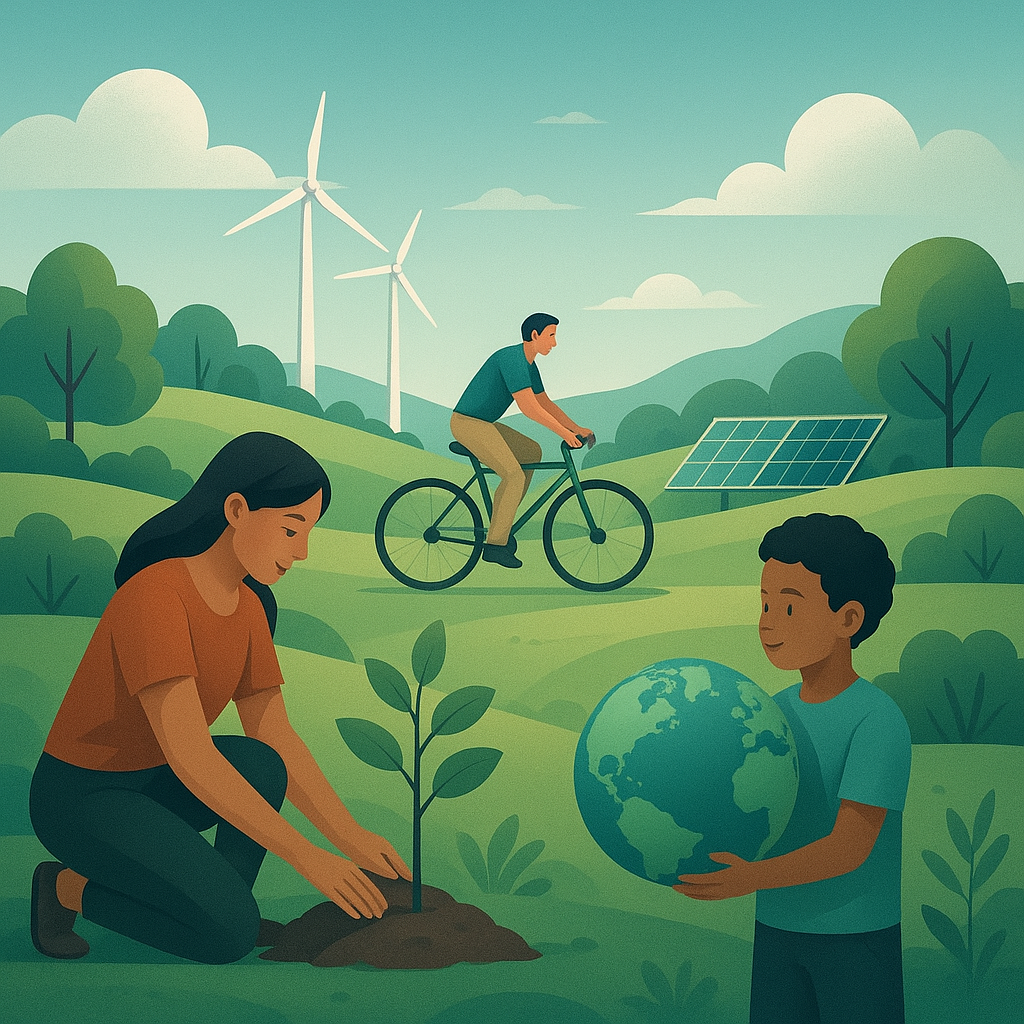
- Reducing Carbon Footprint: Transportation and energy use are major contributors. Transitioning to renewable energy sources, adopting energy-efficient appliances, and reducing car travel can cut emissions substantially. The International Energy Agency reported that households shifting to renewables reduced their carbon footprint by up to 40%.
- Adopting Sustainable Diets: Food production accounts for roughly 25% of global emissions. Reducing meat consumption and food waste are effective ways to decrease one’s environmental impact.
- Supporting Climate-Friendly Policies: Voting for leaders with strong climate agendas and participating in local environmental initiatives help accelerate systemic change.
- Engaging in Community Projects: Urban greening, tree planting, and local sustainability programs enable direct, visible contributions.
- Building Climate Literacy: Continuously educating oneself through credible sources fosters informed decision-making and advocacy.
“Individual choices accumulate. When multiplied by millions, they can steer the course of climate mitigation.” — Elena Vargas, Environmental Policy Analyst
These strategies form the foundation for more advanced actions, including investing in green technologies or pursuing careers in sustainability fields. Beginners should also be aware of common pitfalls such as greenwashing and misinformation, which can undermine genuine efforts.
2026 Climate Action Landscape: What Has Changed?
As of 2026, the climate action landscape has shifted in several important ways. The adoption of electric vehicles (EVs) has accelerated dramatically, spurred by government incentives and improved battery technologies. According to recent data, EVs now constitute nearly 30% of new car sales globally, a sharp increase from just 10% in 2023. This trend aligns with findings discussed in our article on electric vehicles, which highlights beginner-friendly approaches to integrating EVs into everyday life.
Additionally, renewable energy capacity has expanded, with solar and wind projects becoming increasingly cost-competitive. However, challenges remain in grid integration and storage technologies. Policy frameworks have also evolved, with the latest UN climate talks resulting in stronger commitments to phase out coal and increase financing for climate adaptation in vulnerable regions.
Another notable development is the rise of climate litigation, where citizens and organizations hold governments and corporations accountable for emissions and environmental damage. This legal approach is reshaping accountability and incentivizing transparency.
Technological innovation continues to play a pivotal role. Advances in carbon capture and utilization (CCU) technologies offer new avenues for reducing atmospheric CO2, while digital platforms have empowered grassroots mobilization and climate education.
For beginners, staying updated on these shifts is essential to align personal actions with broader systemic changes. Our coverage on the urgency of climate action explores how political momentum is evolving in tandem with grassroots movements.
Expert Insights and Industry Impact: Voices from the Frontlines
Experts emphasize that while policy and technology are critical, the role of individual and collective behavioral change cannot be overstated. Dr. Amina Rahman, a sustainability consultant, notes that “climate action is as much a social transformation as a technical one.”
Industry players are also adapting. Renewable energy firms report record investment inflows, while major corporations are embedding environmental, social, and governance (ESG) criteria into their operations. The financial sector is increasingly directing capital towards sustainable ventures, recognizing climate risk as a material factor.
However, experts caution against complacency. The climate action gap—the difference between current efforts and what science says is necessary—remains vast. Bridging this gap requires innovation, collaboration, and persistent advocacy.
“The future depends on how quickly and decisively we can integrate climate action into every facet of society—from the boardroom to the kitchen table.” — James O’Connell, CEO of GreenTech Innovations
This perspective underscores the importance of beginners understanding their potential leverage points and engaging with both technological and social dimensions of sustainability.
Looking Ahead: Practical Takeaways and Future Directions
As the climate crisis intensifies, beginners must focus on actionable steps that build momentum and resilience. Here are key takeaways to guide meaningful engagement:
- Start Small but Think Big: Individual lifestyle changes matter, but they should be coupled with efforts to influence community and policy-level decisions.
- Stay Informed: Reliable climate information is evolving; regularly consult trusted sources and scientific updates.
- Embrace Innovation: Support and adopt emerging green technologies, from smart home systems to electric mobility.
- Build Networks: Join local environmental groups, online forums, or advocacy organizations to amplify impact.
- Be Patient and Persistent: Climate solutions often require time to mature; resilience and sustained commitment are essential.
The path of climate action for beginners is a continuous learning curve with tangible rewards. By understanding the science, recognizing the societal stakes, and engaging pragmatically, anyone can contribute to shaping a sustainable future.
For those inspired to advance beyond individual action, exploring climate research offers a robust avenue. Our in-depth guide on embarking on climate research provides practical steps for aspiring scientists and advocates alike.