
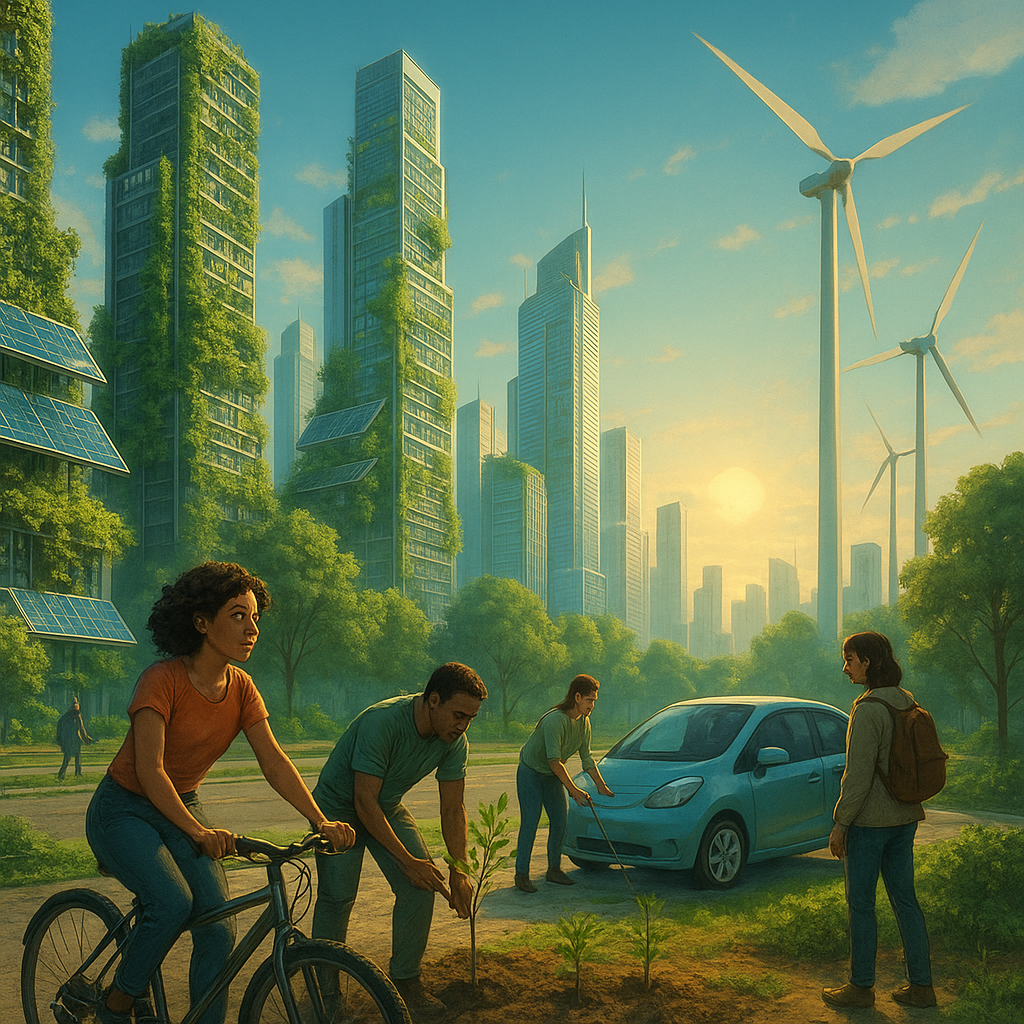
Opening Scene: A Glimpse into a Sustainable Urban Future
On a crisp morning in April 2026, the skyline of Copenhagen reflects a city transformed by decades of rigorous sustainability policies. Solar-paneled rooftops shimmer alongside vertical gardens climbing high-rise facades, while electric autonomous buses glide silently through streets designed to prioritize pedestrians and cyclists. This scene, emblematic of many progressive cities worldwide, encapsulates the ongoing global effort to harmonize human development with ecological preservation.
Yet, this progress exists amid complex tensions. Despite technological advances and policy commitments, global environmental degradation and resource depletion persist. The World Economic Forum’s 2026 Global Risks Report highlights climate change and biodiversity loss as paramount threats, intersecting deeply with social equity and economic systems.
“Sustainability is no longer optional; it is embedded in the very fabric of economic resilience and societal well-being,” observes Dr. Helena Forsberg, a leading environmental economist.
Historical Context: How Sustainability Evolved into a Global Imperative
Understanding sustainability today requires tracing its roots through environmental, social, and economic history. The term first gained prominence in the 1987 Brundtland Report, defining sustainable development as meeting present needs without compromising future generations’ ability to meet theirs. This concept laid the foundation for international frameworks like the 1992 Earth Summit and the 2015 United Nations Sustainable Development Goals (SDGs).
Early sustainability efforts primarily focused on conservation and pollution control. However, by the 2010s, the approach expanded to embrace systemic challenges such as climate change mitigation, circular economy models, and social inclusion. The Paris Agreement in 2015 marked a pivotal moment, engaging nearly 200 nations in climate commitments.
Throughout the 2020s, accelerating climate events and scientific warnings forced governments and corporations to intensify sustainability initiatives. The integration of Environmental, Social, and Governance (ESG) criteria into investment decisions became mainstream, reshaping capital flows globally. Public awareness also surged, propelled by youth activism and digital information sharing.
These milestones laid a complex but crucial groundwork, shaping the multifaceted sustainability landscape we navigate today.
Core Analysis: Data-Driven Insights into 2026 Sustainability Metrics
As of 2026, comprehensive data reveals mixed progress across environmental, social, and economic dimensions of sustainability. The Global Sustainability Index (GSI) published this year indicates that while renewable energy adoption reached 45% of global electricity generation, fossil fuels still constitute 40%, underscoring a persistent transition challenge.
Carbon emissions have plateaued in several developed economies but continue to rise in emerging markets due to industrial growth. The International Energy Agency reports that global CO2 emissions were approximately 33.7 gigatons in 2025, down marginally from 34.1 gigatons in 2020.
On biodiversity, the Global Biodiversity Outlook 6 highlights alarming trends: nearly 1 million species face extinction, with habitat loss and pollution as primary drivers. However, concerted conservation efforts in regions like the Amazon and Southeast Asia show promising localized success stories.
- Renewable Energy Growth: Solar and wind capacity expanded by 12% annually since 2020.
- Waste Reduction: Circular economy practices have diverted 25% of industrial waste from landfills globally.
- Water Usage: Efficiency improvements reduced per capita water consumption by 10% in urban areas.
Social sustainability indicators reveal progress in gender equality and education access, yet income inequality remains stark. The World Bank reports that the global Gini coefficient improved slightly from 0.41 in 2020 to 0.39 in 2025, reflecting modest gains.
“Sustainability metrics must evolve beyond environmental factors to fully capture human and economic well-being,” states Professor Rajiv Malhotra, sustainability scientist.
Current Developments in 2026: Innovations and Policy Milestones
The year 2026 marks a notable acceleration in sustainability-driven innovation and policy reform. Governments worldwide have ramped up commitments following the 2025 United Nations Climate Change Conference (COP31), which emphasized adaptation alongside mitigation. Several countries introduced carbon border adjustment mechanisms to protect domestic industries while incentivizing greener imports.
Technological breakthroughs have reshaped sectors critical to sustainability:
- Energy Storage: Solid-state batteries with higher capacity and faster charging are commercially viable, enabling more reliable renewable integration.
- Carbon Capture: Direct air capture plants operate at scale, removing over 100 million tons of CO2 annually.
- Smart Agriculture: Precision farming technologies optimize water and fertilizer use, reducing environmental footprints.
Corporate sustainability reporting standards have been harmonized globally under the International Sustainability Standards Board (ISSB), improving transparency and comparability. Investors increasingly demand verified ESG data, influencing capital allocation decisions.
Public awareness campaigns harness augmented reality and social media to foster sustainable consumer behavior, particularly among Gen Z and Alpha populations. Cities integrate green infrastructure and promote circular urban economies, supported by policy incentives.
These developments reflect an integrated approach combining technology, policy, and societal engagement, essential for meeting the SDGs by 2030.
Case Studies: Real-World Examples of Sustainability in Action
Examining specific initiatives brings sustainability’s abstract goals into tangible focus. Three noteworthy examples illustrate diverse strategies and impacts:
1. Singapore’s Urban Sustainability Blueprint
Singapore’s 2026 Urban Sustainability Blueprint prioritizes water self-sufficiency, green building standards, and carbon neutrality targets. Innovations such as NEWater—advanced water recycling—and vertical farming have enhanced resource efficiency. The city-state’s Green Mark certification incentivizes eco-friendly construction, with 70% of buildings now compliant.
2. Patagonia’s Regenerative Supply Chain
Outdoor apparel company Patagonia has implemented regenerative agricultural practices within its supply chain, restoring soil health and biodiversity. The company’s commitment to transparency and circular product design has elevated industry standards and engaged consumers in sustainability narratives.
3. Kenya’s Off-Grid Solar Expansion
Kenya’s off-grid solar initiatives have expanded electricity access to over 12 million people, reducing reliance on kerosene and wood fuels. This shift improves health outcomes, supports local economies, and mitigates emissions, exemplifying sustainable development in emerging markets.
These cases demonstrate that sustainability efforts require contextual adaptation, cross-sector collaboration, and long-term commitment to succeed.
Expert Perspectives and Industry Impact
Industry leaders and experts emphasize sustainability as a strategic imperative rather than a peripheral concern. According to Dr. Maria Gonzalez, Chief Sustainability Officer at GreenTech Innovations, “Embedding sustainability into core business strategies enhances resilience and unlocks new market opportunities.”
Financial institutions increasingly integrate climate risk assessments into lending and underwriting processes. The Task Force on Climate-related Financial Disclosures (TCFD) framework guides risk reporting, now mandated in several jurisdictions.
Manufacturing sectors adopt circular economy principles to minimize waste and resource consumption, while technology firms develop AI-driven tools to optimize energy use and supply chains.
The labor market adapts as well, with green jobs projected to grow by 24% globally through 2030, according to the International Labour Organization. This shift calls for reskilling initiatives and equitable access to emerging opportunities.
Such expert insights underscore the systemic nature of sustainability challenges and the need for integrated responses.
Future Outlook: Key Trends and Strategic Takeaways for 2026 and Beyond
Looking ahead, sustainability in 2026 stands at a critical junction. The following trends will shape its trajectory:
- Decentralized Energy Systems: Microgrids and community solar projects will increase energy democratization.
- Nature-Based Solutions: Ecosystem restoration and natural infrastructure will gain prominence in climate adaptation strategies.
- Digital Sustainability: Blockchain and IoT technologies will enhance supply chain transparency and resource management.
- Social Equity Focus: Policies will increasingly address justice and inclusivity, linking sustainability with human rights.
- Global Cooperation: Multilateral frameworks will evolve to tackle transboundary environmental challenges.
For policymakers, businesses, and civil society, the imperative is clear: embed sustainability holistically, foster innovation, and prioritize resilience. Engagement at all levels—from local communities to international organizations—is essential.
To explore interconnected topics influencing sustainability’s future, you might enjoy Law in 2026: Trends, Challenges, and Transformations Shaping Justice and Real Estate in 2026: Trends, Data, and Future Outlook, which examine legal frameworks and urban development respectively.
“The path to sustainability is iterative and collective; only through sustained effort across sectors can we safeguard the planet and prosperity for future generations,” concludes Dr. Forsberg.