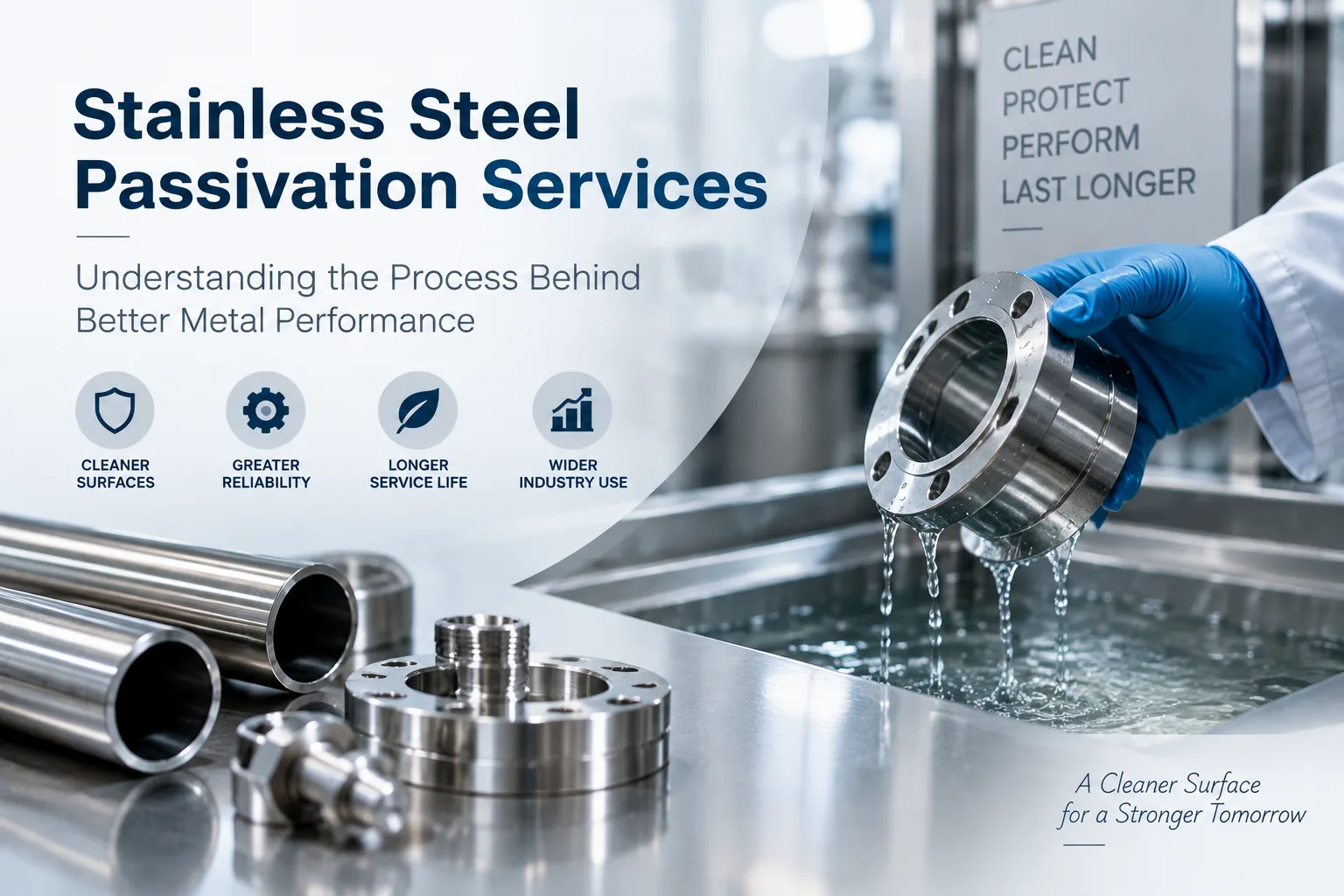
A small surface imperfection can significantly affect the reliability of a precision metal component. Although stainless steel is known for its durability and resistance to environmental exposure, manufacturing processes such as welding, machining, grinding, and fabrication can introduce contaminants that weaken its natural protective properties.
To maintain the expected quality and longevity of stainless steel components, manufacturers often rely on specialized finishing procedures that remove impurities and help restore the protective characteristics of the material.
Professional passivation processes are widely used across industries where component reliability, cleanliness, and long-term durability are essential.
The Science Behind Stainless Steel Protection
The ability of stainless steel to resist oxidation comes from a naturally occurring chromium oxide layer. This extremely thin protective film forms when chromium within the alloy reacts with oxygen in the surrounding environment.
Under normal conditions, this passive layer can repair itself when damaged. However, manufacturing activities may introduce free iron particles, tool marks, heat-related residues, or other contaminants that interfere with this protective mechanism.
When these impurities remain on the surface, they can create areas where corrosion may develop, particularly in demanding environments involving moisture, chemicals, or temperature variations.
Why Proper Metal Preparation Matters
The manufacturing journey of a stainless steel component often involves multiple processes before it reaches its final application. Cutting, forming, welding, and mechanical finishing can influence the condition of the outer layer.
A controlled finishing procedure helps address these challenges by improving cleanliness and preparing the material for reliable use.
Removing Manufacturing Contaminants
During fabrication, unwanted particles from tools, equipment, or surrounding materials may become attached to the component. Removing these contaminants helps reduce potential weak points that could affect durability.
Supporting Long-Term Reliability
A properly prepared component is better equipped to handle environmental conditions throughout its service life. This is particularly important for industries where equipment failure can result in operational challenges or increased maintenance requirements.
Meeting Quality Requirements
Many industries operate under strict quality expectations. Following recognized guidelines helps manufacturers maintain consistency and ensure that components meet required specifications.
Standards such as ASTM A380 provide recommendations related to cleaning, descaling, and preparation practices for stainless steel components.
How the Passivation Process Is Performed
The process generally involves several carefully controlled stages to achieve the desired material condition.
Cleaning and Surface Preparation
Before chemical processing begins, components are thoroughly cleaned to remove oils, grease, dirt, and production residues.
This stage is important because contaminants left behind can prevent the treatment solution from working effectively and may affect the final result.
Chemical Treatment
During this step, specialized chemical solutions are applied to remove free iron and other unwanted materials from the component.
Traditional methods often use nitric acid solutions, while citric acid-based approaches have become increasingly common due to their effectiveness and different environmental considerations.
ASTM A967 provides guidance on chemical treatment methods and verification procedures for stainless steel parts.
Rinsing and Drying
After chemical processing, components are carefully rinsed to remove remaining residues. Controlled drying helps maintain cleanliness before inspection, packaging, or installation.
Testing and Inspection
Quality verification ensures that the process has achieved the required results.
Depending on the application, manufacturers may use testing methods such as:
- Water immersion testing
- Humidity testing
- Salt spray evaluation
- Free iron detection procedures
These checks help confirm that the finished component meets required quality standards.
Industries That Rely on Advanced Metal Finishing
Different sectors depend on properly prepared stainless steel components because reliability and cleanliness are critical.
Medical and Pharmaceutical Equipment
Medical devices and pharmaceutical systems require strict control over material quality. Proper finishing methods help maintain clean surfaces and support demanding industry requirements.
Examples include surgical instruments, laboratory equipment, and specialized processing systems where surface quality is essential.
Aerospace Manufacturing
Aerospace components must perform consistently under challenging conditions. Surface preparation helps improve reliability for parts exposed to changing temperatures, moisture, and mechanical stress.
Food Processing Systems
Food production equipment requires materials that are easy to clean and resistant to contamination. Properly prepared stainless steel is commonly used for tanks, processing equipment, and handling systems.
Chemical and Industrial Applications
Industrial environments may expose equipment to aggressive substances. Appropriate finishing methods help components maintain their integrity during long-term operation.
Selecting the Right Approach for Different Applications
There is no single solution suitable for every stainless steel component. The appropriate method depends on several factors, including:
- Material grade
- Component design
- Manufacturing history
- Operating environment
- Required testing standards
For manufacturers working with critical components, stainless steel passivation services can help achieve the required surface condition while following recognized industry standards.
For example, a medical device may require stricter cleanliness controls compared with a general industrial component. Similarly, aerospace applications may require detailed documentation and verification procedures.
Understanding these requirements helps manufacturers select the most suitable process for achieving consistent results.
Developments in Modern Metal Finishing
The metal finishing industry continues to evolve as manufacturers focus on improved efficiency, sustainability, and quality control.
Citric acid-based processes have gained attention as an alternative approach to traditional methods, while automation and improved inspection techniques are helping companies achieve greater consistency.
As industries continue to demand higher standards for reliability and cleanliness, advanced finishing processes will remain an important part of stainless steel manufacturing.
Conclusion
Stainless steel provides excellent strength and durability, but manufacturing processes can affect its natural protective characteristics. Proper cleaning, preparation, and chemical processing help maintain the quality and reliability expected from this material.
By understanding how these procedures work and why industry standards matter, manufacturers can make informed decisions about protecting components used in critical applications.