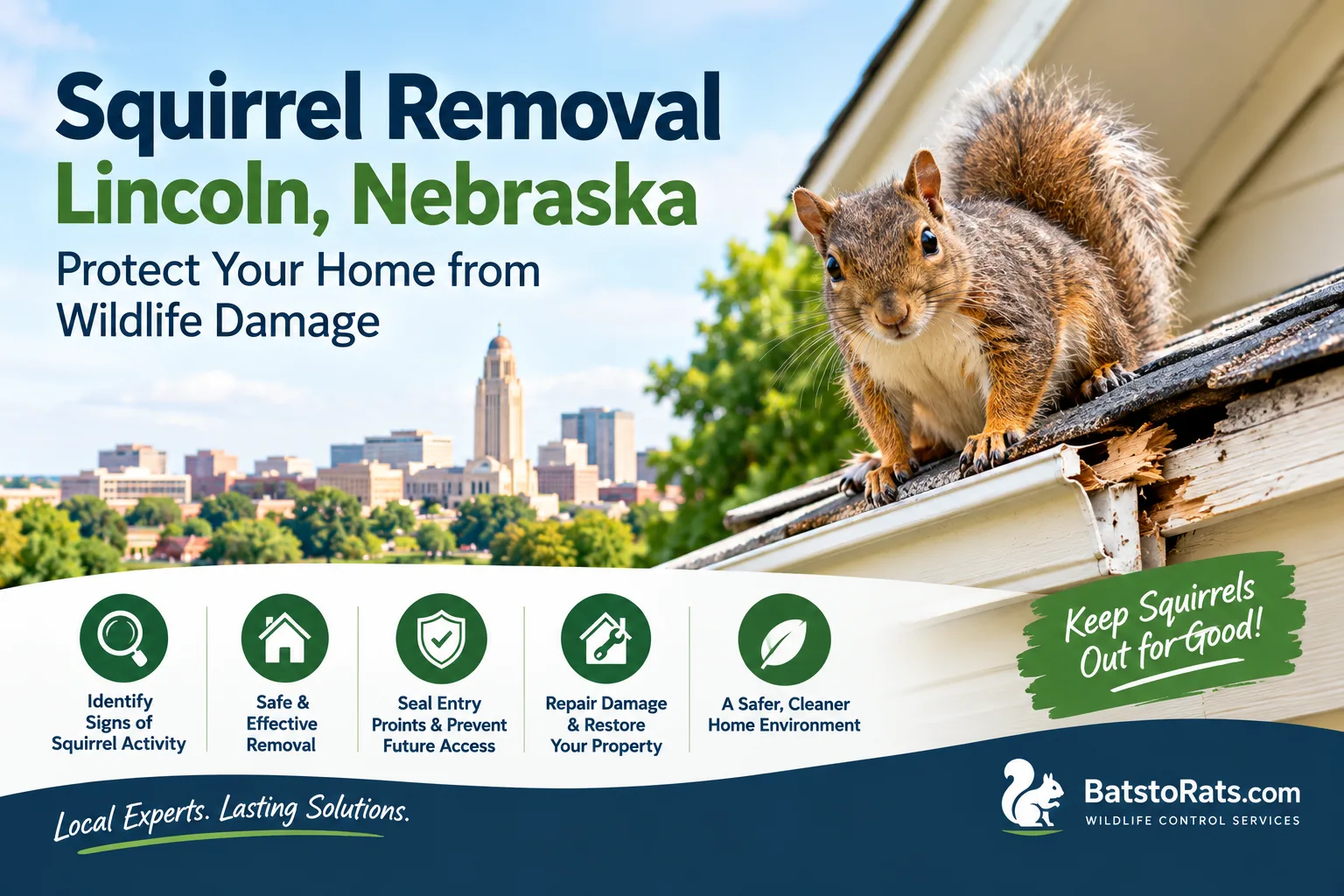
Squirrels are common throughout Nebraska, and while they may look harmless outdoors, they can cause problems when they enter a home or building. From scratching noises in the attic to damaged insulation and chewed electrical wires, a squirrel infestation can become a serious concern for property owners. Professional squirrel removal in Lincoln, Nebraska, can help homeowners address the problem safely and prevent further damage.
Understanding how squirrels enter buildings, recognizing the warning signs, and taking preventive steps can help protect your property throughout the year.
Signs You May Need Squirrel Removal in Lincoln, Nebraska
Squirrels often enter attics, roof spaces, garages, and wall cavities in search of shelter. Because these areas are not always visible, homeowners may notice unusual signs before they see the animal itself.
Common warning signs include:
- Scratching or running sounds: Noises coming from the ceiling or attic, especially during the day, may indicate squirrel activity.
- Chewed roof edges: Squirrels can gnaw on fascia boards, soffits, vents, and other building materials to create entry points.
- Damaged insulation: Nesting activity can disturb insulation and leave debris behind.
- Droppings and nesting materials: Small accumulations of debris or animal waste may indicate wildlife activity.
- Visible entry holes: Gaps around rooflines, vents, and eaves can provide access to indoor spaces.
If you notice these signs, inspect the situation carefully and consider contacting a wildlife professional to determine the source of the problem.
Why Squirrels Enter Homes in Lincoln
Squirrels usually seek warm, sheltered places to nest and raise their young. Attics and roof spaces can provide protection from harsh weather and predators. A small opening around a roof vent or eave may be enough for a squirrel to gain access, and the animal may enlarge the gap by chewing.
Common reasons squirrels enter homes include:
- Gaps in rooflines, soffits, and exterior walls.
- Damaged attic vents or loose roof materials.
- Nearby tree branches that provide access to the roof.
- Accessible bird feeders, seeds, and other food sources.
What Damage Can Squirrels Cause?
Although squirrels are small, their activity inside a building can create costly problems if left unaddressed.
Electrical hazards: Squirrels may chew electrical wiring, potentially increasing the risk of electrical faults and fire.
Insulation damage: Nesting materials and animal activity can disturb attic insulation, reducing its effectiveness.
Structural damage: Chewed fascia boards, soffits, and wooden roof components may require repairs.
Contamination: Droppings, urine, and nesting debris can make attic spaces unpleasant and create cleanup concerns.
Early inspection and appropriate squirrel removal can help reduce the risk of further damage.
How Professional Squirrel Removal Works
When squirrels enter a home, simply blocking the visible hole may not solve the problem. An animal could remain trapped inside, or other squirrels may find another way in. A professional wildlife control process should address both the existing animal and the entry points.
1. Property Inspection
The first step is to identify signs of squirrel activity and inspect likely access points, including roof edges, vents, soffits, and attic spaces. Professionals can also look for nesting activity and potential damage.
2. Safe and Legal Removal
The appropriate removal method depends on the situation, the species involved, the presence of young, and applicable wildlife regulations. Nebraska has specific rules governing squirrel trapping, release, and wildlife damage control, so property owners should avoid assuming that any trapping or relocation method is permitted.
3. Entry Point Sealing
Once the situation has been assessed and the animals have been safely addressed, vulnerable openings can be repaired using durable materials. Damaged vents, gaps beneath eaves, and other access points should be secured to reduce the likelihood of another intrusion.
4. Damage Assessment and Cleanup
Chewed materials, disturbed insulation, and contaminated areas may need repairs or professional cleanup. Electrical wiring should be inspected by a qualified electrician if chewing is suspected.
DIY Squirrel Removal vs. Professional Help
Some preventive tasks are suitable for homeowners, but removing squirrels from an attic can be more complicated than it appears.
DIY preventionProfessional assistanceRemove accessible food sourcesInspect difficult-to-reach entry pointsTrim branches away from the roof where safeAssess animals and nesting activityCheck for visible exterior gaps from the groundPlan lawful removal and exclusionKeep bins and birdseed securedIdentify damage and recommend repairsAvoid climbing onto a roof without appropriate equipment. Do not seal an opening until you are confident no squirrel or dependent young will be trapped inside. University of Nebraska–Lincoln guidance highlights the importance of checking for young and addressing entry points as part of a complete solution.
How to Prevent Squirrels from Returning
After squirrel removal in Lincoln, Nebraska, prevention is essential. Consider these practical steps:
- Inspect your roof regularly: Look for damaged shingles, loose soffits, and gaps around vents.
- Secure attic openings: Install suitable, durable mesh over vulnerable vents where appropriate.
- Manage tree access: Trim branches that provide an easy route to your roof, using a qualified tree professional when necessary.
- Store food securely: Keep birdseed, pet food, and garbage in secure containers.
- Repair damage promptly: Fix loose boards and openings before they become larger access points.
- Arrange follow-up checks: Reinspect repaired areas to make sure they remain secure.
No single measure can guarantee that squirrels will never return, but combining repairs, exclusion, and sensible property maintenance can reduce the risk of future problems.
When Should You Call a Wildlife Control Professional?
Contact a wildlife professional if you hear persistent scratching in your attic, discover chewed wiring, notice repeated entry attempts, or suspect that squirrels have established a nest inside your home.
Professional help is especially useful when the entry point is difficult to reach or when you are unsure whether young animals are present. A complete assessment can help identify the source of the issue and determine the most appropriate next steps.
Get Help with Squirrel Removal in Lincoln, Nebraska
Squirrels may be a familiar part of Nebraska's wildlife, but they can become a serious nuisance when they enter homes, garages, or commercial buildings. Identifying the problem early, addressing the animals appropriately, and repairing entry points can help protect your property from ongoing damage.
If you need help with squirrel activity or other wildlife concerns, visit BatstoRats.com to learn more about wildlife control services and prevention options. Taking action early can help you protect your home and reduce the chances of recurring wildlife problems.