
Michigan Medical Assistance Claim Denials: Common Reasons and How to Fix Them
Claim denials are one of the biggest causes of delayed revenue for Michigan practices that bill Medicaid. Most are not caused by the care itself. They come from small errors that are easy to prevent once you know where to look. Over a year, those unpaid claims add up to a serious loss for any practice.
Why Michigan Medicaid Claims Get Denied
The most common reasons include:
- Inactive or changed eligibility: Coverage may have ended or switched plans since the last visit.
- Incorrect patient or provider information: A misspelled name, wrong date of birth, or mismatched provider ID can stop a claim.
- Wrong or outdated billing codes: Code sets are updated regularly, and old codes are rejected.
- Missing prior authorization: Some services must be approved before they are performed.
- Claims filed after the deadline: Timely filing limits are strict, and late claims are rarely paid.
Billing Medicaid before a primary commercial plan has paid can also trigger a rejection, as can documentation that does not support the service billed. Even a missing modifier can stop a payment.
The Real Cost of Unworked Denials
A denied claim is not just a delay. Each one takes staff time to review, correct, and resubmit. When teams are busy, denied claims get pushed aside, and the longer they wait, the harder they are to collect. Small balances written off here and there can quietly add up to thousands of dollars each year.
How to Fix Denials the Right Way
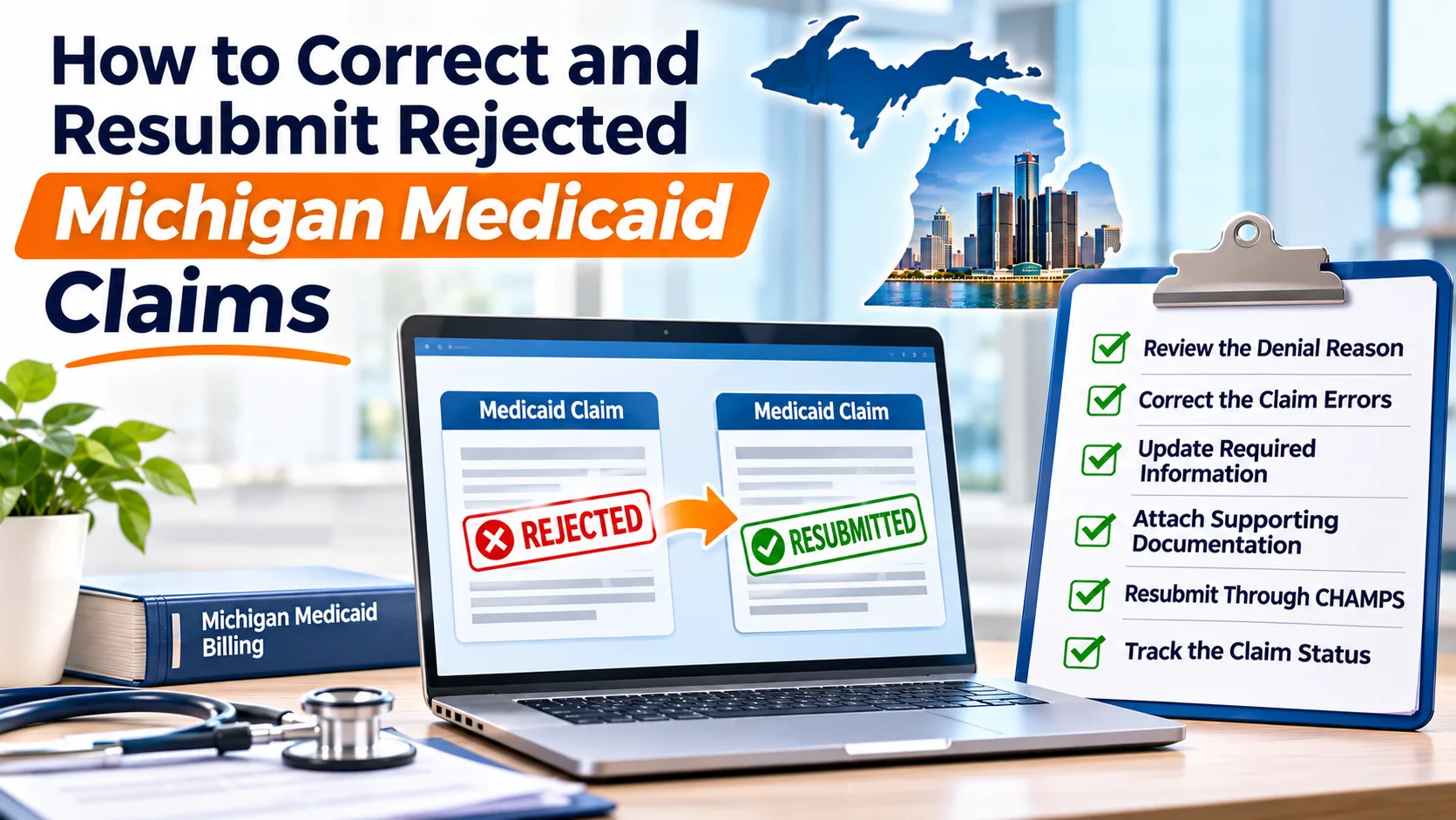
Fixing the problem starts at the front desk. Follow these steps:
- Verify coverage before every visit. Confirm active eligibility and which plan is responsible for payment.
- Confirm demographic details. Match the patient’s name, date of birth, and ID to the Medicaid record.
- Match each code to the clinical notes. Documentation must support every service billed.
- Submit claims promptly. Faster submission leaves more time to fix problems before deadlines.
- Read the reason code on every denial. It tells you exactly what went wrong.
- Correct the issue and appeal on time. Include supporting records with every appeal.
Tracking denials by reason also reveals patterns you can stop. If the same error keeps appearing, the fix may be a change in your front desk process, not just a corrected claim. Keeping a short checklist at check in helps reduce repeat mistakes.
Build Habits That Prevent Denials
Prevention is always cheaper than rework. A few habits make a real difference:
- Review denial reports weekly, or daily if volume is high.
- Keep provider enrollment details current.
- Train staff on payer rules and code updates.
- Check for a primary insurance before billing Medicaid.
Get Expert Help With Your Claims
Many practices simply do not have the time to do this consistently. Experienced medical billing services in Michigan can scrub claims before submission, work denials quickly, and follow up on unpaid balances. They also spot trends, such as a payer or code that keeps causing problems, and help you fix the cause instead of treating symptoms.
With a dedicated team handling the details, your staff can stay focused on patients while more of your claims get paid the first time.