Introduction
The procurement process has transformed into systematic functions. It is directly linked with financial performance, supplier relationships, and business growth. Many modern organizations are looking forward to digitalizing their operations with the right procurement solutions. It is a wise decision that determines how effectively teams can manage sourcing, contracts, suppliers, and spending.
There are many advanced procurement management systems available. They provide different sets of features like task automation, supplier management, e-auction facilities, and many more. Hence, businesses struggle to choose the best system that matches their business needs.
This guide talks about how a business can evaluate procurement solutions and choose the best for long-term growth.
Understanding the Need for Modern Procurement Software
Traditional procurement management depends on manual efforts, multiple spreadsheets, and emails. It creates inefficiency in the entire procurement ecosystem.
Modern procurement process management software addresses these issues with its salient features. Its centralized approach helps a business automate tasks and get customized dashboards for real-time insights. With the help of these useful tools, procurement teams can shift from time-consuming processes to a streamlined approach.
Let’s explore procurement management software’s salient features in detail.
Key Features to Look for in Procurement Software
Top procurement software solutions offer various useful tools in different price ranges. Choosing any random software based on the initial price is not a great idea. Here are some important features described below that you should evaluate in procurement solutions.
Process Automation
Procurement automation software streamlines repetitive tasks like approvals, purchase orders, and invoice generation. An entirely digital procurement process reduces the chances of human errors. It helps companies speed up procurement processes.
Workflow standardization frees teams from time-consuming tasks. Hence, they can focus more on the tasks that actually require human effort.
Overall, it improves the efficiency of procurement teams.
Supplier Performance Tracking
Feature-rich procurement software solutions centralize supplier data. It makes contract management and communication much easier than handling it with emails.
It tracks supplier performance based on quality, delivery, and pricing. It helps businesses choose reliable suppliers.
Real-Time Insights
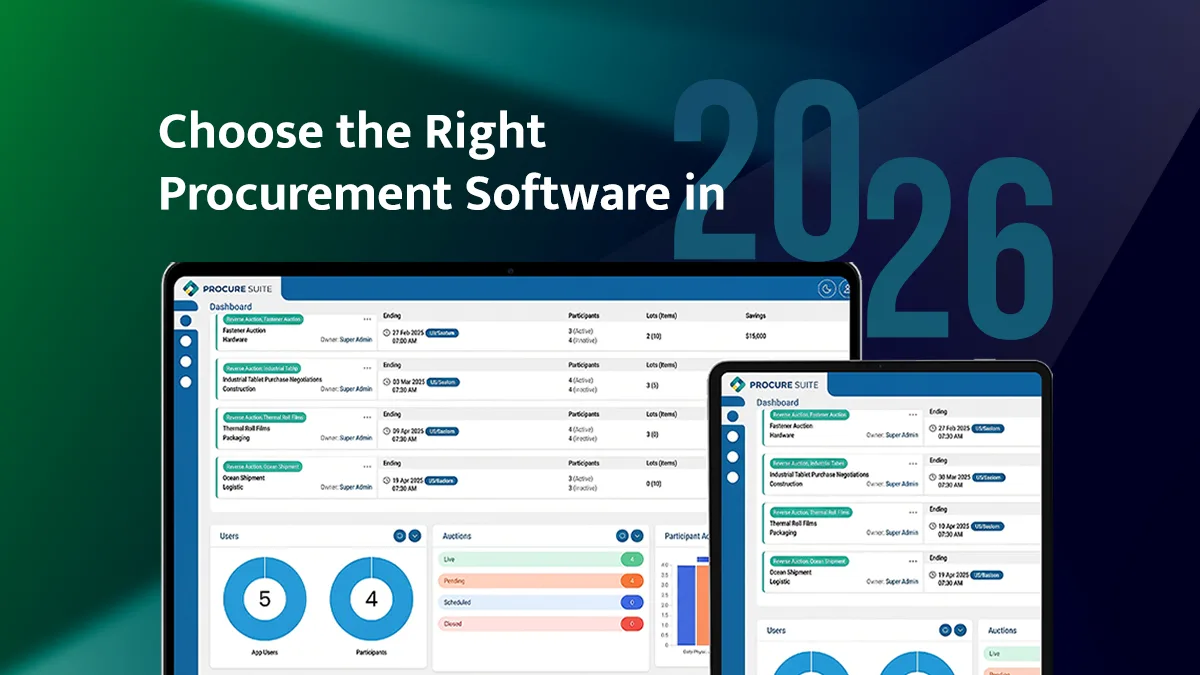
Dashboards and analytics provide real-time insights into spending, orders, and supplier performance.
These insights help teams identify opportunities to save expenses. Teams can make faster and data-driven decisions with the help of insights.
Reverse Auctions
Businesses can organize reverse auctions using procurement auction software. Suppliers can complete it online to offer the best prices.
Integration and Scalability
A good procurement process management software integrates easily with ERP and financial systems. It ensures smooth data flow and reduces duplication of items.
It should also be easy to scale whenever procurement requirements grow in the future.
User Experience
Good procurement software is always easy to use. It comprises a simple interface that is easy to understand for users.
In addition, cloud-based access allows procurement teams to manage the process from remote locations. It ensures flexibility and continuity.
Let’s look at how these tools work with real examples.
Real-Life Scenarios Where Procurement Solution Can Be Useful
Here are some real-world examples that will help you understand the role procurement software plays in an organization.
Improves Cost Control in Manufacturing Company
Some mid-sized manufacturing companies face operational delays and poor supplier coordination. It leads to variable pricing and limited visibility.
Adopting a procurement management system that offers procurement auction software can help businesses streamline approvals. Planning a reverse auction through the software helps a business secure better pricing to reduce overall procurement costs.
Enhance Supplier Efficiency in Retail Business
Growing retail companies face issues while managing multiple suppliers and tracking their performance. Also, email-based communication results in late deliveries and material shortages.
A robust procurement process management software can help companies centralize supplier data and improve performance tracking. It helps companies build reliable supplier relationships.
Boost Productivity in IT Companies
Some IT companies prefer manual approvals, documentation, and procurement data management. It can affect project timelines.
Procurement automation software automates workflows and reduces manual intervention. It allows faster approvals and better resource utilization.
Now, let’s go through the important aspects you should consider before selecting a procurement solution.
Factors to Consider Before Making a Decision
Businesses should always evaluate their requirements carefully before choosing a procurement solution software.
- Access the size and nature of your procurement operations. A small business needs a simple procurement process management software. But on the other side, large enterprises might require scalable and integrated platforms.
- The software should be easy to integrate with current business systems like ERP, finance software, and inventory management tools.
- It should provide an easy-to-use interface for the users.
Budget should not be overlooked while finalizing procurement software. Advanced procurement software solutions require higher initial costs and also deliver better ROI through cost savings.
It should support supplier support and customization features.
Common Mistakes to Avoid
Many organizations only compare prices and choose a cheaper solution for their business. But this mistake can lead to limited functionality.
Businesses should rather focus on the following:
- It should be user-friendly.
- It should be easy to integrate with existing systems.
- It should be easy to scale to match future needs.
- It should automate repetitive tasks.
- It should provide data insights in real-time.
With all these considerations, you can choose the best solution for your business.
Conclusion
The selection of a perfect procurement software in 2026 requires a clear understanding of business needs and long-term goals. Choosing a system that fits your business would streamline operations and enhance decision-making power. It also transforms the way your business manages relationships with suppliers. It helps you save overall business expenses using the e-auction feature.
Feature-based evaluation helps a business choose the best procurement management software that supports long-term growth.