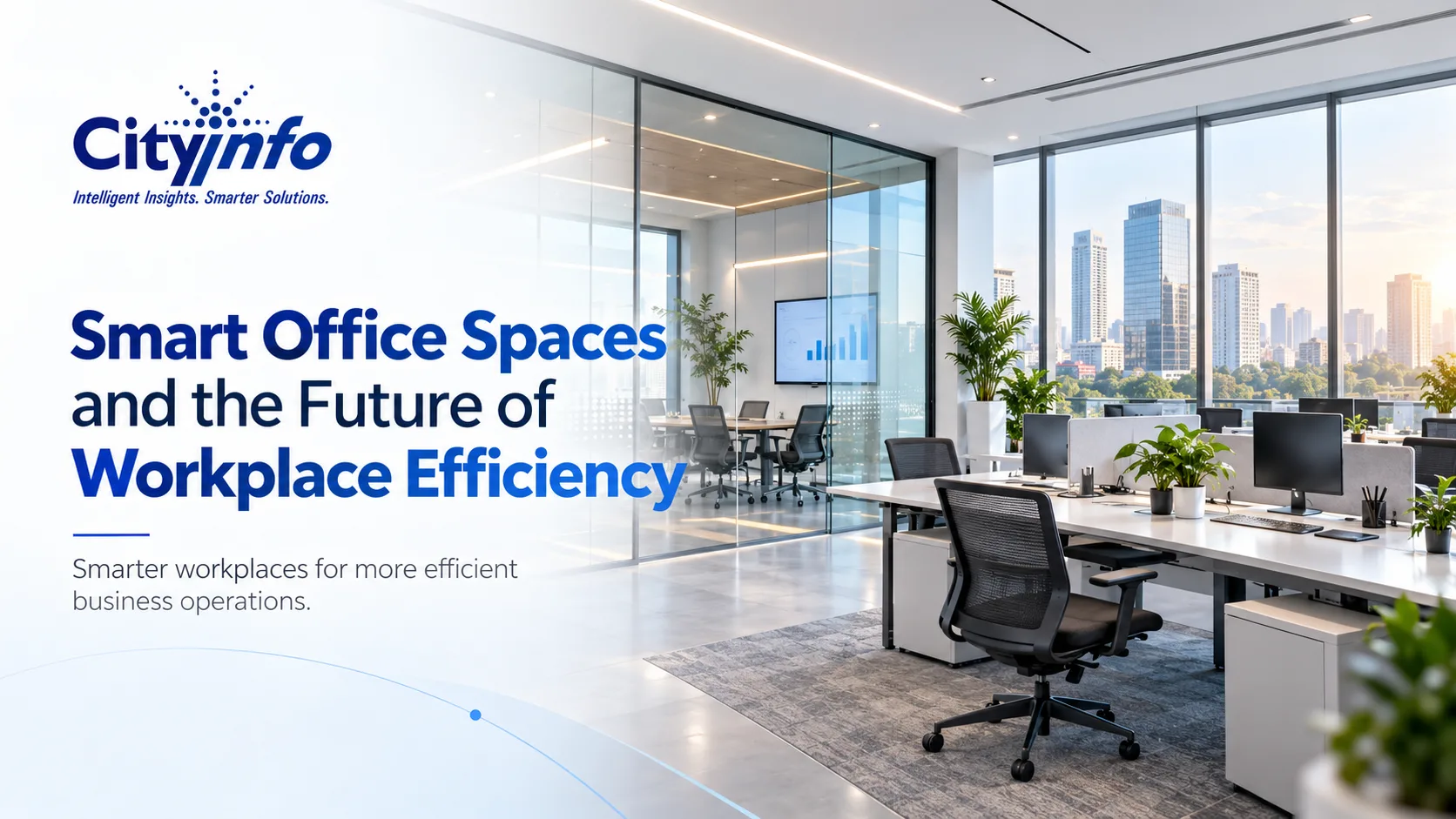
The workplace is changing rapidly. Businesses are no longer evaluating office space only by location, floor area, or rental cost. They are increasingly looking at how effectively the workplace supports productivity, collaboration, employee experience, sustainability, and operational efficiency.
This shift is driving growing interest in smart office spaces, where technology, workplace design, automation, and data come together to create more efficient working environments.
From intelligent lighting and climate control to occupancy monitoring and digital meeting room management, smart office technology is changing how businesses use commercial office space. As organisations adapt to hybrid working, flexible teams, and evolving employee expectations, smart workplaces are likely to play an increasingly important role in the future of corporate real estate.
What Are Smart Office Spaces?
Smart office spaces are workplaces that use connected technologies, automation, sensors, and digital systems to improve how the office operates and how employees interact with the workspace.
Rather than relying entirely on manual processes, a smart workplace can collect and use information about occupancy, energy consumption, meeting room utilisation, indoor conditions, and other workplace activities.
Typical smart office features may include:
- Automated lighting and temperature controls
- Occupancy and motion sensors
- Smart access control systems
- Meeting room booking platforms
- Desk reservation systems
- Visitor management technology
- Energy monitoring solutions
- Workplace management platforms
- Connected building management systems
The objective is not simply to introduce more technology. A well-designed smart office uses technology to solve practical workplace challenges and create a more efficient, responsive environment.
Improving Space Utilisation
One of the biggest challenges businesses face today is understanding how much office space they actually need.
Hybrid working has made traditional workplace planning more complex. Some areas may remain underutilised for several days while meeting rooms, collaborative spaces, or particular work zones become crowded at specific times.
Smart occupancy technology can provide businesses with better visibility into how different areas of the workplace are being used.
For example, occupancy sensors may help identify:
- Frequently used work areas
- Underutilised desks or floors
- Peak workplace occupancy periods
- Meeting rooms that are regularly booked but not used
- Areas requiring additional collaboration or breakout space
This information can support better office planning and allow businesses to make more informed decisions about expansion, consolidation, redesign, or relocation.
Supporting Hybrid and Flexible Work Models
Modern workplace strategies increasingly need to accommodate employees who may not be in the office every day.
Smart office spaces can make flexible working easier by allowing employees to reserve desks, meeting rooms, or collaborative areas before arriving at the workplace.
Digital workplace platforms can also provide employees with information about available spaces, facilities, meeting schedules, and workplace services.
This creates a more organised environment where employees can plan their office visits around the type of work they need to complete.
For businesses, these systems can also provide useful insights into workplace demand and help determine whether existing office configurations match employee working patterns.
Creating a Better Employee Experience
Workplace efficiency is not only about reducing costs. Employee experience can also influence productivity, collaboration, and the overall effectiveness of an office.
Smart office technology can help create workplaces that respond more closely to employee needs.
Automated lighting systems, intelligent temperature controls, indoor air quality monitoring, and digital workplace services can contribute to a more comfortable working environment.
Employees may also benefit from simpler workplace processes, such as digital visitor registration, mobile access, automated meeting room booking, and easier navigation within large office environments.
When employees spend less time dealing with workplace administration or searching for available spaces, they can focus more effectively on their work.
Improving Energy and Operational Efficiency
Commercial buildings consume significant amounts of energy through lighting, air conditioning, equipment, and other building systems.
Smart office spaces can help organisations manage this consumption more efficiently.
For example, automated systems can adjust lighting or climate controls according to occupancy rather than operating at full capacity throughout the day.
Building management platforms may also provide facilities teams with real-time information about equipment performance, energy consumption, or maintenance requirements.
This can help identify inefficiencies earlier and support more proactive building management.
Over time, improved energy management may contribute to lower operating costs while also supporting broader sustainability objectives.
Data-Driven Workplace Decisions
One of the most significant advantages of smart workplaces is the ability to generate useful workplace data.
Traditionally, many office planning decisions were based on assumptions about how employees used the workplace.
Smart workplace systems can provide more accurate information about occupancy, space utilisation, meeting room demand, energy consumption, and employee movement patterns.
Businesses can use these insights when considering questions such as:
- Do we need more collaborative areas?
- Are individual workstations being fully utilised?
- Should certain departments be located closer together?
- Is the office larger than current workforce requirements?
- Which areas experience the highest demand?
- Could the workplace be redesigned to improve efficiency?
Using real workplace data can help organisations make commercial real estate decisions based on actual usage rather than estimates.
Smart Offices and Sustainable Workplaces
Smart office technology can also support sustainability strategies.
Energy-efficient lighting, intelligent HVAC systems, occupancy-based automation, and real-time energy monitoring can reduce unnecessary resource consumption.
Businesses can also use building performance data to understand where improvements may be required.
As environmental performance becomes more important to occupiers, investors, employees, and corporate stakeholders, smart building features may become an increasingly important consideration when evaluating commercial office properties.
The Role of Smart Offices in Corporate Real Estate
Corporate real estate strategies are becoming more closely connected with technology and workforce planning.
Businesses looking for new office space may increasingly evaluate properties based on factors such as digital infrastructure, connectivity, building automation, access control, energy efficiency, flexible layouts, and smart building capabilities.
A strategically located office may still be important, but organisations are also considering whether the workplace can support their future operating model.
For growing companies, technology-enabled office environments can provide greater flexibility as team sizes, workplace policies, and business requirements evolve.
The Future of Workplace Efficiency
The future workplace is unlikely to be defined by technology alone. The most effective offices will combine intelligent systems with thoughtful workplace design, strong connectivity, employee-focused amenities, and flexible space planning.
Smart office spaces provide businesses with an opportunity to understand how their workplaces are being used and continuously improve them.
For companies evaluating office space, the question is increasingly shifting from “How much space do we need?” to “How effectively can this space support our people and operations?”
As workplace expectations continue to evolve, businesses that combine the right location, office design, technology, and workplace strategy will be better positioned to create efficient, adaptable environments.
For organisations exploring commercial office spaces, understanding smart workplace capabilities alongside traditional factors such as location, accessibility, infrastructure, and cost can help support more informed real estate decisions.
Ultimately, smart office spaces are not simply about creating more connected buildings. They represent a broader shift toward workplaces that are more responsive, measurable, efficient, and better aligned with the way modern businesses operate.