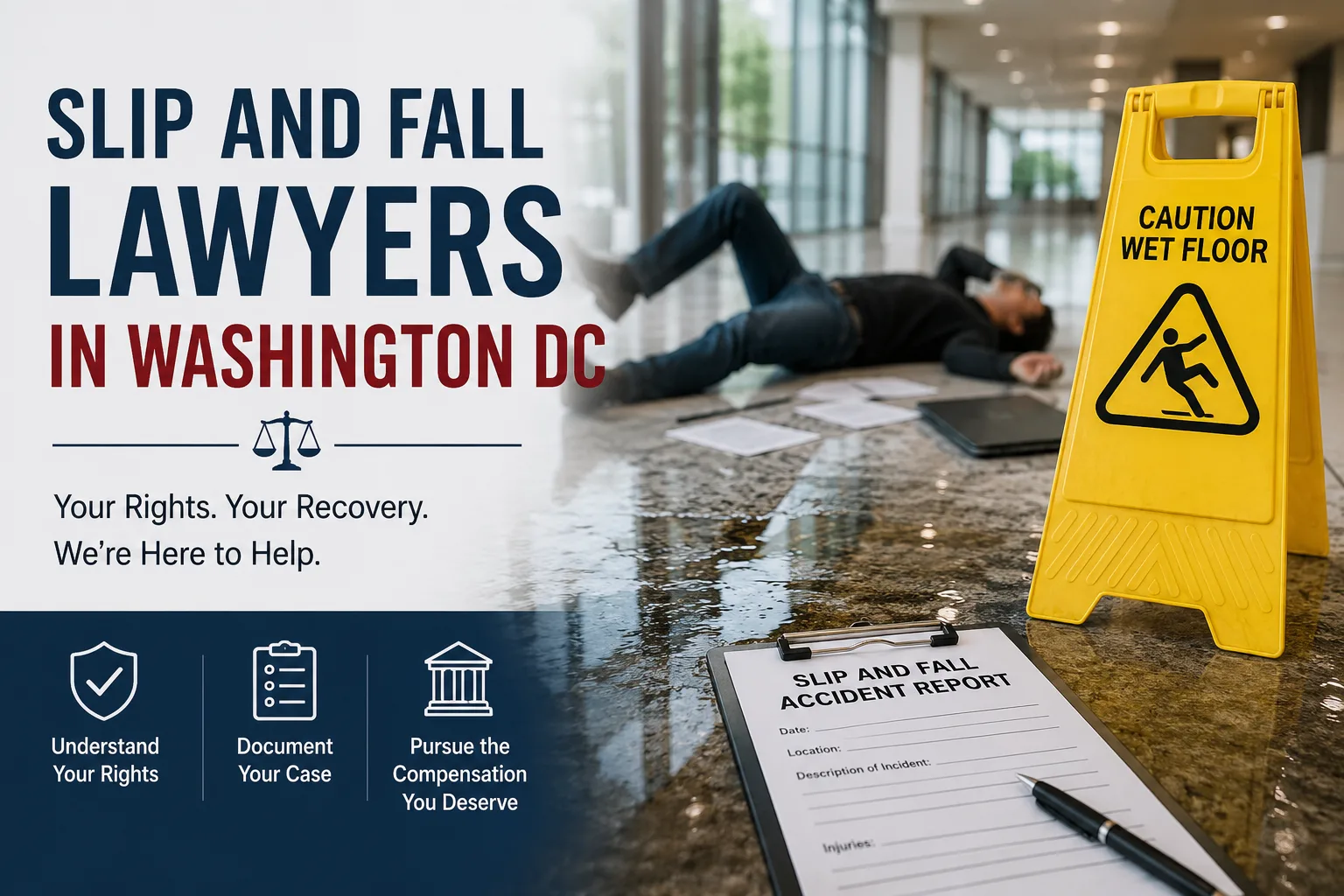
A slip and fall accident can happen in seconds, but the resulting injuries may affect a person for weeks, months, or even longer. Wet floors, uneven sidewalks, poor lighting, loose carpeting, broken stairs, and other unsafe conditions can create serious hazards for visitors, customers, tenants, and pedestrians.
If you have been injured in such an accident, understanding your legal rights can help you determine what steps to take next. Slip and fall lawyers in Washington DC can help injured individuals understand potential claims, identify responsible parties, and pursue compensation when another party's negligence contributed to the accident.
What Is a Slip and Fall Accident?
A slip and fall accident is a type of premises liability incident that occurs when someone falls because of a dangerous or unsafe condition on another person's property. These accidents can happen in many locations, including:
- Grocery stores and shopping centers
- Restaurants and hotels
- Office buildings
- Apartment complexes
- Parking garages and lots
- Public sidewalks
- Private homes
- Construction areas
Common hazards include spilled liquids, recently mopped floors without warning signs, cracked pavement, potholes, defective stairs, inadequate lighting, and objects left in walkways.
Not every fall automatically creates a legal claim. Generally, the circumstances surrounding the accident and whether a property owner or another responsible party failed to take reasonable steps to address a known or foreseeable hazard are important considerations.
Common Injuries Caused by Slip and Fall Accidents
Although some falls result in minor injuries, others can cause significant physical and financial consequences. Common injuries include:
- Broken or fractured bones
- Sprains and strains
- Back and neck injuries
- Shoulder injuries
- Knee injuries
- Traumatic brain injuries
- Spinal cord injuries
- Soft-tissue damage
Older adults may face particularly serious consequences after a fall, but people of any age can suffer substantial injuries.
Medical treatment can also result in expenses such as emergency room visits, diagnostic tests, medication, physical therapy, rehabilitation, and follow-up appointments. If an injury prevents someone from working, lost income may add to the financial burden.
When May a Property Owner Be Responsible?
Property owners and occupiers generally have responsibilities regarding reasonably safe premises, although the specific legal duties can depend on the circumstances and the type of property involved.
A potential claim may arise when a dangerous condition existed and the responsible party knew or reasonably should have known about it but failed to correct the hazard or provide an appropriate warning.
For example, imagine a store employee notices a large liquid spill in an aisle but does not clean it up or place a warning sign. If a customer subsequently slips on the spill and suffers an injury, the circumstances may support a premises liability claim.
However, proving responsibility can require evidence showing what caused the accident, who was responsible for the property, whether the hazard was known or should have been discovered, and whether reasonable precautions were taken.
What Should You Do After a Slip and Fall?
Taking appropriate steps immediately after an accident can help preserve important evidence and protect your interests.
1. Seek Medical Attention
Your health should be the first priority. Even if an injury initially appears minor, some conditions may become noticeable hours or days later. Follow medical recommendations and keep records of your treatment.
2. Report the Accident
Notify the property owner, manager, landlord, security personnel, or another responsible person about the incident. Ask whether an incident report is being prepared and request information about how to obtain a copy when appropriate.
3. Document the Accident Scene
If your condition allows, take photographs or videos of the area where the accident occurred. Capture the hazardous condition, surrounding area, lighting, warning signs, flooring, stairs, or other factors that may have contributed to the fall.
4. Gather Witness Information
If people witnessed the accident, consider obtaining their names and contact information. Witness accounts may become useful when determining what happened.
5. Preserve Relevant Records
Keep medical bills, treatment records, receipts, correspondence, photographs, employment records, and other documents related to the accident and resulting losses.
6. Be Careful About Statements
Avoid making unnecessary statements about fault or accepting responsibility for the accident before you understand the circumstances. Insurance representatives may ask questions about the incident, so consider getting appropriate legal guidance before providing a detailed statement.
How Can Slip and Fall Lawyers in Washington DC Help?
A premises liability case may involve more than simply demonstrating that a person fell. Evidence may be needed to establish the dangerous condition, responsibility for the property, notice of the hazard, and the connection between the accident and the resulting injuries.
An attorney handling these cases may investigate the circumstances, review available evidence, communicate with insurance companies, assess potential damages, and help determine whether pursuing a legal claim is appropriate.
Depending on the facts, potential compensation may include medical expenses, lost wages, rehabilitation costs, pain and suffering, and other losses associated with the injury. The availability and value of compensation depend on the individual circumstances of each case.
Understanding Time Limits for a Claim
Legal claims are subject to deadlines, and the applicable time limit can depend on several factors, including the nature of the claim and the parties involved. Claims involving government-owned property may involve additional requirements or different deadlines.
Because waiting too long can affect your ability to pursue a claim, it is generally wise to understand the applicable deadlines as soon as possible after an accident.
Final Thoughts
A slip and fall can have consequences far beyond the initial accident. Medical treatment, missed work, ongoing pain, and unexpected expenses can create significant challenges for an injured person and their family.
If your fall occurred because of a potentially dangerous property condition, documenting the accident and understanding your legal options can be important. Slip and fall lawyers in Washington DC may help you evaluate the circumstances, identify potentially responsible parties, and understand the legal process for seeking compensation.
Every accident is different, and whether a claim is viable depends on the specific facts, available evidence, applicable law, and deadlines. Speaking with a qualified legal professional can help you make an informed decision about what to do next.