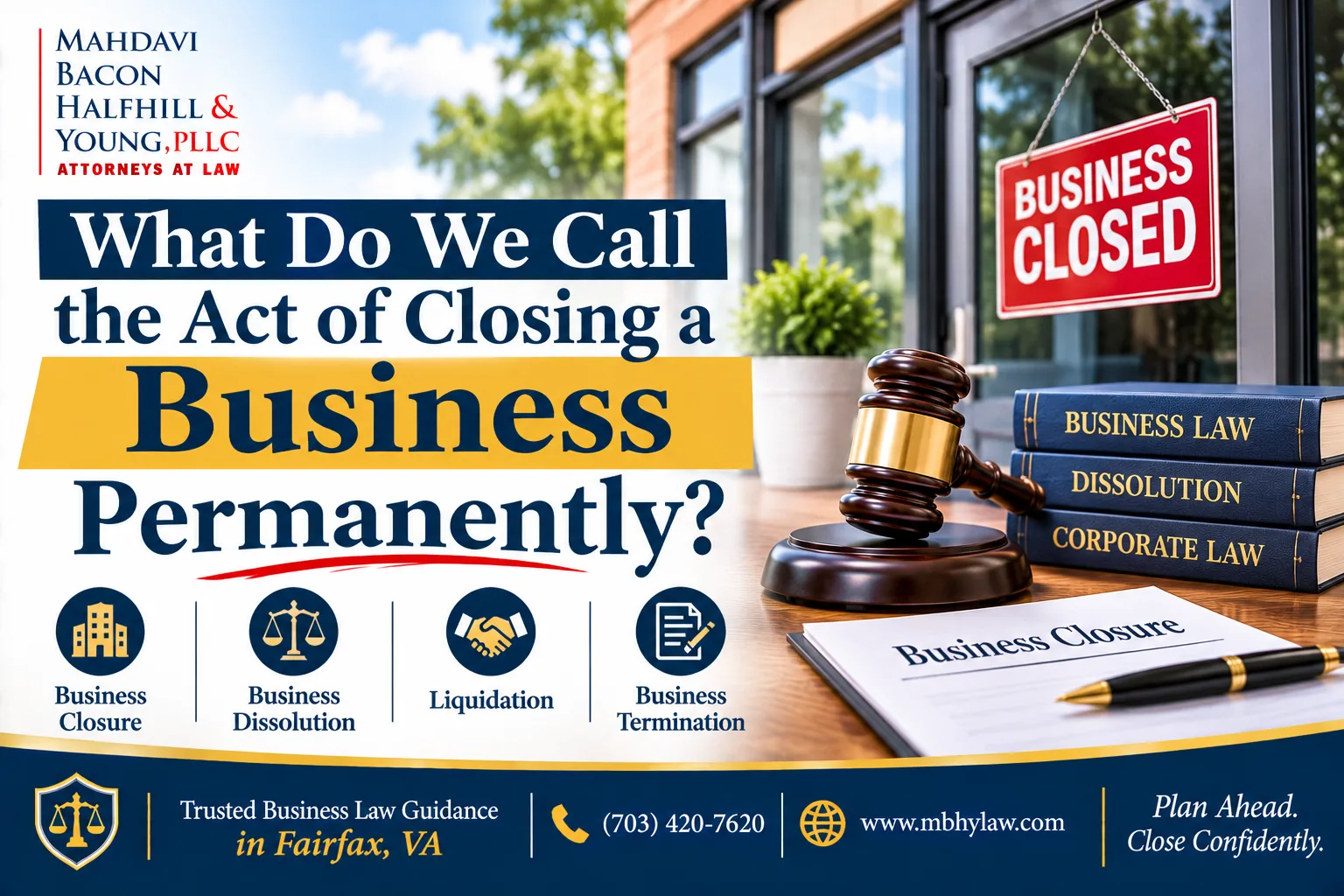
The act of closing a business permanently is commonly called business closure, business shutdown, or business dissolution. Although these terms are sometimes used interchangeably, they don't always have the same legal meaning.
For example, a business owner may stop serving customers and close the company's physical location. However, if the business is registered as an LLC or corporation, additional legal steps may be required before the entity is formally dissolved or its legal existence is terminated.
Understanding the difference between closing business operations and legally dissolving a company matters for owners who want to end their business activities responsibly. From handling outstanding debts to completing tax filings and notifying relevant parties, a permanent business closure involves several practical and legal considerations.
1. What Is the Term for Permanently Closing a Business?
The most appropriate term depends on what is happening to the business.
Business closure: A general expression describing the decision to stop operating a business permanently.
Business shutdown: An informal term often used when a company stops its day-to-day operations.
Business dissolution: A legal process through which an entity formally winds up its affairs and proceeds toward ending its existence under applicable law.
Liquidation: The process of converting business assets into cash or otherwise disposing of assets to address liabilities and distribute remaining value.
Business termination: A term that may refer to the final legal ending of a company's existence, depending on the jurisdiction and entity type.
If you are discussing the legal process of permanently closing an LLC or corporation, "business dissolution" is often the most useful term. However, the precise filing requirements depend on the company's legal structure and state of registration.
2. Is Business Closure the Same as Business Dissolution?
Not always. Business closure usually describes what happens operationally, while dissolution refers to the formal legal process.
Consider an example: An owner decides to close a retail store because sales have declined. The owner stops accepting orders, removes inventory, and closes the premises. These actions may end the store's daily operations, but they do not necessarily dissolve the LLC or corporation that owns the business.
The legal entity may still have obligations involving:
- State registration and annual reporting.
- Outstanding business taxes.
- Commercial leases and vendor contracts.
- Employee wages and benefits.
- Loans and other financial obligations.
- Pending legal claims.
- Business licenses and permits.
A formal dissolution process helps address the company's legal status and remaining affairs. Owners should identify the steps required for their particular entity rather than assuming that stopping operations is enough.
3. Why Might a Business Owner Decide to Close Permanently?
There are many reasons why an owner may decide that continuing a business is no longer the right option.
Financial pressure: Operating expenses, declining sales, or unpaid obligations may make it difficult to maintain the business.
Retirement: An owner may decide to close the company after reaching retirement or completing a long-term business goal.
Change in professional direction: Entrepreneurs sometimes close one business to focus on a new company, career, or investment opportunity.
Partnership disagreements: Serious conflicts between business partners or shareholders may affect the company's ability to operate.
Market changes: New competition, changing customer needs, or shifts in an industry may make the original business model less practical.
Business sale or restructuring: Some owners may choose to sell the company, merge it with another business, or reorganize their operations instead of continuing the existing entity.
Before choosing permanent closure, owners should compare the legal and financial implications of dissolution, sale, restructuring, and other available options.
4. What Are the Main Steps Involved in Permanently Closing a Business?
The process depends on the business structure and jurisdiction, but several steps commonly require attention.
Review the Company's Governing Documents
Start by reviewing the operating agreement, partnership agreement, bylaws, shareholder agreement, and other relevant documents. These materials may explain how owners can approve dissolution and how remaining assets should be distributed.
Obtain the Required Approval
An LLC may require approval from its members or managers, while a corporation may require action by its board of directors and shareholders. The correct procedure depends on the entity's governing documents and applicable law.
File the Required State Documents
Registered entities may need to submit formal dissolution, cancellation, or termination documents to the appropriate state agency.
For Virginia businesses, the Virginia State Corporation Commission (SCC) administers business entity filings. The filing requirements differ for corporations and LLCs, so owners should confirm the correct forms and sequence before submitting documents.
Address Business Debts and Obligations
Owners should identify outstanding debts, review contracts, and determine how valid obligations will be handled during the winding-up process.
Complete Final Tax Responsibilities
A business closure may require final federal, state, and local tax filings. Employers may also have final payroll and information-reporting responsibilities.
Cancel Licenses and Registrations
Depending on the business, owners may need to cancel permits, professional licenses, local business licenses, assumed names, and other registrations.
Maintain Important Records
Business records may be needed after operations stop. Owners should preserve financial statements, tax filings, payroll records, contracts, ownership documents, and records relating to the dissolution.
5. What Happens to Business Assets During Permanent Closure?
When a business closes, its assets must be handled carefully. These assets may include equipment, inventory, real estate, vehicles, cash, intellectual property, and money owed by customers.
Depending on the company's structure and legal obligations, assets may be sold, transferred, collected, or distributed during the winding-up process.
For example, a company may sell unused equipment to generate funds for outstanding obligations. It may also collect unpaid invoices or dispose of inventory before distributing any remaining value.
Owners should not assume that business assets can be divided among themselves immediately. Creditors and other legal obligations may have priority under applicable law.
6. What Happens to Employees, Customers, and Creditors?
A permanent business closure can affect people and organizations beyond the owners. Employees may be entitled to final wages, benefits, or other compensation under applicable law and agreements.
Customers may have prepaid orders, deposits, warranties, subscriptions, or services that have not yet been delivered. Business owners should review these commitments and determine how they will be addressed.
Creditors may also need to be notified or given an opportunity to submit claims, depending on the applicable legal requirements. This can include lenders, suppliers, landlords, contractors, and other parties to whom the business owes money.
Clear communication and proper documentation can help reduce misunderstandings and potential disputes during the closing process.
7. Do You Need to File Taxes After Closing a Business?
Yes, a business may still have tax responsibilities after it stops operating.
The Internal Revenue Service generally requires businesses to file the applicable final federal tax returns for the year they close. The required forms depend on the entity's tax classification and activities. Businesses with employees may also need to complete final employment tax filings and provide required wage statements.
Owners should also review state and local tax requirements, including sales tax, income tax, and employer obligations where applicable.
Closing a business does not automatically cancel every tax responsibility. The owner should coordinate with a qualified tax professional to identify the final filings and payment obligations that apply.
8. Should You Sell, Liquidate, or Dissolve Your Business?
Permanent closure is not the only option available to an owner who no longer wants to operate a company.
Selling the business: A sale may allow the owner to transfer the company or its assets to another buyer. This can involve purchase agreements, due diligence, negotiations, and review of liabilities.
Liquidating assets: Liquidation involves converting business property into cash or otherwise disposing of assets as part of winding up the company's affairs.
Dissolving the entity: Dissolution is the formal legal process for closing the registered business entity, subject to applicable requirements.
Restructuring or merging: In some circumstances, a business may be able to reorganize or combine with another entity rather than close entirely.
Each option can have different tax, contractual, regulatory, and financial consequences. Reviewing these alternatives before making a final decision may help owners avoid unnecessary complications.
9. How Can a Business Attorney Help With Permanent Closure?
Closing a business can involve corporate documents, ownership rights, creditor issues, contract obligations, asset distribution, and regulatory requirements. A business attorney can help owners understand the legal process and identify issues that should be addressed before the entity is fully wound up.
Legal guidance may be particularly valuable when:
- The business has multiple owners or shareholders.
- Owners disagree about whether to close.
- The company has outstanding debts or creditor disputes.
- The business owns real estate or valuable assets.
- Important contracts or leases remain active.
- The company is involved in pending litigation.
- The owners are considering a sale, merger, or restructuring instead.
Mahdavi, Bacon, Halfhill & Young, PLLC (MBHY Law) provides legal services involving business counseling, corporate structures, contracts, and business transactions. Business owners can learn more about the firm's Business Law and Corporate Attorney services to explore legal support for business-related matters.
The firm's business law practice also provides information about its broader areas of business representation.
FAQs
What is it called when a business closes permanently?
It is commonly called business closure or business shutdown. When a registered entity goes through the formal legal process of ending its affairs, the process is generally called business dissolution.
What is the difference between liquidation and dissolution?
Liquidation involves selling or converting assets to address obligations and distribute remaining value. Dissolution is the legal process of closing the business entity. Liquidation may be one part of winding up a dissolved business.
Can I simply stop operating my LLC?
Stopping operations does not necessarily close an LLC's legal registration. Owners may need to follow the applicable state dissolution or cancellation process and address remaining obligations.
Do I have to pay business debts before closing?
Business debts and valid claims must be addressed according to applicable law and the company's circumstances. Owners should not assume that dissolution automatically removes outstanding obligations.
What happens to a business license after closure?
Depending on the jurisdiction and type of license, owners may need to cancel or surrender business licenses, permits, and registrations. Requirements vary by issuing agency.
Should I consult an attorney before dissolving my company?
Legal guidance can help owners understand approval requirements, filing procedures, contracts, creditor matters, and asset distribution. It may be especially useful when the business has multiple owners, significant liabilities, or unresolved disputes.
Final Thoughts
The act of closing a business permanently is generally known as business closure, but the formal legal process is often called business dissolution. Although the terms are related, they describe different aspects of ending a business.
Business owners should consider more than simply stopping daily operations. They may need to obtain approval, file state documents, address debts, complete final tax responsibilities, notify relevant parties, and preserve important records.
Understanding the correct process can help make the transition more organized and reduce the risk of future complications. If you are considering closing, selling, or restructuring a business, reviewing your legal options before taking action is a practical first step.
To learn more about business-related legal services, visit MBHY Law or call (703) 420-7620.