
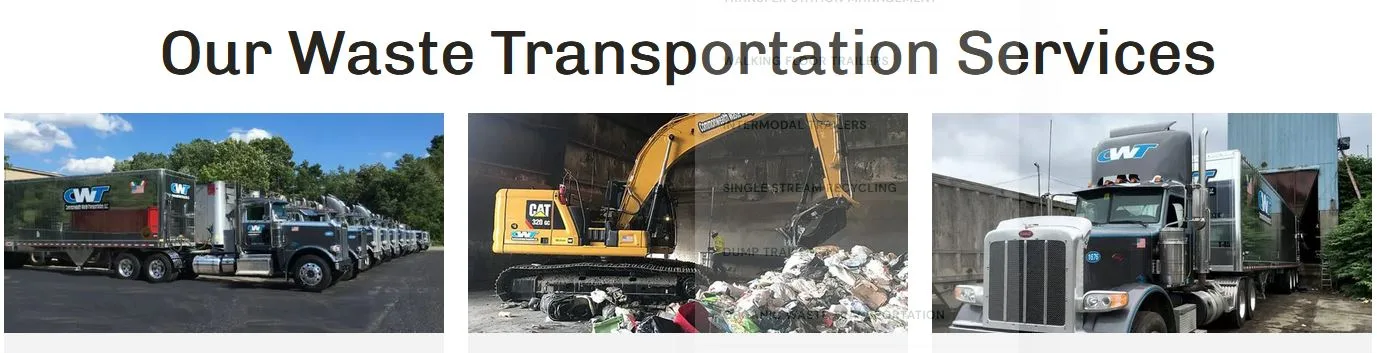
Commonwealth Waste Transportation, LLC is highlighting a set of operational indicators that businesses across New England often overlook until disruption forces the issue. As commercial waste volumes grow and site portfolios expand, many organisations continue operating under service arrangements designed for a far simpler version of their business.
The company notes that the decision to engage a waste logistics company in Massachusetts is rarely triggered by a single dramatic failure. It usually follows a period of accumulated friction, where scheduling problems, capacity surprises, and administrative burden gradually become accepted as normal. Recognising the pattern early allows businesses to transition on their own terms rather than under pressure.
Why This Question Is Surfacing Now
Commercial operations across the region have grown more complex without a corresponding change in how waste movement is managed. Businesses have added locations, diversified material streams, and taken on stricter reporting expectations from clients and regulators. Meanwhile, many are still working under arrangements negotiated years earlier for a single site with predictable output.
That mismatch produces steady operational strain. Staff spend time coordinating pickups that should be routine, containers fill ahead of schedule, and finance teams reconcile invoices across multiple arrangements that were never designed to work together. The individual problems seem small, but collectively they consume meaningful management attention every month.
Limits of Basic Service Arrangements
Standard hauling is built around fixed routes and set schedules. That model performs well when volume is stable, and operations sit at one location. Businesses that need a waste logistics company in Rhode Island typically discover the limits when volume becomes variable, because a fixed schedule cannot absorb a genuine surge without an unplanned service call.
We observe that most organisations do not recognise this threshold as it is crossed. They adapt instead, adding workarounds and internal coordination until the effort becomes invisible. The cost is real, but it is absorbed by staff time rather than appearing on an invoice.
Operational Signs a Business Has Outgrown Its Current Setup
The company identifies several practical indicators that consistently signal a need for coordinated logistics rather than basic hauling. These signs are observable without a formal audit, and most operations managers will recognise several immediately.
Businesses should assess whether they are experiencing the following:
- Managing waste across two or more physical locations under separate arrangements.
- Handling multiple material streams that require different transport methods or destinations.
- Requesting unscheduled pickups more than occasionally during a normal quarter.
- Assigning staff time to coordinate scheduling that should require no attention.
- Struggling to produce consolidated documentation for reporting or client requirements.
Volume Volatility Has Become Routine
Fluctuating volume is the clearest signal. When output varies significantly with production cycles, seasonal demand, or project phases, a fixed schedule will either leave capacity unused or leave the business waiting. A waste logistics company structures scheduling around volume ranges and forecast data rather than a single assumed average.
We note that businesses frequently misread this as an internal planning problem. In most cases, the forecasting is sound, and the constraint is a service arrangement with no built-in flexibility. Engaging a waste logistics company that businesses can scale with resolves the constraint at its source rather than through internal workarounds.
Multi-Site Coordination Is Consuming Management Time
Operating across several locations under separate arrangements creates administrative weight that grows with each addition. Different providers, schedules, invoicing cycles, and points of contact multiply quickly. What functioned acceptably at two sites becomes genuinely inefficient at four.
Consolidated coordination changes this materially. A single scheduling relationship covering multiple sites reduces administrative overhead, produces consistent documentation, and gives the business one accountable point of contact when something requires attention across the portfolio.
What Changes Under Coordinated Logistics
Businesses moving from hauling to logistics generally report changes in predictability rather than dramatic cost reduction. The value lies in removing recurring friction from operations. A waste logistics company in Massachusetts coordinates timing across transfer stations, recycling facilities, and disposal sites simultaneously, accounting for destination-side constraints that individual haulers rarely factor into scheduling.
That coordination has practical effects across the operation. Capacity problems become rare rather than routine, documentation arrives consolidated and consistent, and operations teams stop absorbing scheduling work that belongs with the provider.
Organisations typically see improvement in these areas:
- Scheduling that adjusts ahead of volume changes rather than after them.
- Consistent documentation across all sites and material streams.
- Fewer unplanned service requests and associated premium charges.
- Reduced internal coordination time for operations and administrative staff.
- A single accountable relationship covering the full portfolio.
Evaluating Readiness Before Disruption Forces the Decision
The company encourages businesses to assess their situation while operations are stable rather than during a service failure. A straightforward review of the past two quarters, covering unplanned pickups, capacity issues, and staff hours spent coordinating, usually makes the picture clear without a formal audit.
We work with commercial businesses, contractors, and municipalities across Massachusetts, Rhode Island, and the wider New England region, and remain focused on coordinated scheduling and dependable regional coverage. For organisations that have outgrown basic hauling, the company believes selecting a waste logistics company in Rhode Island and Massachusetts operations should be a planned decision rather than a reaction to disruption.
Recognising these signs in your own operation? Contact Commonwealth Waste Transportation, LLC to review your sites, volumes, and scheduling needs. Call (978) 265-4482 to discuss a coordinated approach.