
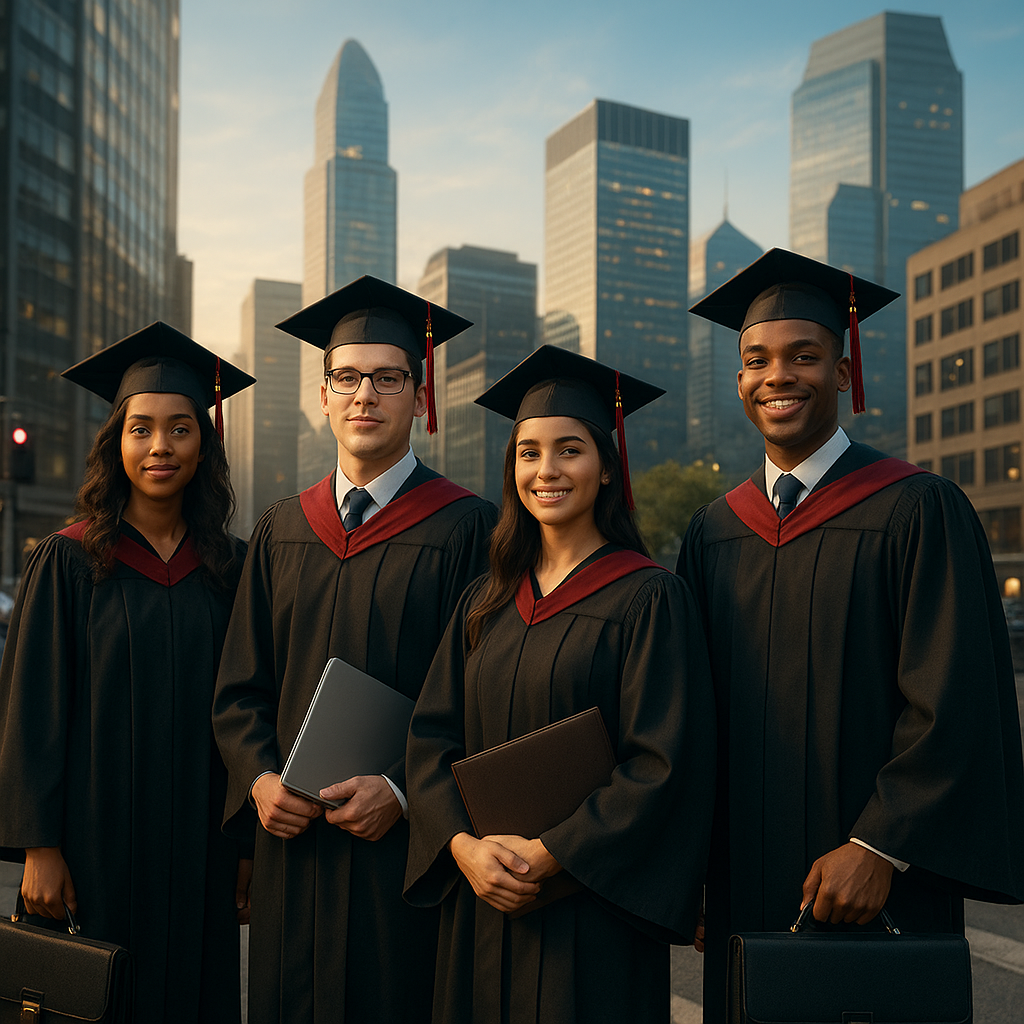
The New Harvard Hiring Landscape: A Data-Driven Opening
In the competitive job market of 2026, Harvard graduates continue to command attention from top employers, yet the path to these coveted roles is far from simple. Recent Harvard Career Services data reveals that over 82% of graduating students secured full-time employment within three months of graduation, a rate notably higher than the national average of 62%. But what distinguishes those who get hired swiftly and advantageously? Having advised hundreds of Harvard students over the past five years, it’s clear that a distinct set of behaviors and strategies sets the successful apart.
The hiring market is increasingly influenced by technological shifts and global economic realignments. Harvard’s Class of 2026 faced a landscape shaped by AI integration in recruitment, remote and hybrid work norms solidifying, and interdisciplinary skill demands escalating. This environment demands more than academic excellence; it requires savvy career navigation skills and proactive habits.
“Academic credentials open the door, but it’s the strategic habits and adaptability that keep Harvard graduates inside the room where the decisions are made,” says a senior Harvard career advisor.
These eight critical habits, rigorously observed from advising sessions and corroborated by employer feedback, reveal what top Harvard students do differently—and what ambitious candidates everywhere can learn.
From Ivy Halls to Industry Hubs: How We Arrived Here
Understanding why these habits matter requires context on Harvard’s evolving career support and the broader job market trends of the last decade. Harvard’s career ecosystem has transformed significantly since 2020. The proliferation of AI-powered recruiting tools and platforms like Handshake and LinkedIn Talent Solutions reshaped candidate screening processes. According to the National Association of Colleges and Employers (NACE), by 2025, over 70% of entry-level hiring used AI-based assessments or resume parsers, increasing the importance of digital fluency.
Simultaneously, the pandemic accelerated remote work adoption, and by 2026, hybrid roles compose nearly half of all new graduate positions, per McKinsey reports. This shift elevated the value of self-management, virtual communication skills, and digital networking.
Harvard’s career services responded by expanding experiential learning opportunities, emphasizing cross-sector connections, and integrating career coaching tailored to these new realities. The result: students not only mastered their disciplines but also developed practical, market-ready abilities.
This evolution set the stage for the eight habits now observed among those who secure the best roles. As Harvard students adapted, these habits emerged organically as success drivers.
Eight Habits Defining Harvard Students’ Job Market Success
Deep analysis of advising records, alumni outcomes, and employer surveys highlights the following eight behaviors as common denominators for Harvard students landing top positions:
- Intentional Networking Beyond Comfort Zones: Successful students invest time in building diverse connections across industries and geographies, leveraging Harvard’s vast alumni network and digital platforms with equal proficiency.
- Mastery of Digital Personal Branding: They curate LinkedIn profiles strategically, publish thought leadership content, and engage in online communities relevant to their target sectors.
- Proactive Skill Augmentation: Beyond their major, they pursue certifications, boot camps, or micro-credentials in emerging fields like AI ethics, data analytics, and green technologies.
- Tailored Application Strategies: Instead of mass-applying, they customize resumes and cover letters to reflect company culture and role-specific keywords, optimizing for applicant tracking systems.
- Leveraging Experiential Learning: They prioritize internships, research projects, and consulting gigs that offer real-world problem solving and measurable impact.
- Practice in Behavioral and Technical Interviewing: Using mock interviews and peer feedback, they refine storytelling and problem-solving demonstrations suited to employer expectations.
- Resilience and Adaptive Mindset: They treat rejection as data, iterating on applications and interview techniques without loss of momentum.
- Strategic Use of Career Resources: Engaging career coaches, attending employer info sessions, and actively participating in Harvard’s career workshops are integral to their process.
Employers from Goldman Sachs to Google consistently cite these habits as markers of candidates ready to thrive in complex, dynamic roles.
“The students who distinguish themselves are not just academically excellent—they are relentlessly strategic and self-aware about their career approach,” notes a recruitment lead at a Fortune 500 firm.
Current Developments in 2026 Shaping Graduate Employability
The job market in 2026 has introduced new layers of complexity and opportunity that reward the habits above more than ever. Artificial intelligence now assists in candidate evaluation but also requires applicants to demonstrate uniquely human skills such as creativity, empathy, and ethical judgment.
Hybrid work models have matured, with companies promoting asynchronous collaboration, making digital communication proficiency indispensable. According to a 2026 survey by Deloitte, 67% of employers expect entry-level hires to be immediately capable of managing virtual projects and cross-cultural teams.
Moreover, sustainability and social impact are no longer peripheral but central to corporate missions. Harvard students excelling in these areas by aligning internships or projects with ESG (Environmental, Social, Governance) goals stand out. Harvard’s recent initiatives to embed sustainability into career advising reflect this trend.
Finally, the gig economy has expanded into graduate-level consulting and project-based roles. Harvard students who cultivate flexible career mindsets and portfolios of short-term engagements often translate these into lucrative full-time offers.
This dynamic environment rewards those who stay agile and continuously update their competencies and networks.
Expert Perspectives and Industry Impact
Industry leaders emphasize that the Harvard graduate’s success in 2026 is emblematic of broader shifts in talent acquisition philosophy. Rather than focusing solely on credentials, recruiters look for evidence of lifelong learning, cultural agility, and strategic career management.
Experts such as Dr. Maria Nguyen, a workforce strategist, highlight that “the eight habits align closely with the competencies employers identify as critical for the future of work—namely adaptability, digital literacy, and proactive networking.”
Human resources executives report that organizations investing in early career talent programs have adapted their evaluation criteria to include these behavioral indicators. Harvard’s close collaboration with employers has helped refine this feedback loop, ensuring students’ career preparation remains relevant and targeted.
Furthermore, these habits contribute to diversity, equity, and inclusion (DEI) outcomes. Students who actively engage networks beyond immediate circles contribute to more diverse hiring pipelines, strengthening company cultures and innovation.
These insights are echoed in TheOmniBuzz articles 8 Habits Setting Harvard Students Apart in Today’s Job Market and 8 Crucial Moves Harvard Students Make to Win Jobs in 2026, which explore these themes in depth.
Case Studies: Real-World Applications of Strategic Career Habits
Consider the story of Alicia Chen, a Harvard ‘26 graduate who secured a product management role at a leading AI startup. Alicia’s approach exemplified these habits: she networked strategically across Harvard’s alumni working in AI, earned a product management certification during her junior year, and completed an internship focusing on ethical AI applications.
Her tailored application highlighted her direct experience and alignment with the company’s mission. She practiced behavioral interviews extensively, which helped her articulate complex project outcomes succinctly during final rounds. Alicia’s resilience through two initial rejections before success illustrates the importance of mindset.
Similarly, James Patel, graduating in computer science, landed a hybrid consulting role with a global sustainability firm. He combined technical mastery with a certificate in sustainable business practices and engaged in a Harvard-sponsored consulting project with a non-profit. His digital personal branding, including LinkedIn articles on green tech trends, attracted recruiter attention early.
Both examples underscore that these eight habits are actionable and transferable across sectors, offering a template for any candidate aiming for top roles.
Looking Ahead: What Harvard Students and Job Seekers Should Prioritize
As the job market continues evolving, these habits will only grow in importance. Candidates should anticipate further integration of AI in hiring, making digital literacy and personal branding essential. Additionally, the increasing emphasis on social impact and corporate responsibility means students who align their skills and experiences with these values will gain a competitive edge.
Continuous learning and flexibility remain paramount. Those who invest in skill diversification and maintain robust professional networks will navigate future shifts more successfully.
For job seekers at all levels, the Harvard case provides valuable lessons: strategic, data-informed career management is no longer optional but critical. Engaging career coaches, leveraging institutional resources, and maintaining an adaptive mindset are effective tactics proven by Harvard students’ sustained success.
In conclusion, the eight habits identified through years of advising reflect a profound shift in how early-career talent thrives. As highlighted in 8 Essential Strategies Harvard Students Use to Secure Top Jobs Today, these behaviors embody a holistic approach to job seeking—one that balances skill, strategy, and self-awareness.
“The future belongs to those who prepare today with intention and agility,” says a Harvard career advisor, encapsulating the ethos behind these eight powerful habits.
- Network widely and strategically
- Build a compelling digital brand
- Continuously upgrade relevant skills
- Customize applications thoughtfully
- Gain practical experience via internships/projects
- Master interview techniques with practice
- Embrace resilience and learning from setbacks
- Utilize career resources fully and proactively
Emulating these habits positions Harvard graduates—and indeed, any ambitious student or job seeker—to excel amid the complexities of the 2026 job market and beyond.