Millions of shoppers open the Amazon app every day looking for something to buy. Most of them never scroll past the first few results. If your product isn’t in those top spots, you’re invisible, however good it is. That is why Amazon advertising in India has gone from an optional extra to a core part of how serious sellers grow.
This guide covers how the ad system works, how to set up campaigns that make money, and which mistakes quietly burn your budget.
Why Ads Matter More Than Ever
Competition on Amazon.in is intense. Thousands of new sellers join every year, and categories like electronics, beauty, home and kitchen, and fashion are crowded with similar products at similar prices. Organic ranking still matters, but it is slow to build.
Ads let you skip the queue. A well-run campaign puts your product in front of buyers right now, and the sales it generates also improve your organic rank. More orders tell Amazon’s algorithm your product deserves visibility, so paid and organic growth feed each other.
Festive periods make this even more important. Around Diwali and other big sale events, shopper intent is at its highest, and so is the cost per click. Sellers who prepare early pay less and win more.
The Ad Types You Should Know
Amazon offers several formats, and each has a different job.
Sponsored Products are the starting point for most sellers. They promote a single listing and appear in search results and on product pages. They are simple, measurable, and usually the quickest route to sales.
Sponsored Brands show your logo, a headline, and multiple products at the top of search results. They suit brand-registered sellers who want to build recognition and cross-sell.
Sponsored Display lets you retarget shoppers who viewed your product but didn’t buy. It also reaches shoppers browsing competitor listings.
Video and DSP ads are for brands with larger budgets who want awareness at scale, including off-Amazon reach.
If you’re new, start with Sponsored Products. Add the other formats once you have steady data and profitable campaigns.
Why Amazon PPC Management Is Not a Set-and-Forget Job
Pay-per-click means you pay only when someone clicks. That sounds safe, but without regular attention it is the fastest way to waste money. Search terms shift, competitors change bids, and seasonal demand moves constantly.
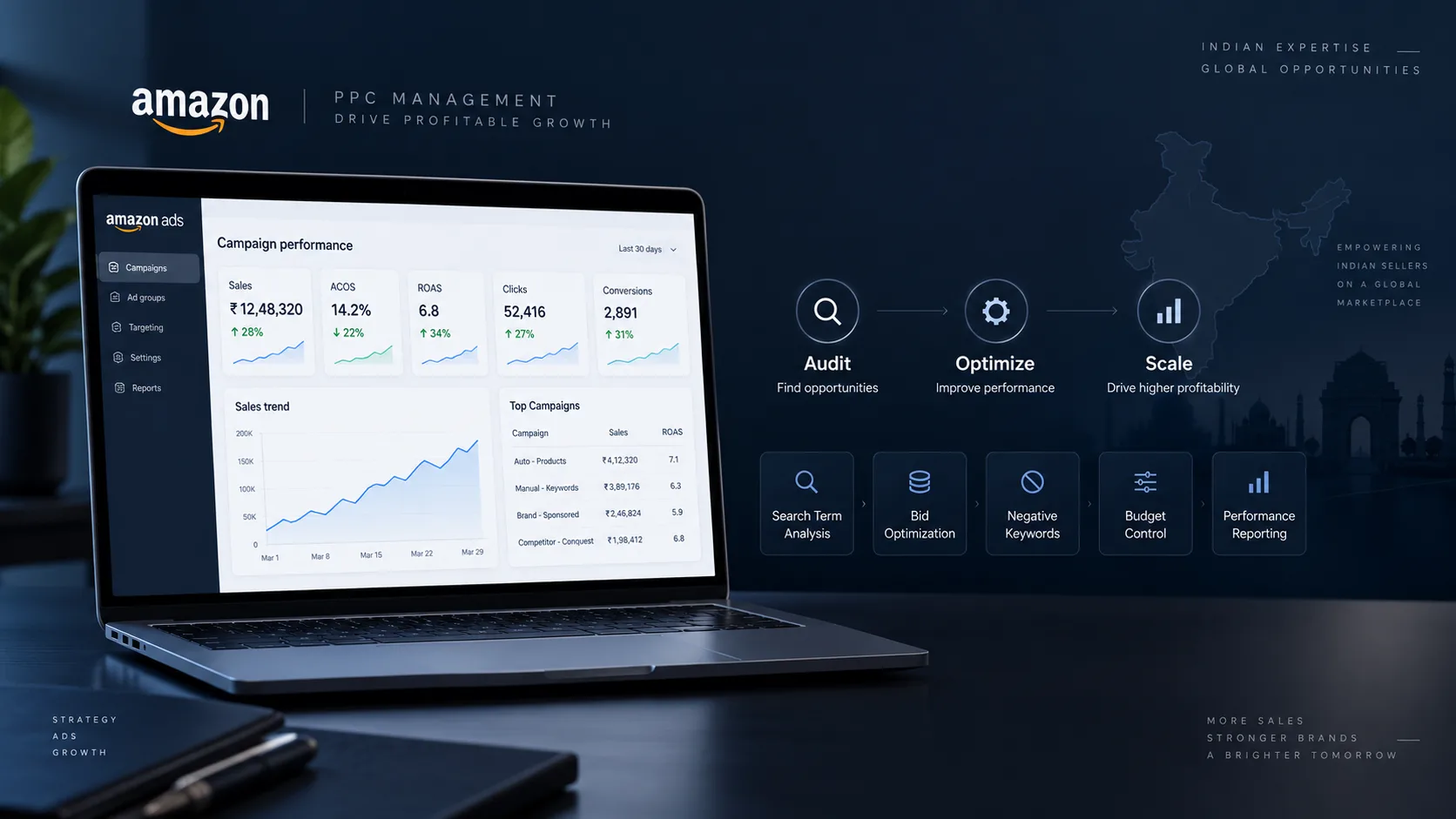
Good Amazon PPC management is a weekly routine, not a one-time setup. It involves reviewing search term reports, pausing keywords that spend without selling, raising bids on winners, and adding negative keywords so your ads stop showing for irrelevant searches. Sellers who do this consistently often see their cost of sales fall within a few weeks, while sellers who skip it watch their margins disappear.
Build Your Campaigns the Smart Way
You don’t need a complicated structure. You need a clean one.
- Separate your goals. Run one campaign to discover new keywords and another to scale proven ones. Mixing them makes results hard to read.
- Use match types on purpose. Broad and phrase match help you discover what shoppers actually search. Exact match gives you control over your best performers.
- Group similar products. Keep one product or tightly related variants per ad group so your bids and keywords stay relevant.
- Add negative keywords early. Block terms like “free,” “cheap,” or unrelated product types so you don’t pay for clicks that will never convert.
- Fix your listing first. Ads can’t rescue a weak page. Check your images, title, bullet points, price, and reviews before you spend a rupee.
Know Your Numbers
Three metrics tell you most of what you need.
ACoS (advertising cost of sales) is ad spend divided by ad sales. A lower number is better, but the right target depends on your margin. If your profit margin is 30 percent, an ACoS of 25 percent is healthy, while an ACoS of 40 percent means you lose money on every ad sale.
TACoS compares ad spend with your total sales, including organic. It shows whether ads are helping your business grow overall rather than just feeding themselves.
Conversion rate shows how many clicks turn into orders. If clicks are high and orders are low, the problem is usually your listing or price, not your bids.
Start with a modest daily budget, let campaigns collect a couple of weeks of data, then adjust. Panic changes after two days of poor results usually do more harm than good.
Mistakes That Drain Your Budget
- Bidding on very broad keywords with no negative list
- Ignoring search term reports for weeks
- Running ads on products with poor reviews or stock issues
- Setting one budget for everything and never adjusting
- Chasing the lowest ACoS and sacrificing growth
- Forgetting to pause ads when inventory runs low
Avoiding these alone can improve your results noticeably.
When to Get Professional Help
Many sellers handle ads themselves at first, and that is fine. But as your catalog grows, the workload grows with it. Dozens of campaigns, hundreds of keywords, and constant bid changes demand time that most owners would rather spend on sourcing and operations.
This is where professional Amazon advertising management can pay for itself. A good specialist or agency brings structure, regular optimization, clear reporting, and experience from many accounts. Look for transparent pricing, reports you can actually understand, and a focus on profit rather than just sales. Be cautious of anyone who promises guaranteed results or won’t show you the data.
Trends Worth Watching
The ad landscape keeps moving. Video ads are getting more attention as shoppers prefer to see products in action. AI-powered shopping assistants are changing how people search, so clear, detailed, benefit-led listings matter more than keyword stuffing. Regional language content is also growing as more shoppers from smaller cities come online. Sellers who adapt early will have an edge.
Final Thoughts
Success with Amazon advertising in India comes down to a few habits: a strong listing, a clean campaign structure, regular optimization, and a clear understanding of your margins. Start small, learn from the data, and scale what works. Treat ads as an investment you manage actively, and they can become the most reliable growth engine in your business.
Frequently Asked Questions
1. How much should a new seller spend on Amazon ads?
Start with a small daily budget, such as ₹300 to ₹500 per campaign, and run it for two to three weeks. This gives you enough data to see which keywords convert before you scale.
2. What is a good ACoS for Amazon sellers?
It depends on your profit margin. A good ACoS is one that stays below your break-even point. New product launches may run a higher ACoS temporarily to build sales history and reviews.
3. How often should I optimize my campaigns?
Review them at least once a week. Check search term reports, adjust bids, and add negative keywords. During festive sales, check daily.
4. Can I run ads without Brand Registry?
Yes. Sponsored Products are available to professional sellers without Brand Registry. Sponsored Brands and some other formats do require it.
5. Is it better to manage ads myself or hire an expert?
If you have only a few products and time to learn, managing it yourself works. As your catalog and budget grow, an expert can save time and often improve profitability.