Most architecture practices choose a marketing agency the way they would choose any supplier, on price and a good first impression. Then they are surprised when a competent generalist produces generic results that bring the wrong enquiries.
The problem is rarely that the agency is bad. It is that architecture has specific demands most agencies have never encountered, and the practice had no way to tell the difference during the sales conversation.
Here is what actually separates the right partner from the wrong one, and what to ask any of the architect seo companies you are considering.
What Should Architects Look For In An SEO Agency
Look for genuine understanding of how architecture clients research and decide, not just SEO competence. The right agency knows architecture has long consideration windows, high project values, portfolio heavy sites, and local intent, and it builds around those. A generalist applying a standard playbook to a portfolio site will produce traffic without the right enquiries.
Generalist Competence Is Not The Same As Fit
A technically skilled agency can rank almost any site, which is exactly why skill alone is a misleading signal.
The question is not whether they can do SEO. It is whether they understand what a good outcome looks like for an architecture practice. A generalist optimising for traffic will happily rank you for terms that bring students, researchers and the wrong project types, and report it as success. The dashboard looks healthy while the enquiries waste your time.
An agency that understands architecture optimises for qualified briefs in the project types and values you actually want. Same technical skill, completely different target, and the difference only shows up months later in the quality of who contacts you.
They Should Understand The Long Consideration Window
Architecture buying is slow, and an agency that does not grasp this will misread the entire campaign.
A homeowner may research for months before commissioning. A developer may take a year. An agency expecting quick conversions, or judging the work on a short timeline, will panic or pivot at exactly the wrong moment. One that understands the window builds for it, with content that reaches people early in research and a measurement approach that does not declare failure before the cycle has run.
Ask a prospective agency how long they expect results to take for a practice like yours. An answer that acknowledges the long cycle is a good sign. A promise of fast enquiries is a warning that they are thinking about a different kind of business.
Portfolio Heavy Sites Need Specific Technical Handling
This is where architecture diverges most from ordinary SEO, and where Web Development Services competence becomes part of the decision.
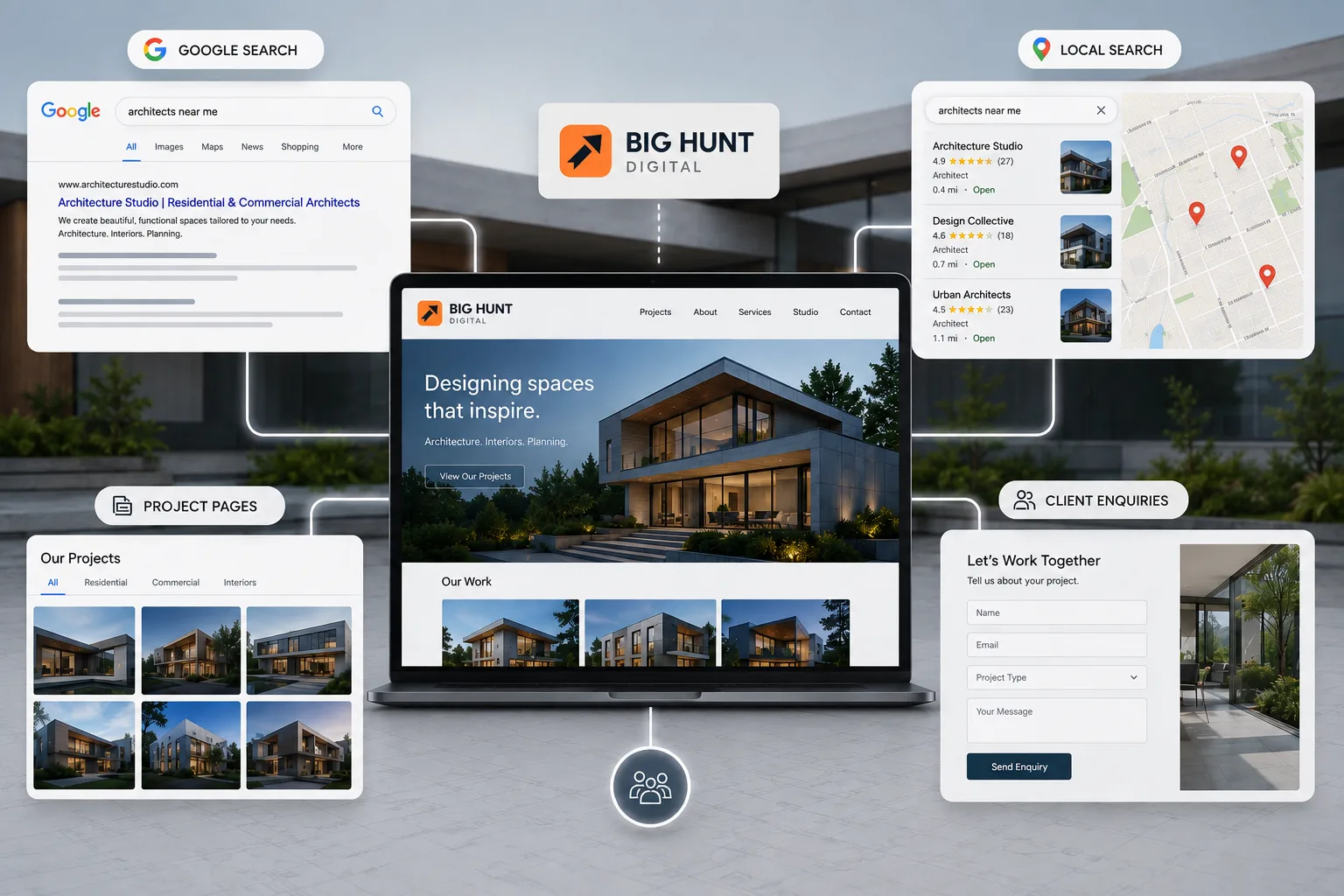
Architecture sites are image heavy by nature. Galleries, high resolution project photography, visual layouts. All of it looks essential and all of it slows the site down, which hurts both ranking and whether a prospect waits long enough to enquire. An agency that does not understand this will leave the technical foundation untouched and wonder why a beautiful site underperforms.
The right partner handles the portfolio properly: compressed and tagged imagery, fast load times at code level, project pages structured to rank individually rather than buried in one scroll. Benchmarks worth holding are load times under two seconds and strong Core Web Vitals scores, achieved by building performance in rather than retrofitting it. An agency that treats the site's technical health as part of the SEO job, not a separate concern, is one that understands architecture.
Local Intent Should Be Central, Not An Afterthought
Most architecture searches carry local intent, and an agency that treats local as a minor add on misunderstands the sector.
Clients search for an architect in their city or area, and those local searches are what turn into fee proposals. An agency that focuses on broad national terms while neglecting local visibility is chasing the wrong rankings. The right one treats the Google Business Profile, consistent local information, and genuine location pages as central to the strategy.
Ask how they approach local visibility for a practice in your area. A detailed answer about profiles, citations and location pages signals understanding. A vague one signals a generalist applying a national playbook.
They Should Ask About Your Business, Not Just Your Website
The most revealing signal comes early, in what the agency asks you.
An agency that opens by asking about your keywords and your website is thinking about traffic. One that asks what a typical project is worth, which enquiries you want more of, how many projects you can take, and what a good client looks like is thinking about your business. The second kind builds a campaign aimed at outcomes that matter to you.
This is easy to test in the first conversation. The questions an agency asks reveal what it will optimise for, long before any work begins.
Evidence In Your Sector, Read Honestly
Ask for results from architecture or comparable considered, high value, local service businesses, and read them for the right things.
Be wary of an agency that only shows its single best case study. Ask for a more ordinary result too, because that tells you what to realistically expect. And look at what the results measure. Qualified enquiries and the right project types matter. Traffic alone does not, because a generalist can produce traffic that converts into nothing useful for an architecture practice.
An agency comfortable showing a modest, honest result and explaining the context is more trustworthy than one showing only headline numbers with no scope attached.
The Questions That Separate Fit From Skill
A short set of questions surfaces the difference quickly.
Ask what a good outcome looks like for an architecture practice, and listen for whether they talk about qualified briefs or just traffic. Ask how long results take, and listen for an honest long cycle answer. Ask how they handle a portfolio heavy site technically. Ask how they approach local visibility. And notice whether they asked about your business economics before proposing anything.
An agency that answers those well understands architecture. One that redirects every answer back to generic SEO deliverables is competent at SEO and unfamiliar with your sector, and the gap between those two is where most disappointing engagements come from. Choose for fit, not just skill, and the same budget produces enquiries you actually want.