The Dawn of a New Scientific Era: A Snapshot from 2026
In early 2026, the world witnessed a landmark experiment at the International Quantum Research Facility in Geneva, where scientists successfully demonstrated stable quantum entanglement across intercontinental distances. This breakthrough is emblematic of a broader transformation in science—one where boundaries between disciplines blur, and technologies advance at an unprecedented pace. The future of science is no longer a distant speculation; it is unfolding in real time, reshaping industries, societies, and even philosophical paradigms.
To appreciate the significance of such advances, consider that just a decade ago, quantum technologies were predominantly theoretical. Today, they are on the cusp of revolutionizing communications, computing, and cryptography. This shift is part of a larger trajectory propelled by exponential growth in data, computational power, and interdisciplinary collaboration.
“The convergence of quantum mechanics, artificial intelligence, and biotechnology is driving a new scientific revolution that will redefine what humanity can achieve,” says Dr. Lila Anders, a leading futurist and science advisor at the Global Science Consortium.
Understanding this trajectory requires a deep dive into the historical developments that paved the way and an analytical look at current trends shaping scientific inquiry and application.
From Foundations to Frontiers: How Science Reached This Pivotal Point
Science has always evolved through paradigm shifts—from Newtonian physics to relativity, and from classical genetics to the genomic era. The early 21st century was marked by rapid digitization, culminating in the rise of AI and machine learning platforms. These tools accelerated data analysis, enabling discoveries at scales previously unimaginable.
Historically, the Human Genome Project (completed in 2003) set a precedent for international collaboration and big data science. It demonstrated how complex biological puzzles could be unraveled with sufficient computational resources and collective expertise. Since then, a wave of projects in neuroscience, climate modeling, and particle physics have similarly depended on cross-border cooperation and advanced computing.
Moreover, the integration of automation and robotics into laboratories has transformed experimental science, increasing throughput and reproducibility. The rise of citizen science and open-access platforms also democratized research, breaking down barriers between professional scientists and the public.
“We’re witnessing a shift from isolated discoveries to a collective intelligence model, where knowledge grows through interconnected networks rather than lone geniuses,” notes Prof. Anil Mehta, chair of the International Science Policy Forum.
This historical context sets the stage for understanding the current scientific landscape and its future directions.
Quantifying Progress: Data and Trends Defining Science in 2026
Examining recent data reveals the scale and scope of scientific progress. According to the Global Science Index 2025, worldwide R&D expenditure has surpassed $3.8 trillion, with annual growth averaging 6.4% over the past five years. Notably, private sector investment now accounts for nearly 60% of total funding, highlighting the increasing role of industry in driving innovation.
Several key domains exhibit extraordinary momentum:
- Quantum Technologies: Investments in quantum computing hardware have tripled since 2022, with companies like Qubitix and IonCore unveiling processors exceeding 1,000 qubits. Applications in secure communications are already being trialed in critical infrastructure.
- Artificial Intelligence: AI research funding has doubled in the last three years, emphasizing explainable AI and ethical frameworks. Breakthroughs in generative models are transforming drug discovery and materials science.
- Biotechnology and Synthetic Biology: CRISPR-based therapies have entered mainstream clinical practice, with over 20 gene-editing treatments approved globally, addressing diseases from cancer to rare genetic disorders.
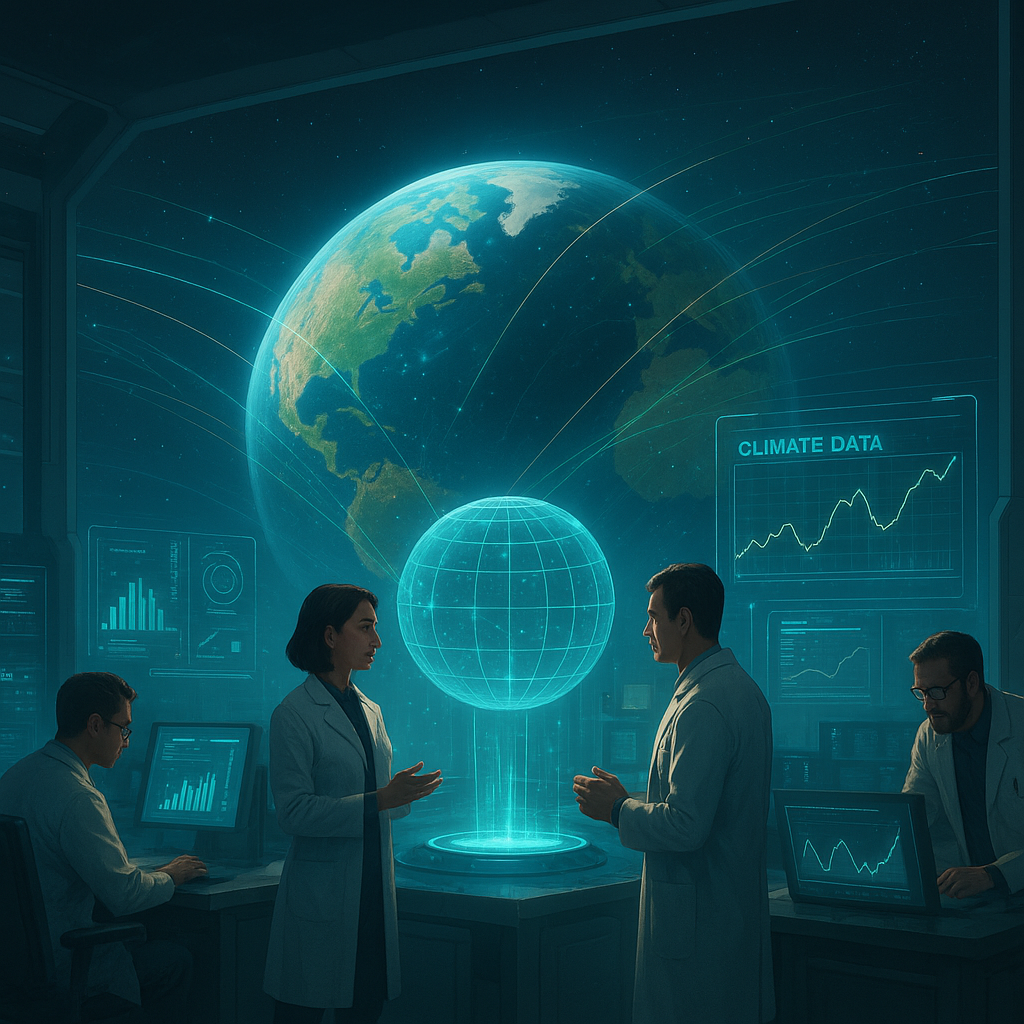
- Climate Science and Earth Monitoring: Enhanced satellite networks and AI-powered climate models have improved forecasting accuracy by 35%, guiding policy decisions and disaster response.
These trends underscore how science is increasingly data-driven, multidisciplinary, and application-focused. The interplay of technological advances and societal needs is accelerating innovation cycles, compressing timelines from discovery to deployment.
For a more comprehensive overview of science's current breakthroughs and challenges, readers can consult TheOmniBuzz’s detailed analysis on Science in 2026: Breakthroughs, Challenges, and the Path Forward.
2026’s Scientific Landscape: Emerging Developments and Breakthroughs
This year has brought several transformative advances that spotlight the future trajectory of scientific exploration. One such development is the successful deployment of autonomous laboratories powered by AI, which conduct complex experiments with minimal human intervention. These systems can iterate hypotheses and optimize protocols in real-time, dramatically accelerating research output.
In medicine, personalized nanorobots capable of targeting tumors with unmatched precision have entered early-stage human trials. These microscopic devices navigate the bloodstream, delivering therapeutic agents and monitoring cellular environments, heralding a new horizon in precision medicine.
Meanwhile, the field of energy science has seen a breakthrough with the first net-positive fusion reactor prototype achieving continuous operation for over 100 hours. This milestone, realized by the international consortium FusionNext, signifies a critical step toward sustainable, clean energy solutions.
“The fusion milestone represents decades of perseverance and international collaboration. It’s a beacon for humanity’s capacity to solve existential challenges through science,” emphasized Dr. Mei Lin, chief scientist at FusionNext.
In environmental science, advanced biosensors deployed globally are enabling real-time monitoring of biodiversity and pollution levels, empowering conservationists and policymakers with actionable intelligence. These developments connect deeply with ongoing efforts to combat climate change, as explored in Unveiling Climate Science Breakthroughs Shaping 2026’s Future.
Expert Insights: Implications for Industry, Policy, and Society
The accelerating pace of scientific advancement poses profound questions for governance, ethics, and societal adaptation. Experts emphasize the need for robust regulatory frameworks that balance innovation with safety and equity.
Dr. Amina El-Sayed, head of Science Policy at the International Council of Scientific Unions, warns, “As technologies like gene editing and AI become more powerful, the risk of misuse or unintended consequences grows. We must prioritize transparent international cooperation to establish norms and safeguards.”
Industries across sectors are rapidly adapting to these scientific shifts. The pharmaceutical industry increasingly collaborates with AI startups to streamline drug pipelines, while energy companies pivot toward fusion and renewable integration. Educational institutions are revising curricula to emphasize interdisciplinary skills and ethical literacy.
“Science’s future is not just about discovery but responsible stewardship—ensuring these advances benefit all humanity,” states Prof. Elena Garcia, director of the Global Institute for Science and Society.
These perspectives highlight the intertwined nature of scientific progress, societal values, and policy frameworks that will shape the coming decades.
Looking Ahead: What to Watch in Science’s Next Frontier
As we project into the next decades, several trends and challenges warrant close attention:
- Integration of AI and Human Cognition: Brain-computer interfaces are advancing toward seamless integration, raising possibilities from enhanced cognition to new forms of communication.
- Ethical Frameworks for Emerging Technologies: The development of global governance models for AI, gene editing, and synthetic biology will be decisive in shaping equitable outcomes.
- Climate Resilience and Geoengineering: Scientific innovations targeting climate mitigation, including carbon capture and solar radiation management, will require rigorous evaluation and international consensus.
- Open Science and Data Sovereignty: Balancing open access with data privacy and national interests will be a critical governance challenge.
- Space Science and Exploration: Renewed interest and investment in lunar and Martian missions may yield new scientific paradigms and resource opportunities.
These focal points suggest that the future of science involves not only technological breakthroughs but also complex social negotiations and policy decisions.
For a deeper exploration of how science is reshaping reality itself, readers should consider visiting How Science Is Rewriting Reality: Breakthroughs and Challenges Shaping Our Future.
Case Study: Quantum Internet and the Global Communications Revolution
The International Quantum Research Facility’s recent success in maintaining stable quantum entanglement over 12,000 kilometers offers a glimpse into the future of global connectivity. This project, a collaboration between European and Asian scientific institutions, aims to establish the first prototype quantum internet.
Unlike conventional networks, a quantum internet leverages entangled particles to enable ultra-secure communication immune to eavesdropping. Early applications focus on government, finance, and critical infrastructure sectors, where data security is paramount.
This initiative exemplifies how foundational science translates into transformative technology with broad societal impact. The project has spurred a wave of investments and startup activity in quantum cryptography and networking components.
“The quantum internet will redefine trust in digital communication, creating a backbone for future technological ecosystems,” explains lead researcher Dr. Sven Richter.
Beyond technology, the project underscores the importance of international collaboration in addressing complex scientific challenges — a theme consistent throughout contemporary science’s evolution.
Conclusion: Navigating the Promises and Perils of Science’s Future
The future of science is a tapestry woven from breakthroughs in fundamental research, technological innovation, ethical reflection, and global cooperation. As 2026 highlights, this future is already here, dynamically reshaping how knowledge is produced and applied.
Science will continue to push boundaries—unlocking new understandings of the universe, revolutionizing health and energy, and confronting urgent environmental crises. Yet, these advances come with responsibilities that extend beyond laboratories and boardrooms to the very fabric of society.
By integrating scientific insight with thoughtful governance and inclusive dialogue, humanity can harness this momentum to build a more resilient, equitable, and enlightened future.