
Opening the Door to the Unknown: A Scientific Renaissance
In early 2026, the scientific community celebrated a milestone that few predicted a decade ago: the successful demonstration of a room-temperature superconductor with practical applications. This breakthrough, achieved by a consortium of international physicists and materials scientists, sets the tone for how science today is not merely advancing incrementally but is poised to transform entire industries, from energy to computing. The implications ripple beyond labs and universities into the core of society, affecting economic systems, healthcare, and environmental management.
This moment epitomizes a broader phenomenon: science in 2026 is characterized by unprecedented interdisciplinarity, accelerated by AI-driven research tools and collaborative global networks. Yet, amid these triumphs lies a complex mosaic of challenges, including ethical debates, funding dynamics, and public trust issues. Understanding science's trajectory requires examining its historical context, current innovations, and future prospects.
"Science today is less about isolated discovery and more about interconnected systems—where data, ethics, and global cooperation determine success." — Dr. Elena Vasquez, Director of the Global Science Initiative
From Enlightenment to AI-Driven Discovery: Contextualizing Today’s Science
The seeds of modern scientific progress were sown centuries ago during the Enlightenment, but the pace of discovery accelerated dramatically through the 20th and early 21st centuries with the advent of computers, biotechnology, and space exploration. The Human Genome Project’s completion in 2003 marked a pivotal moment, opening the door to personalized medicine and genomics. However, the last five years have arguably seen the most rapid transformation, largely due to advancements in artificial intelligence and big data analytics.
AI’s integration into research pipelines has reduced experimental times, optimized hypothesis testing, and expanded the scope of what is scientifically accessible. This era also witnesses the blending of disciplines: quantum physics informs materials science, neuroscience guides AI development, and environmental science shapes urban planning. The 2026 landscape is a direct product of these layered evolutions.
Yet, the journey hasn’t been without hurdles. Funding for fundamental research has become more competitive, often favoring applied sciences promising quicker returns. Social movements have also pushed science to become more inclusive and transparent; debates about data privacy, algorithmic bias, and equitable access to innovations are now central to the scientific discourse.
Analyzing the Data: Key Scientific Advances and Their Impact
Recent data from the International Science Council (ISC) shows a 45% increase in cross-disciplinary research publications between 2021 and 2025. This trend reflects the shift from siloed approaches to integrated problem-solving. Key areas illuminating this shift include:
- Quantum Computing: Companies like Qubitron and global research teams have increased quantum computing qubit coherence times by 300%, enabling more practical quantum algorithms that can solve complex optimization and cryptography problems.
- Biomedical Engineering: The rise of bio-integrated electronics has led to devices that monitor health in real time, significantly improving chronic disease management. These devices leverage advances in nanomaterials and AI for predictive analytics.
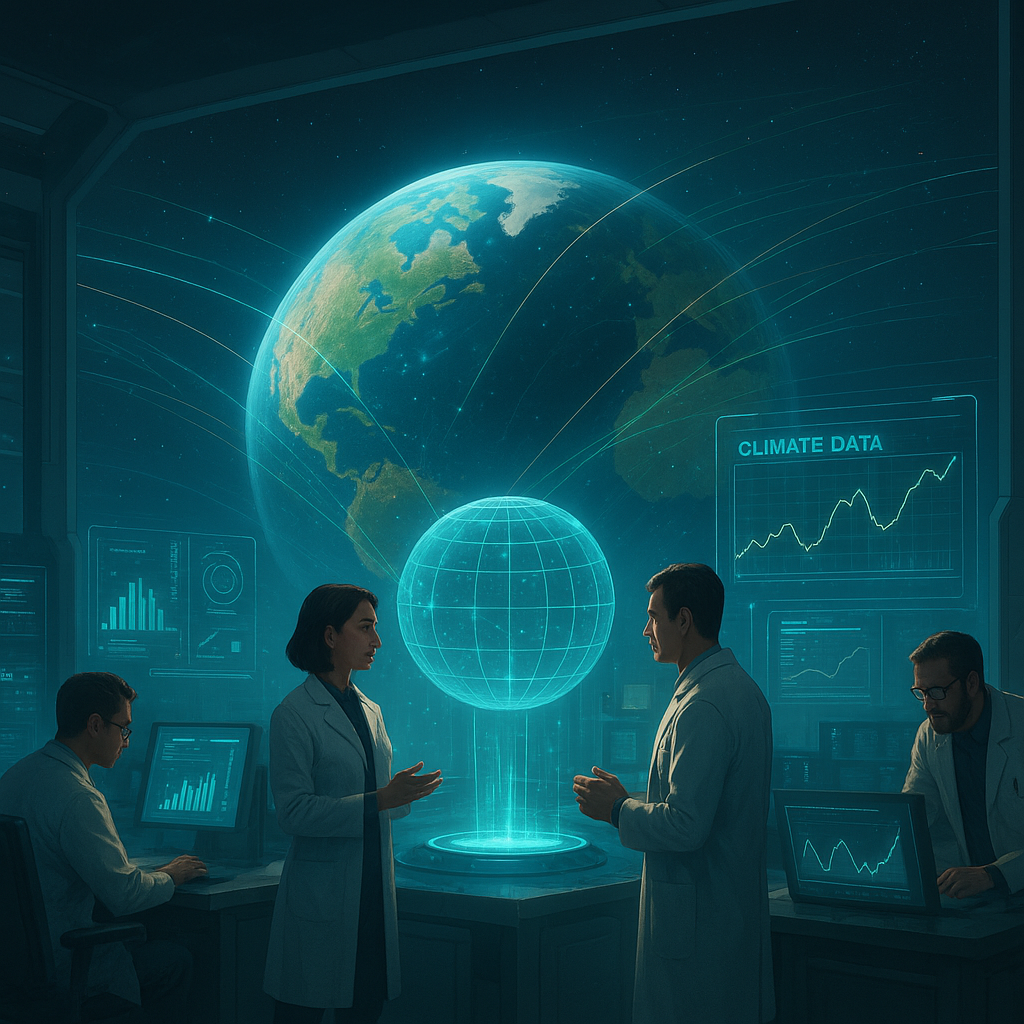
- Climate Science Modeling: Enhanced climate models now incorporate multi-system feedback loops with 60% higher accuracy, aiding policymakers in crafting adaptive strategies more effectively.
- Materials Science: The aforementioned room-temperature superconductor breakthrough promises to revolutionize energy transmission and storage, potentially reducing global energy losses by over 20%.
These developments are not isolated; they influence one another in a complex ecosystem of innovation. For example, improved quantum computing capacity accelerates materials simulations, which in turn enable better battery technologies. The cumulative effect is a scientific environment that is dynamically self-reinforcing.
"The interconnectedness of modern scientific disciplines means that a breakthrough in one field often triggers a cascade of innovations elsewhere." — Prof. Samuel Nguyen, Quantum Computing Specialist
Science in 2026: New Frontiers and Persistent Challenges
While the promise of science is expansive, 2026 also reveals enduring and emerging challenges. One significant issue is the reproducibility crisis: despite technological aids, nearly 30% of peer-reviewed studies in some fields fail replication attempts, raising questions about methodological rigor and publication pressures.
Furthermore, the ethical framework surrounding emerging technologies, such as AI-driven genetic editing and autonomous systems, remains under intense scrutiny. Regulatory bodies worldwide are attempting to balance innovation incentives with societal safeguards, but consensus is often elusive.
Funding disparities also persist, especially between high-income countries and developing regions. Although global initiatives like the International Science Equity Fund are working to bridge these gaps, access to cutting-edge research tools and data remains uneven.
On the positive side, citizen science and open data movements have gained momentum. Platforms enabling public participation in ecological monitoring, astronomy, and health studies have democratized science, fostering a culture of transparency and inclusivity.
2026 has also seen remarkable strides in science communication, leveraging immersive technologies such as augmented reality to engage broader audiences. Such innovations are critical in rebuilding public trust, which is essential for tackling global challenges like climate change and pandemics.
Expert Perspectives and the Science Ecosystem’s Transformation
Leading scientists and policymakers emphasize that science’s future hinges on embracing complexity and collaboration. Dr. Anika Bose, Chief Scientist at the Global Institute for Sustainable Development, highlights how integrating diverse expertise and perspectives is key to addressing multifaceted problems.
Industry players are also reshaping science’s role. Tech giants have expanded their research divisions, often partnering with academic institutions to accelerate innovation. However, this raises questions about intellectual property and open science norms.
Universities, meanwhile, are evolving their curricula to prepare scientists for interdisciplinary careers, embedding ethics, data science, and communication skills into traditional programs. These changes reflect a recognition that scientific success depends not only on discovery but also on societal integration and impact.
- Expanded public-private partnerships fostering faster technology transfer.
- Increased emphasis on ethical frameworks guiding research design.
- Growing importance of science diplomacy to navigate geopolitical tensions.
- Adoption of AI-powered platforms for peer review and grant evaluation.
These shifts illustrate a science ecosystem in flux—one that balances innovation with responsibility, agility with rigor.
Looking Ahead: What Science’s Trajectory Means for Society
As we look toward the next decade, several trends warrant close observation. First, the integration of AI with human creativity will likely deepen, enhancing problem-solving capacities but also raising questions about automation’s limits and risks.
Second, the imperative to address climate change through scientific innovation remains urgent. Breakthroughs in carbon capture, renewable energy, and ecosystem restoration will be critical, as emphasized in the recent TheOmniBuzz article Unveiling Climate Science Breakthroughs Shaping 2026’s Future.
Third, the convergence of biology and technology—sometimes called the bio-digital convergence—will continue to accelerate, offering new therapeutic avenues and ethical challenges.
Finally, science’s social contract with the public will be tested as misinformation and skepticism persist. Strengthening science literacy and engagement remains a priority for maintaining democratic decision-making and global cooperation.
- Invest in education that fosters interdisciplinary and ethical scientific thinking.
- Promote open science policies to ensure equitable access to knowledge and tools.
- Enhance international collaboration to address global challenges collectively.
- Develop adaptive regulatory frameworks that balance innovation with societal values.
Embracing these principles will be crucial as science continues to rewrite reality, offering unprecedented opportunities and complex dilemmas.
For readers interested in exploring how breakthroughs and persistent challenges shape the scientific landscape, TheOmniBuzz’s Science in 2026: Breakthroughs, Challenges, and the Path Forward provides a comprehensive analysis.