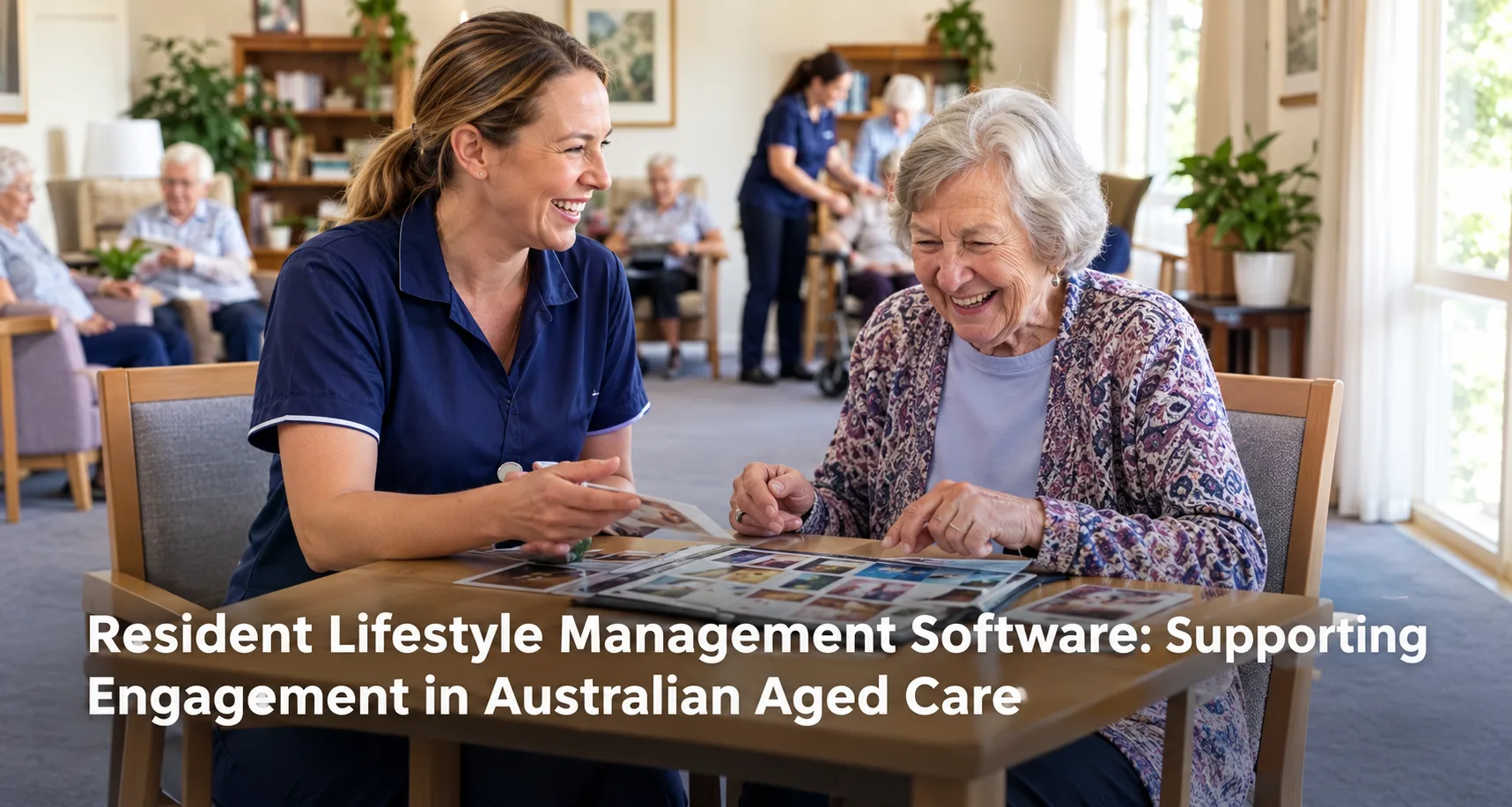
Lifestyle coordinators carry more than most job descriptions capture. One coordinator might plan a week of group activities, keep track of preferences for forty or fifty residents, and still clock that someone's missed morning tea three days running. Spread that across notebooks, a whiteboard and a spreadsheet nobody fully trusts, and details slip. That's the gap resident lifestyle management software is built to close.
The Strengthened Aged Care Quality Standards expect providers to show residents get real choice and genuine connection, not a fixed weekly roster stuck to a noticeboard. Proving that shift after shift, resident after resident, is hard without something built for the job.
Why Lifestyle Engagement Matters in Australian Aged Care
Engagement now sits next to clinical care in how a facility gets assessed. Under the Aged Care Act 2024 and the Strengthened Standards, providers have to show residents are supported to keep their identity, relationships and interests alongside their health, not instead of it.
Families notice too. Mention during a visit that Mum went to a music session or joined the gardening group, and it tells the family something real is happening day to day. Can't recall doing anything that week? Families ask why.
Surveyors look for the same thing from a different angle. Documented participation. Individual lifestyle plans. Proof that preferences noted at admission are still being acted on months later. A paper diary rarely survives that kind of scrutiny.
Common Challenges in Residential Aged Care Lifestyle Programs
Most lifestyle teams already work hard. The problems tend to sit in the systems around them, not the people.
A coordinator who's been at a facility for years carries a mental map of who likes what. New starters and agency staff have no fast way into that knowledge, so residents end up offered whatever's generic instead of what actually suits them. Attendance gets logged at the end of a shift, if it gets logged at all, which makes it hard to catch a resident quietly pulling back from group activities. Families end up waiting on phone calls staff don't always have time to make. A resident who's stopped going to something they used to enjoy can be an early sign of low mood, but if lifestyle records sit apart from care notes, nobody joins the dots. And building next week's calendar from memory, trying to recall who came last time, eats hours that could go into running the actual program.
How Resident Lifestyle Management Software Supports Daily Operations
Resident lifestyle management software brings these pieces together, so coordinators spend more time with residents and less chasing information down.
Preferences, cultural background, hobbies and communication needs get recorded once and stay visible to whoever's on shift, casual staff included. Coordinators build activity calendars and log attendance as sessions happen, so a real picture of what each resident engages with builds up over weeks and months. When someone's participation drops, it shows early enough for a check-in, not three months later when the pattern's already set. Families get to see what their loved one's been doing without staff having to manage a separate channel for it. And when surveyors ask for evidence of individualised support, coordinators pull records instead of trying to reconstruct history from memory the night before.
Read More About Resident Lifestyle Management Software: Supporting Engagement in Australian Aged Care Here : https://centrimlife.com.au/blog/resident-lifestyle-management-software/