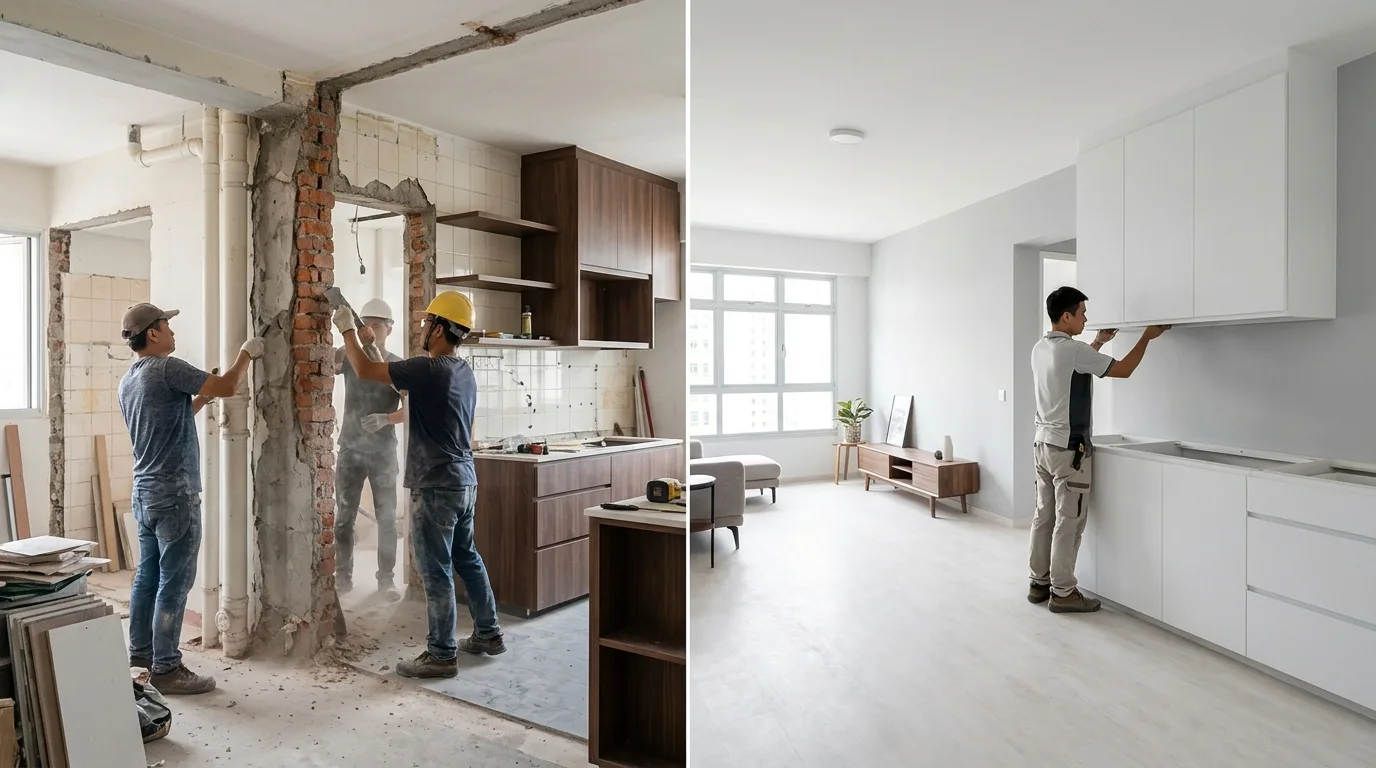
Resale HDB vs New BTO Renovation: Which Costs More in Singapore?
A resale HDB flat typically costs 20–40% more to renovate than a new BTO of the same size. For a 4-room flat, that usually means a BTO lands between S$40,000–S$65,000, while a comparable resale flat runs S$55,000–S$95,000. The gap comes down to one thing: a BTO is a blank slate, while a resale flat comes with decades of hacking, rewiring, and hidden repair work already baked into the price before any design even begins.
If you're trying to decide between buying a new BTO or a resale flat, or you've already bought one and are trying to work out why your quote looks so different from a friend's, this guide breaks down exactly where the money goes, and how to plan for it either way.
Why Two "4-Room Flats" Can Cost S$30,000 Apart
This is the single most common source of confusion for first-time renovators in Singapore. Two buyers, both renovating a 4-room flat, both get quotes, and one is nearly double the other. It's rarely a case of one contractor overcharging. It's almost always the flat type.
Homeowners often budget based on a friend's BTO renovation, then get caught off guard when their resale quote comes in far higher, or they overbudget for a BTO based on a resale horror story. The fix is simple: understand what you're actually paying for in each flat type before you get a single quote, so you can budget accurately and know which line items in a contractor's quote are justified versus inflated.
BTO Renovation Cost: What You're Actually Paying For
A new BTO flat is handed over bare: no flooring, no built-in wardrobes, no kitchen cabinetry, and importantly, no old fixtures to remove. This is why BTO renovation is cheaper: your budget goes almost entirely toward building, not undoing.
Typical 2026 cost ranges:
- 3-room BTO: S$25,000 – S$45,000
- 4-room BTO: S$40,000 – S$65,000
- 5-room / Executive BTO: S$45,000 – S$70,000
Where the money goes:
- Flooring (vinyl, tiles, or laminate) across a bare unit
- Kitchen carpentry and cabinetry from scratch
- Wardrobe and storage carpentry
- False ceiling, lighting, and basic electrical points
- Painting
Because BTO units are structurally new, waterproofing is still under HDB's warranty and wiring meets current code, two of the biggest cost drivers in a resale renovation simply don't apply here.
Resale HDB Renovation Cost: Where the Extra 20–40% Goes
Resale flats carry a "resale premium", and it's not a design markup; it's the cost of dealing with what's already there. Before a resale HDB renovation in Singapore even gets to the visible design work, a meaningful portion of the budget is spent on hacking, demolition, and fixing what age has worn down.
Typical 2026 cost ranges:
- 3-room resale: S$35,000 – S$55,000
- 4-room resale: S$55,000 – S$95,000
- 5-room resale: S$65,000 – S$110,000
Where the extra cost comes from:
- Hacking and demolition: of existing tiles, walls, and built-ins
- Rewiring: flats over 20–25 years old often need a full electrical conduit replacement, since old wiring wasn't built for today's appliance load
- Waterproofing redo: for bathrooms and kitchens, especially once HDB's original warranty has long expired
- Plumbing upgrades: to replace ageing pipework
- Uneven screed and flooring prep: left behind by the previous owner's renovation
This is why a resale flat renovation quote can look "unreasonably high" to a first-time renovator; it isn't inflated; it's covering repair work a BTO simply doesn't need.
Making Sense of a Confusing Quote
Resale flat owners frequently receive quotes with unfamiliar line items, hacking, re-screeding, conduit replacement, and no easy way to tell if they're being overcharged or if the work is genuinely necessary. The best way through this is to ask for an itemised quote rather than a lump sum, and to request a pre-renovation site inspection. A transparent renovation partner will walk you through exactly which items are structural necessities versus optional upgrades; this is where working with a full in-house team, rather than a patchwork of subcontracted trades, makes it far easier to get a straight answer rather than finger-pointing between parties.
Deciding Between a BTO and a Resale Flat
Renovation cost is only one factor when choosing between a BTO and a resale flat, but it's often overlooked at the property-buying stage, leading to budget shock after the keys are already collected. The smarter approach is to factor renovation cost into your total housing budget before committing to a flat type, not after.
- Prioritise a lower total move-in cost, and don't mind a longer wait? A BTO's lower renovation bill is a real saving.
- Need to move in sooner and prepared for the resale premium? Budget an extra 20–40% specifically for hacking, rewiring, and waterproofing.
- Reviewing a resale quote? Treat any quote that skips hacking, rewiring, or waterproofing line items with suspicion; it's likely missing work you'll end up paying for later.

Where to Save, and Where Not To
Homeowners trying to cut costs often trim in the wrong places, skimping on waterproofing or wiring to afford a nicer countertop, only to end up paying far more to fix later. The rule of thumb: never economise on structural work.
Don't cut costs here:
- Waterproofing for bathrooms and kitchens
- Electrical rewiring and wiring capacity
- Plumbing work
These aren't visible once the renovation is done, but they're the most expensive to redo after tiles and carpentry are in place.
Safe places to save instead:
- Loose furniture
- Light fixtures
- Soft furnishings (curtains, rugs, cushions)
These are easy and affordable to upgrade later, unlike anything built into the walls or floor.
BTO vs Resale Renovation Cost: Quick Comparison
FactorNew BTOResale HDBStarting conditionBare unit, no fixturesExisting fixtures, wear from prior ownerHacking requiredMinimal to noneOften extensiveRewiringNot usually neededOften required (20+ year old flats)WaterproofingUnder HDB warrantyUsually needs redoing4-room typical costS$40,000 – S$65,000S$55,000 – S$95,000Renovation timelineShorter (8–12 weeks)Longer (10–16 weeks)Conclusion
Resale HDB renovation costs more than BTO renovation in almost every case, typically 20–40% more for the same flat size and finish level. The gap isn't about design ambition; it's the unavoidable cost of removing and repairing what's already there before any new work can begin. A BTO lets your entire budget go toward building the home you want. A resale flat asks you to pay for the home's past before you can design its future.
Whichever you're working with, the safest way to protect your budget is the same: get an itemised quote, insist on a proper site inspection, and work with a team that handles design and technical execution under one roof, so hacking, wiring, and waterproofing decisions aren't made by three different parties with three different incentives.
If you're planning a BTO or resale HDB renovation in Singapore and want an accurate, itemised quote for your specific flat, Homescape Pte. Ltd. manages design and technical execution in-house from hacking and rewiring to final carpentry so you get one accountable team and one transparent budget from start to finish.
FAQs
Is resale HDB renovation always more expensive than BTO?
In almost all cases, yes. The exception is a resale flat that was recently renovated by the previous owner and needs only cosmetic updates, but this is uncommon, and most resale flats still require hacking, rewiring, or waterproofing work.
How much more should I budget for a resale flat renovation?
Budget 20–40% above a comparable BTO renovation quote, primarily to cover hacking, electrical rewiring, and waterproofing that a new BTO doesn't need.
Can I renovate a resale flat in stages to spread out the cost?
Structural work, hacking, wiring, plumbing, and waterproofing should be completed in one phase, since redoing finished areas later costs more than doing it right the first time. Cosmetic items like furniture and lighting can reasonably be phased.
Does a full in-house renovation team cost more than hiring separate contractors?
Not necessarily, and it often reduces variation orders and delays that occur when different subcontractors are hired independently for design, hacking, electrical, and carpentry.