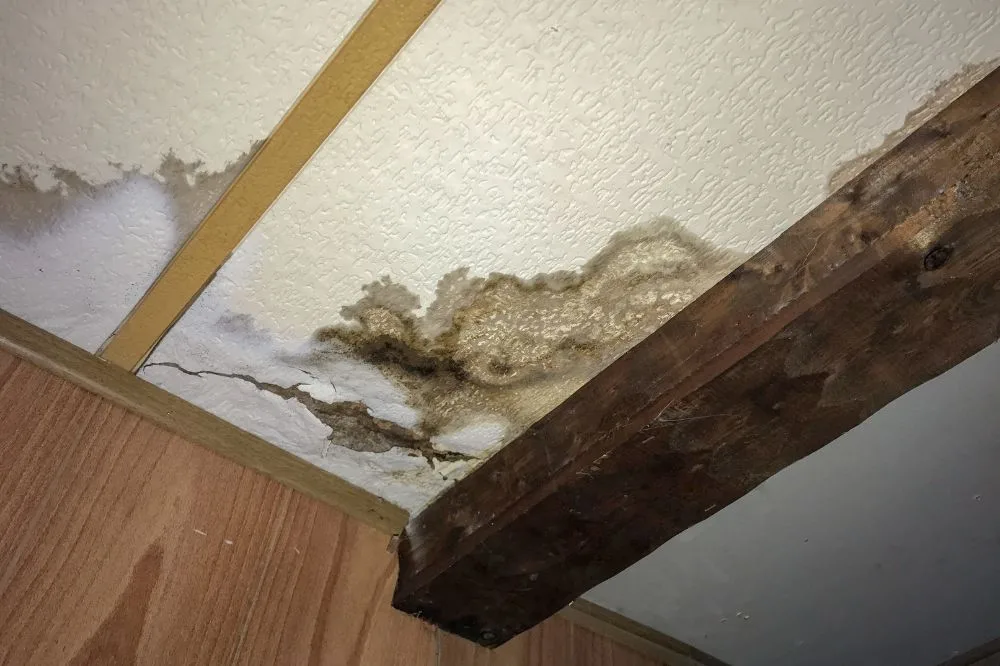
A pipe bursts in a rented apartment, and the questions start immediately. Who pays to dry the unit? Who replaces the soaked couch? Who covers the hotel if the place is unlivable for a week?
The answer is rarely one person. It depends on what broke, who caused it, and what each side's insurance covers. Here is how responsibility for water damage is actually split in a California rental, in plain terms. This is general information, not legal advice.
The default split: building versus belongings
As a starting point, the landlord is responsible for the building and the tenant is responsible for their own things.
California law requires landlords to keep a rental habitable, which includes working plumbing and weatherproofing of the roof and walls. The state Attorney General's tenant guide points to Civil Code 1941.1 for these baseline duties.
So repairing the burst pipe, drying the structure, and fixing the drywall generally falls to the landlord. Replacing the tenant's furniture, electronics, and clothing usually does not, because the landlord's insurance covers the structure, not the tenant's possessions.
Where the line moves: who caused it
The default flips when the damage is someone's fault.
When the tenant is on the hook
If a tenant overflows a bathtub, leaves a window open in a storm, or ignores a small leak until it becomes a big one, the resulting damage can become their responsibility. Negligence shifts liability.
Reporting problems quickly matters here. A leak you flagged in writing the day you noticed it is a very different situation from one that ran for a month.
When the landlord is on the hook
If the landlord knew about a failing water heater or a leaking roof and did not act, the damage that follows is generally theirs, and the duty to restore habitability does not disappear because repairs are inconvenient.
Mold sharpens this. California treats persistent dampness and mold as a habitability concern, so a unit that turns moldy after a leak is not a problem a landlord can quietly ignore.
The piece renters skip: renters insurance
This is the gap that causes the most pain. A landlord's policy does not cover a tenant's belongings, and it does not pay for a tenant's hotel.
Renters insurance does both. It covers personal property against covered causes, and most policies include loss-of-use coverage that pays additional living expenses if the unit becomes uninhabitable.
For what it usually costs per month, it is the single best protection a renter has against a water loss they did not cause.
Multi-unit buildings make it messier
In apartments and condos, water rarely stays in one unit. An upstairs leak becomes a downstairs ceiling stain, and now three parties and two insurers are involved.
The cause still drives responsibility, but proving it gets harder. That question of who pays when a leak crosses between units deserves careful documentation from everyone affected.
What to do the moment you find water
Whether you rent or own, the first hour sets up everything that follows.
Stop the source if you safely can, and shut the water off at the valve.
Notify the landlord or property manager in writing, immediately, with photos.
Document everything before cleanup. The first 24 hours and the record you build in them decide claims later.
Do not assume the water is clean. The category of water involved changes how the cleanup has to be handled, especially if sewage is in the mix.
The short version
In a California rental, the landlord owns the building and the duty to keep it habitable, the tenant owns their belongings and the duty to act like a careful occupant, and insurance fills the gaps on each side.
Sort out the cause, put everything in writing, and carry renters insurance. That combination settles most water damage disputes before they turn into fights.