The Dawn of a New Residential Era: A Scene from Boise
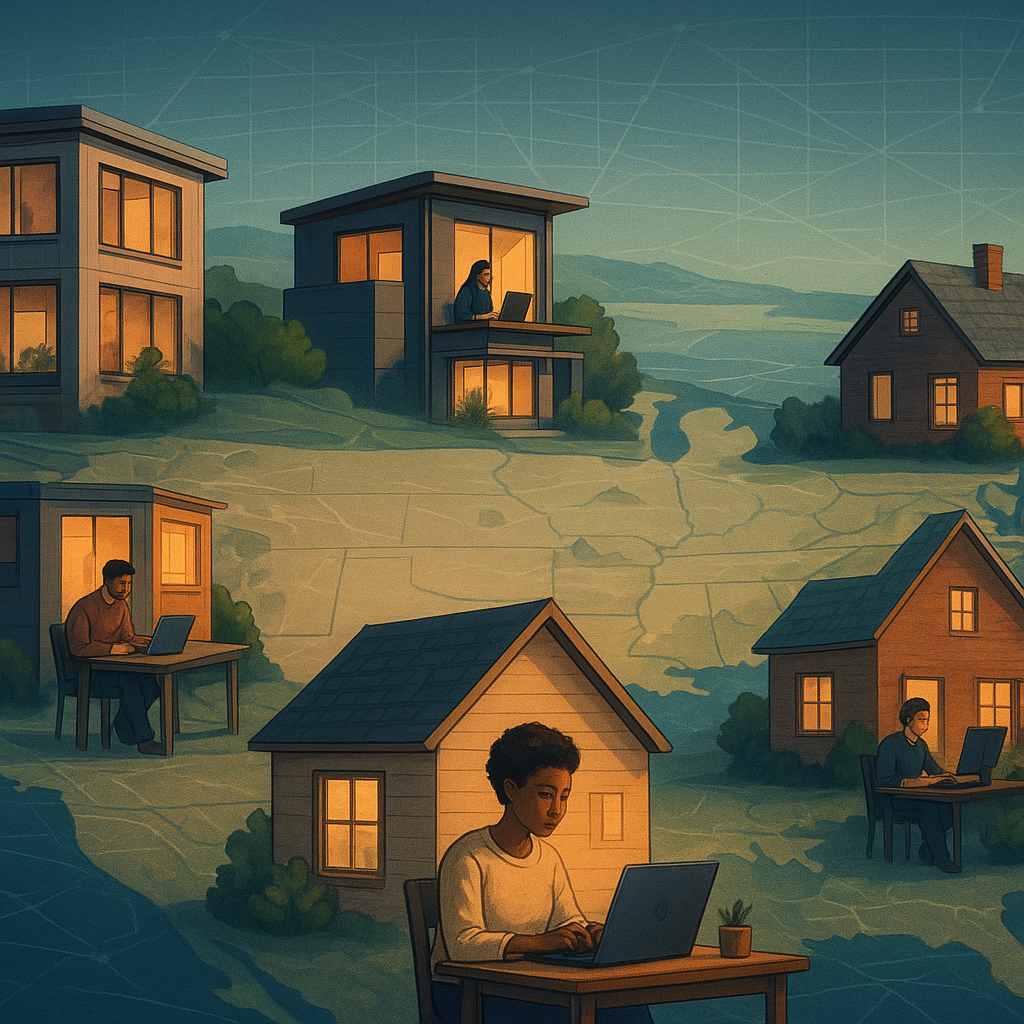
On a crisp spring morning in Boise, Idaho, the hum of construction cranes and the steady influx of new residents paint a vivid portrait of change. Once a modest city known primarily for its outdoor lifestyle and affordable living, Boise now finds itself at the epicenter of a seismic shift in the American housing landscape. The catalyst? Remote work migration. The pandemic-fueled adoption of flexible work arrangements has matured into a permanent feature of the labor market, prompting millions of workers to rethink where and how they live.
This movement is not merely a matter of preference but is reshaping entire local economies, real estate markets, and urban planning strategies. According to recent surveys conducted by Pew Research Center and data from the U.S. Census Bureau’s 2025 American Community Survey, approximately 22% of U.S. workers regularly operate remotely, a figure that has stabilized at nearly double the pre-pandemic levels. The consequences ripple across the nation’s housing map, triggering a complex interplay of demand surges in formerly undervalued regions and cooling in once-hot urban cores.
Boise exemplifies this transformation, where year-over-year home price increases have averaged 12% since 2023, alongside a 30% rise in rental demand. As remote workers flood in, local governments scramble to balance growth with infrastructure demands, laying bare the intricate challenges of this migration phenomenon.
Tracing the Roots: How Remote Work Migration Took Hold
The groundwork for today’s housing upheaval was laid years before 2026, with the COVID-19 pandemic serving as a catalyst rather than the sole origin. Prior to 2020, remote work was an emerging but niche option, embraced mostly by tech companies and freelancers. However, the abrupt switch to home offices in 2020 proved that many occupations could effectively function outside traditional settings.
From 2021 through 2023, major corporations such as Google, Microsoft, and Salesforce formalized hybrid and fully remote policies, fueling a cultural shift. The labor market evolved rapidly, with the remote workforce expanding from 10% to over 20% of all employees. This shift had immediate housing implications. Urban dwellers sought more space, affordable homes, and better quality of life beyond congested city centers.
Research from the Brookings Institution highlights that this migration was initially concentrated among high-income earners, predominantly in technology, finance, and creative sectors. Yet, by 2024, remote work's democratization extended to middle-income jobs, broadening the geographic impact. Cities with lower cost of living, attractive amenities, and robust internet infrastructures became magnets, while some traditional urban cores saw population declines.
Moreover, rising mortgage rates since 2024, analyzed in our feature Why Rising Mortgage Rates Are Redrawing America's Housing Map, compounded the effects by limiting affordability in overheated markets, accelerating outward migration.
Mapping the Migration: Data Insights into Shifting Housing Demand
Quantitative analysis reveals clear patterns in how remote work migration reshapes housing markets. A 2026 report by the National Association of Realtors (NAR) synthesizes nationwide trends:
- Top gainers: Secondary cities such as Boise, Austin, Raleigh, and Salt Lake City have seen population inflows exceeding 5% annually.
- Urban core slowdowns: Traditional metropolitan hubs like New York City, San Francisco, and Chicago experienced net population declines or stagnation in central neighborhoods.
- Rental market dynamics: Suburban and exurban rental vacancies dropped by 15% on average, pushing rents upward by 7% year-over-year.
- Home price appreciation: Markets favored by remote workers appreciated at nearly twice the national average, with some regions exceeding 15% annual growth.
Additionally, the U.S. Census Bureau’s 2025 American Housing Survey underscores how housing preferences have evolved. Demand for single-family homes with dedicated office space, larger yards, and proximity to natural amenities has surged. Conversely, demand for densely populated apartments in city centers has waned.
This shift is also geographically nuanced. The Sun Belt states have attracted disproportionate shares of remote workers, driven by favorable climates and tax advantages. Meanwhile, some Rust Belt cities have leveraged this trend by investing in digital infrastructure and quality-of-life improvements to retain and attract residents.
These patterns are not only evident in population data but also reflected in municipal budgets and urban planning priorities. Cities like Atlanta and Denver have increased investments in broadband, parks, and affordable housing, seeking to sustain growth amid demographic changes.
2026 Developments: Remote Work Migration Gains New Momentum
This year marks a critical juncture with remote work migration becoming a permanent fixture rather than a transient phase. Several factors have converged in 2026 to reinforce and reshape this phenomenon:
- Corporate policy solidification: More than 65% of Fortune 500 companies now offer full or partial remote options, as reported by Gartner’s 2026 Workforce Trends report.
- Technological advancements: The proliferation of 6G wireless networks and immersive virtual collaboration tools have expanded the feasibility of remote work across industries.
- Housing policy adaptations: State and local governments introduce new zoning reforms to accommodate increased housing demand in suburban and rural areas.
- Economic diversification: Smaller cities are actively attracting remote workers by cultivating startup ecosystems and remote-friendly services.
- Environmental considerations: Remote work migration contributes to shifts in commute-related emissions, influencing regional sustainability strategies.
These 2026 developments are vividly illustrated in the case of Chattanooga, Tennessee. Once overshadowed by larger neighbors, Chattanooga has invested heavily in citywide gigabit internet access and streamlined permitting processes for new housing. The result is a 7% population growth in the last two years, driven largely by remote professionals relocating from high-cost metros.
Meanwhile, some metropolitan areas have adjusted their economic models. New York City, for example, has redirected resources to enhance cultural offerings and affordable housing, aiming to maintain its appeal despite remote work pressures.
These dynamics underscore that remote work migration is not monolithic but varies across regions, industries, and policy environments.
Expert Perspectives: The Broader Impact on Labor and Real Estate
Industry experts weigh in on the multifaceted effects of remote work migration. Dr. Maria Chen, a labor economist at Stanford University, emphasizes that “remote work migration is fundamentally altering the geography of talent and opportunity. It decentralizes economic activity, with profound implications for regional development.”
"Remote work migration decentralizes economic activity, reshaping regional economies and labor markets in unprecedented ways." — Dr. Maria Chen, Stanford University
Real estate analysts caution that while migration stimulates growth in emerging markets, it also risks exacerbating affordability challenges. James Patel, Chief Analyst at Real Estate Insights, notes, “Markets like Boise and Austin are grappling with supply shortages, driving prices up and pushing long-term residents out.”
"Emerging remote work hubs face housing supply constraints that threaten affordability and community cohesion." — James Patel, Real Estate Insights
From a corporate perspective, HR leaders report evolving recruitment strategies. Companies increasingly prioritize geographic flexibility, expanding talent pools nationwide rather than concentrating hires in specific cities.
TheOmniBuzz’s coverage on Why Remote Work Is Rewriting the Rules of Career and Collaboration further explores how these labor shifts influence collaboration models and workplace culture, reinforcing the intertwined nature of housing and career trends.
Future Outlook: What to Monitor as Remote Work Migration Continues
Looking ahead, several key trends and uncertainties will shape remote work migration’s ongoing impact on the U.S. housing map. Stakeholders must watch for:
- Housing supply responses: Will local governments and developers meet the surging demand with sufficient, affordable inventory?
- Infrastructure investments: Broadband and transportation improvements remain critical to sustaining growth in receiving areas.
- Demographic shifts: The composition of remote workers may evolve, including more diverse income brackets and family types.
- Climate resilience: Environmental risks could influence migration patterns, as some attractive regions face increasing climate hazards.
- Policy adaptations: Tax codes, zoning laws, and urban planning will need to evolve to balance growth, equity, and sustainability.
The Omnibuzz article How Remote-Work Migration Is Redrawing America’s Housing Landscape offers in-depth analysis of these ongoing trends, signaling that remote work’s spatial consequences will be a dominant theme in urban and economic planning for years to come.
In conclusion, the remote work migration trend is more than a temporary shift; it is actively redrawing the housing and economic map of the United States. As millions of Americans continue to leverage location flexibility, the interplay between labor markets, real estate, and public policy will define the next chapter of American community life and prosperity.