From Office Towers to Suburban Streets: A New Migration Pattern Emerges
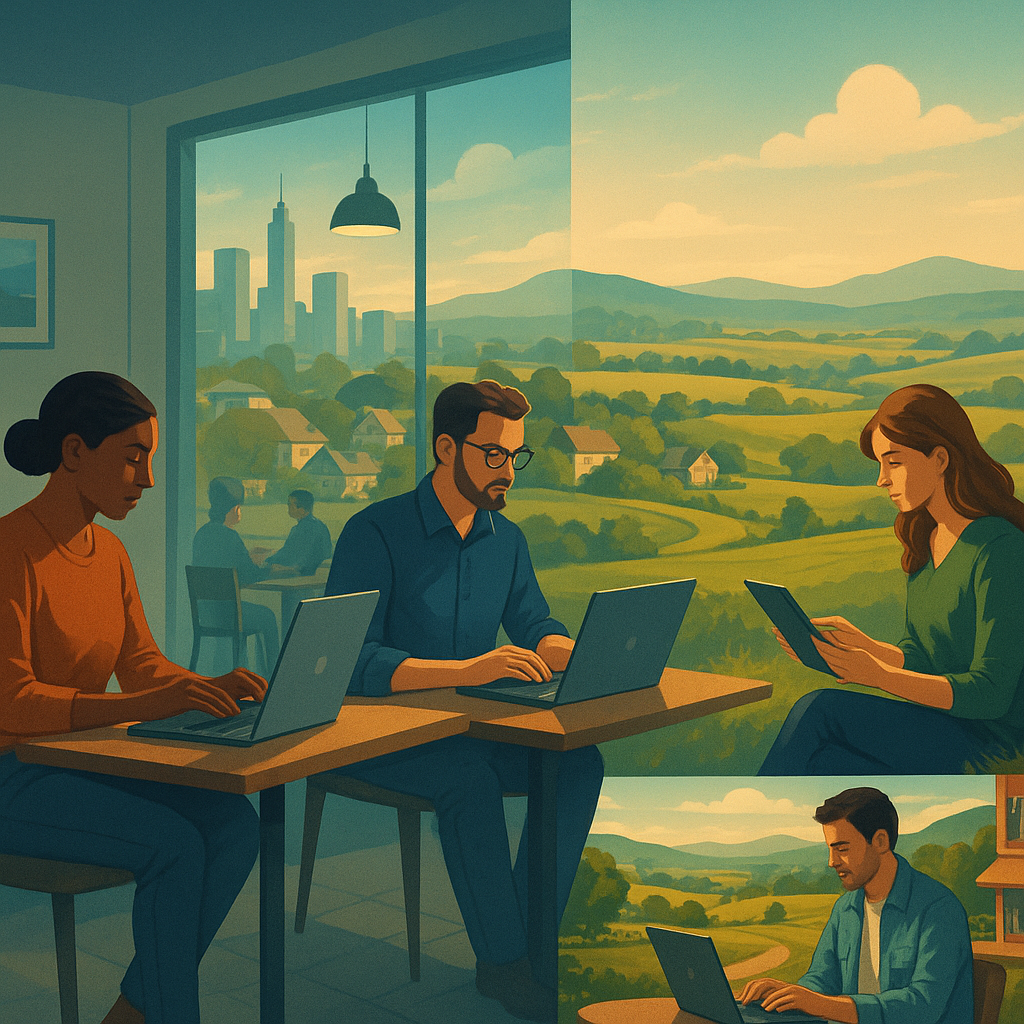
On a crisp morning in early 2026, the streets of Boise, Idaho, hum with a vibrancy unseen just five years ago. Cafés brim with young professionals discussing projects over lattes, while bike lanes bustle with commuters who swapped cramped urban apartments in San Francisco for spacious homes here. Boise, once a quiet city off the beaten path, is now emblematic of a seismic shift in American living patterns. This change is driven primarily by remote-work migration—a trend that has redefined where millions choose to live and work.
Recent census data analyzed by housing experts reveals that since 2021, over 7 million Americans have relocated primarily due to remote-work flexibility, sparking growth in secondary cities and smaller metros while putting pressure on traditional hubs like New York and San Francisco. This movement is not merely a demographic blip; it has redrawn the country’s housing map, affecting market dynamics, urban planning, and social fabrics across regions.
"Remote work has untethered people from geographic constraints, creating unprecedented demand in places previously overlooked," says Dr. Elena Martinez, a housing economist at the Urban Institute. "We are witnessing one of the largest internal migrations in modern American history."
Understanding this migration demands examining its causes, the data illustrating its scope, and the implications for the future of American housing and work culture.
Tracing the Roots: How Remote Work Paved the Way for Migration
The story begins in early 2020, when the COVID-19 pandemic accelerated remote work adoption at an unimaginable scale. Initially a health necessity, remote work evolved into a preferred mode for millions by 2023. Companies ranging from tech giants to financial firms embraced hybrid or fully remote models, acknowledging benefits in productivity and employee satisfaction.
This shift dismantled long-standing assumptions about proximity to office hubs. Workers, freed from daily commutes and rigid schedules, began reevaluating their living situations. High housing costs, congestion, and lifestyle preferences spurred many to seek alternatives in more affordable and spacious locales.
By 2024, studies from Pew Research and the National Association of Realtors showed a clear pattern: a significant uptick in moves from high-cost metros in California, New York, and Massachusetts toward Sun Belt cities, mountain towns, and even rural areas with reliable broadband infrastructure. This trend accelerated into 2025 and continues to reshape demographics.
Importantly, these moves were not only about escaping costs but also about lifestyle changes. Access to nature, community safety, and better quality of life emerged as priorities. The omnipresent drive for flexibility and autonomy, as detailed in our analysis of remote work’s career impacts, ties directly into this migration.
Mapping the Shift: Data and Trends in Remote-Work Migration
Concrete data paints a vivid picture of this transformation. According to the U.S. Census Bureau's 2025 migration report, the top 10 fastest-growing metropolitan areas include Boise (ID), Raleigh (NC), Austin (TX), and Chattanooga (TN)—all known for robust remote-work infrastructure and relatively affordable housing.
- Boise, Idaho: Population growth of 12% from 2021 to 2025, driven largely by remote workers from California.
- Raleigh, North Carolina: 10% growth with a surge in tech-sector remote employees.
- Austin, Texas: 9.5% increase despite already high housing prices, fueled by startup culture and tech migration.
- Chattanooga, Tennessee: 8% growth credited to affordability and enhanced broadband access.
In contrast, traditional urban giants like San Francisco and New York have seen population declines of 3-5% during the same period, with housing markets cooling and rental vacancies rising. This reversal challenges decades of urbanization trends.
Real estate platforms report that remote workers prioritize homes with dedicated office spaces, high-speed internet, and proximity to green spaces. These preferences have reshaped demand profiles, affecting home design, neighborhood development, and pricing structures.
"The housing market is no longer just about location in relation to the office—it’s about lifestyle and connectivity," notes Sarah Kim, VP of Market Analytics at Zillow. "Remote work has introduced a new layer of complexity to housing demand."
2026 Developments: Infrastructure, Policy, and Market Responses
As the migration trend matured into 2026, cities and states responded with a mix of innovation and challenges. Local governments in burgeoning metros invested heavily in broadband infrastructure, recognizing it as critical to sustaining growth. For instance, Chattanooga expanded its gigabit internet program, attracting more remote workers and tech companies.
Simultaneously, housing affordability has become a pressing issue, even in formerly affordable markets. Boise’s median home price surged by 35% since 2023, straining middle-class buyers and prompting calls for new zoning reforms and affordable housing initiatives. This mirrors concerns highlighted in our coverage on housing affordability, underscoring how remote-work migration intersects with broader economic challenges.
Corporate real estate strategies also evolved. Many firms downsized physical office footprints, reinvesting savings into hybrid collaboration tools and satellite work hubs in secondary cities. This decentralization has ripple effects on local economies, commercial real estate valuations, and urban design.
Moreover, governments at the federal and state levels are exploring tax incentives and relocation bonuses to attract remote workers, attempting to balance growth with sustainable development. However, some legacy cities face economic downturns as tax bases erode, sparking debates about economic diversification and resilience.
Voices from the Field: Expert Insights and Industry Impact
Experts across real estate, urban planning, and labor economics emphasize that remote-work migration is neither a temporary fad nor a one-dimensional trend. Instead, it represents a fundamental shift in how work and life interconnect.
"This migration challenges traditional urban hierarchies and compels us to rethink investment priorities," explains Dr. Marcus Lee, a professor of urban studies at NYU. "Secondary cities have a chance to redefine themselves, but only if infrastructure and inclusivity keep pace with demand."
Real estate developers are adapting by designing multi-use communities that blend residential, commercial, and recreational spaces tailored for remote workers. Co-working spaces have proliferated in smaller cities, reflecting a hybrid work culture that values flexibility and community.
Labor market analysts highlight that remote work has democratized opportunity but also intensified competition. Workers moving to affordable regions must continually upgrade skills to remain competitive, a dynamic explored in our feature on remote worker skill development.
"Remote work has flattened geography but raised the bar on adaptability and skill acquisition," notes HR consultant Linda Nguyen. "This is reshaping career trajectories alongside housing patterns."
Looking Ahead: What to Watch in Remote-Work Migration and Housing
As 2026 progresses, several trends warrant close attention. First, the sustainability of growth in secondary markets hinges on affordable housing supply keeping pace with demand. Failure to address this could replicate issues seen in coastal metros, undermining migration benefits.
Second, technology will continue to be a key enabler. Advances in virtual reality collaboration and 5G connectivity promise to deepen remote work integration, potentially opening new regions to migration.
Third, demographic shifts—such as aging populations and younger workers’ preferences—will influence which areas thrive. Cities investing in amenities, education, and healthcare infrastructure are likely to attract and retain residents.
- Housing affordability initiatives: Monitoring how local governments implement zoning reforms and subsidies.
- Broadband and tech infrastructure: Expansion beyond urban centers will be critical.
- Work culture evolution: Hybrid models and satellite offices will reshape commuting and living choices.
- Economic diversification: Secondary cities must build diverse economies to sustain growth.
- Skill development: Workers must adapt to remain competitive in a geographically dispersed labor market.
Ultimately, the remote-work migration is a complex, multifaceted phenomenon altering the American housing map and work culture. For employers, policymakers, and workers alike, understanding these dynamics is essential to harnessing opportunities and addressing challenges.
As remote work continues to redefine career and collaboration norms, the housing market will remain a critical barometer of social and economic transformation. Readers interested in the broader implications can explore in-depth perspectives in our related articles, Why Remote Work Is Rewriting the Rules of Career and Collaboration and Balancing Three Remote Jobs for $280K — Until the Market Shifted.