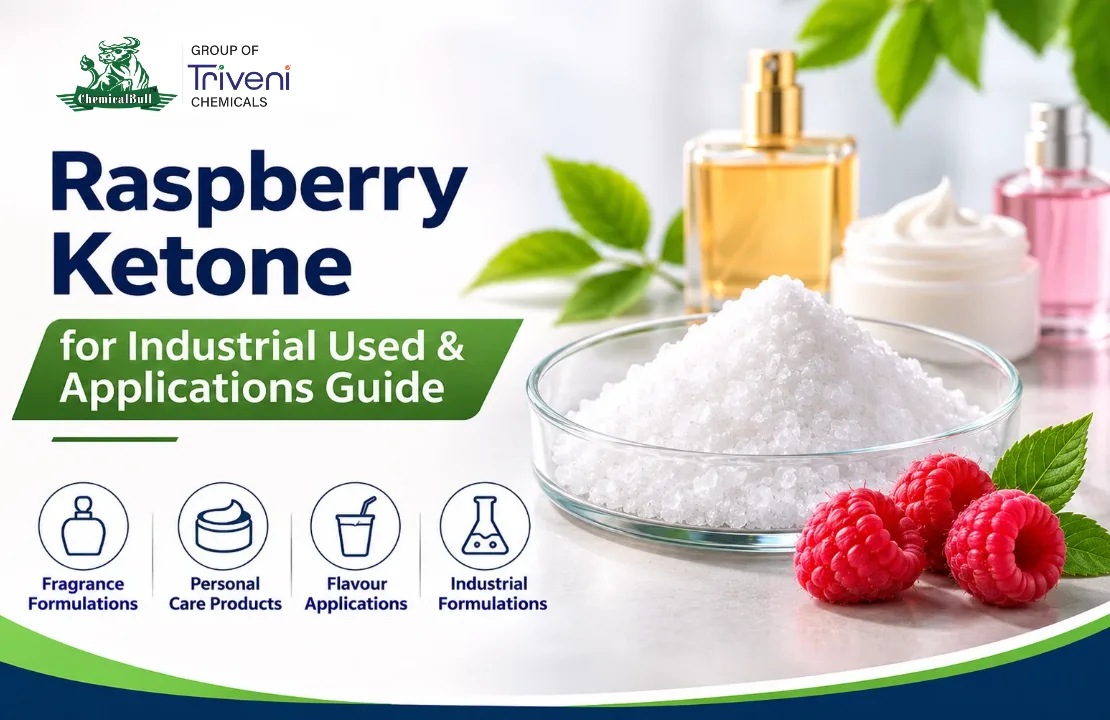
The fragrance industry uses a wide range of aromatic ingredients to create distinctive and appealing scent profiles. Fruity notes are particularly useful in modern fragrance development because they add freshness, sweetness, and character to different compositions. Raspberry Ketone is one such aromatic compound, recognised for its characteristic sweet, berry-like scent.
It is used in selected fragrance and aroma formulations where a raspberry-inspired profile is desired. Understanding its properties, applications, and sourcing requirements can help fragrance developers and industrial buyers make informed procurement decisions.
Understanding Raspberry Ketone in Aroma Formulations
Raspberry Ketone is an aromatic organic compound associated with the characteristic smell of raspberries. It is valued in fragrance development for its sweet and fruity sensory profile.
Depending on the formulation, it can be combined with floral, citrus, woody, and other fruity ingredients to develop balanced fragrance compositions. Its suitability depends on the required fragrance character, product type, and formulation specifications.
Major Applications of Raspberry Ketone
1. Fine Fragrances and Perfumes
Raspberry Ketone can be used in selected perfume compositions to introduce sweet and fruity notes. Fragrance developers may incorporate it into berry-inspired perfumes and other compositions where a distinctive fruity character is required.
2. Personal Care Products
Certain personal care formulations use fruity fragrance profiles to improve the overall sensory experience. Raspberry Ketone may be considered in fragrance compositions for products such as:
- Body lotions and creams
- Shower gels and body washes
- Fragrance-based skincare products
- Body sprays and related products
The final application should comply with relevant safety standards and ingredient-use restrictions.
3. Home Care and Household Fragrances
Fruity fragrance profiles are also used in household and home care products. Depending on the formulation and applicable requirements, Raspberry Ketone may be evaluated for fragrance compositions intended for selected cleaning and household products.
4. Specialty Aroma Compositions
Raspberry Ketone can be included in specialty aroma development where a sweet, berry-like scent is needed. Formulators may combine it with other aroma ingredients to create customised fragrance profiles for different product categories.
Formulation Considerations for Fragrance Developers
When using Raspberry Ketone in fragrance development, formulators should evaluate the following points:
- Fragrance compatibility: Assess how the ingredient performs alongside other aromatic materials.
- Concentration: Determine the appropriate level through formulation trials and applicable usage guidance.
- Stability: Evaluate fragrance performance under the intended product's storage and processing conditions.
- Product compatibility: Check suitability for the final product base and application.
- Regulatory compliance: Review relevant industry standards and restrictions before commercial use.
These checks help formulators develop consistent fragrance compositions that meet their intended product requirements.
How to Select the Right Raspberry Ketone Grade
Choosing an appropriate grade is essential for industrial procurement. Buyers should confirm the following information before placing an order:
- Product identity and CAS number.
- Required purity and product specifications.
- Appearance and relevant quality parameters.
- Certificate of Analysis (COA).
- Technical Data Sheet (TDS) and Safety Data Sheet (SDS).
- Packaging size and storage recommendations.
- Batch consistency and material availability.
The required grade should always match the intended application. Buyers should not assume that a fragrance-grade material is automatically suitable for food, pharmaceutical, or other regulated applications.
Bulk Procurement and Supplier Selection
For businesses purchasing Raspberry Ketone regularly, reliable sourcing is important for maintaining production schedules and product consistency. Buyers should compare supplier documentation, specifications, packaging, availability, and commercial terms before finalising procurement.
Chemical Bull supports chemical sourcing requirements for industrial and specialty applications. Buyers can explore Raspberry Ketone sourcing, properties, and industrial uses to understand the product in greater detail.
For bulk requirements, Chemical Bull supplies Raspberry Ketone in bulk quantities with competitive pricing, subject to product availability and order specifications.
Conclusion
Raspberry Ketone is a useful aromatic ingredient for selected fragrance and specialty aroma formulations because of its sweet, fruity scent profile. Its applications can include perfumes, personal care fragrances, and home care compositions. Evaluating grade suitability, technical documentation, formulation compatibility, and supplier reliability helps buyers make informed sourcing decisions.