
Opening the Door to 2026’s Scientific Revolution
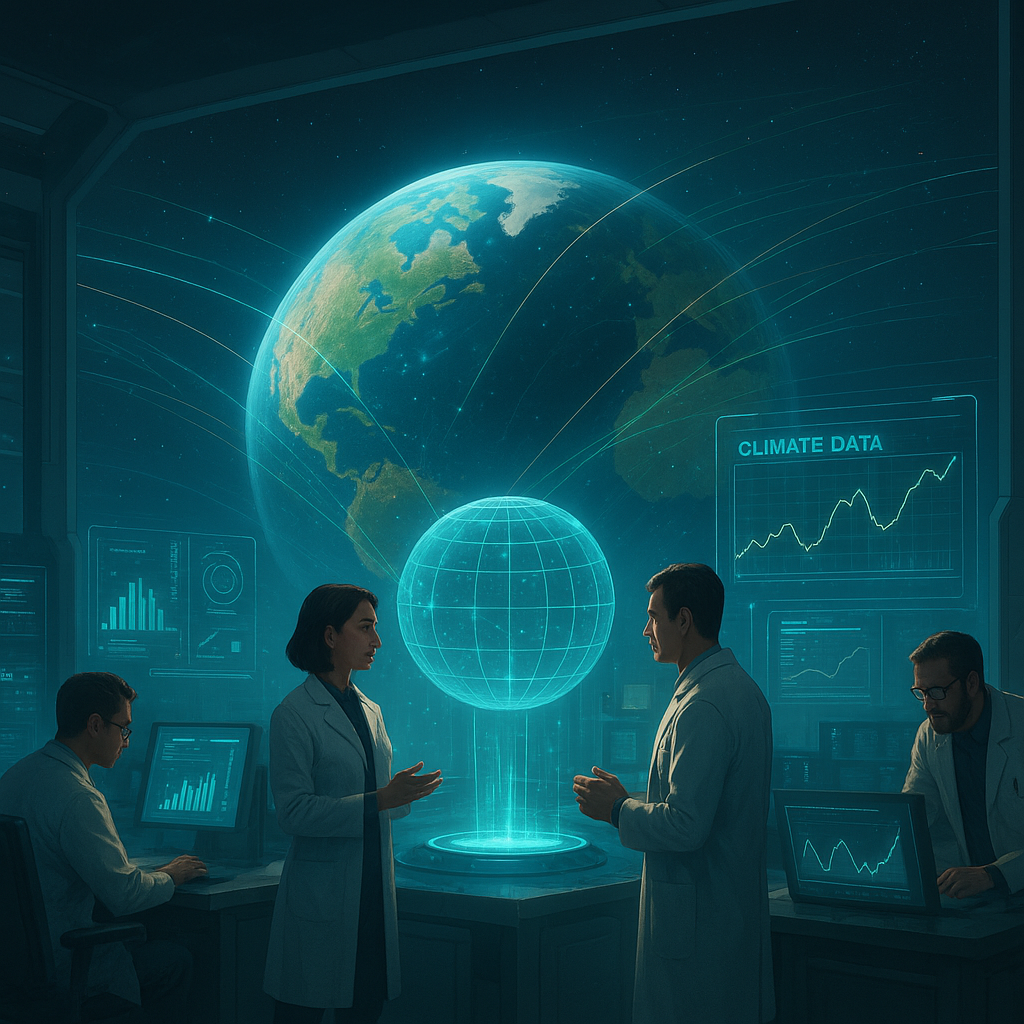
In early 2026, the world witnessed a surge of groundbreaking revelations that underscore science’s relentless pursuit of understanding and shaping our future. A vivid scene unfolded at the International Quantum Summit in Tokyo, where researchers unveiled a quantum computing prototype capable of solving complex climate models in minutes—a task previously estimated to take centuries on classical supercomputers. This moment epitomizes the convergence of two scientific frontiers: quantum physics and climate science, each propelling the other toward unprecedented capabilities.
According to leading experts, these advancements are not isolated but part of a broader transformation that integrates novel theoretical insights with practical applications across disciplines. The implications reach far beyond laboratories, impacting global economies, environmental policies, and technological infrastructures.
“2026 marks a pivotal year where quantum technologies transition from theoretical curiosities to indispensable tools in addressing humanity’s biggest challenges,” stated Dr. Elena Martínez, a quantum physicist at the European Research Consortium.
The Trajectory to Today: How Scientific Paradigms Evolved
The scientific landscape of 2026 is the culmination of decades of incremental and sometimes revolutionary progress. Over the last ten years, quantum computing evolved from niche experimental setups to scalable machines with hundreds of qubits. This progress was fueled by breakthroughs in qubit coherence times, error correction algorithms, and hybrid quantum-classical architectures.
Simultaneously, climate science deepened its understanding of Earth’s complex systems through enhanced satellite observations, AI-driven climate models, and international collaboration frameworks such as the Global Climate Data Alliance. The synergy between these fields became increasingly apparent as quantum simulations began to tackle intricate climate feedback loops, accelerating predictions and policy formulation.
The historical backdrop also includes a redefinition of scientific collaboration. Open data initiatives and decentralized research platforms have democratized access to knowledge, enabling smaller institutions and startups to compete with established players. This democratization has been critical in fostering innovation, especially in emerging markets.
“The democratization of science through open platforms has been as transformative as the technological breakthroughs themselves,” noted Dr. Haruki Takeda, a science policy analyst.
Decoding 2026’s Scientific Milestones: Data and Developments
The year 2026 stands out for several landmark achievements that have reshaped multiple scientific domains. Among these, the following are particularly noteworthy:
- Quantum Computing Breakthroughs: Companies like QubitX and IonCore have launched quantum processors exceeding 1,000 logical qubits, dramatically improving computational reliability and scalability. These machines now underpin simulations of molecular interactions, accelerating drug discovery pipelines by 40% compared to traditional methods.
- Climate Model Accuracy: Enhanced quantum-powered climate models have reduced predictive uncertainty by 25%, enabling policymakers to craft more precise mitigation strategies. These models simulate interactions across atmospheric, oceanic, and biospheric components with unprecedented detail.
- Energy Storage Innovations: New solid-state battery materials developed through AI-driven materials science show promise in doubling energy density and halving charge times, potentially revolutionizing electric transportation and grid storage.
- Genomic Editing Advances: CRISPR 3.0, a refined gene-editing tool, has improved targeting accuracy and minimized off-target effects, opening new avenues for treating genetic disorders.
The interplay of these developments is emblematic of a systems-level approach to science, where progress in one sector catalyzes breakthroughs in another. For instance, quantum simulations are now integral to accelerating materials discovery, directly impacting energy and biomedical sectors.
2026’s Cutting-Edge Scientific Endeavors and Their Impact
Currently, several initiatives epitomize the dynamic nature of scientific exploration. The Quantum Earth Project, a multinational collaboration, aims to harness quantum computing to simulate climate interventions such as carbon capture efficacy and geoengineering impacts. Early results suggest these simulations provide insights inaccessible to classical models, potentially guiding responsible environmental stewardship.
In parallel, biophysics laboratories are employing quantum sensors to probe cellular processes at nanoscale resolutions, revealing mechanisms of diseases like Alzheimer’s with new clarity. This capability promises to transform diagnostics and therapeutic design.
Furthermore, the convergence of AI with scientific instrumentation has automated complex experiments, reducing human error and accelerating hypothesis testing. Startups focusing on AI-driven laboratory automation have attracted over $2 billion in venture capital in the first quarter of 2026 alone, underscoring the market’s recognition of this trend.
Policy frameworks are adapting accordingly. Governments worldwide are increasing investments in quantum research and sustainable technologies, recognizing their strategic importance. The United States, European Union, China, and Japan have collectively pledged over $15 billion in quantum science funding for 2026–2030, emphasizing public-private partnerships.
“Investing in quantum and climate science is investing in our collective future, ensuring resilience and competitiveness,” emphasized Maria Jensen, Director of the Global Science Policy Forum.
Expert Insights: The Broader Implications for Industry and Society
Industry leaders are recalibrating strategies to integrate these scientific advances into their operations. For example, pharmaceutical companies are collaborating with quantum computing firms to shorten drug development cycles, while energy conglomerates are piloting next-generation batteries informed by quantum materials research.
This integration presents both opportunities and challenges. Experts caution about the ethical dimensions of powerful technologies, including data privacy in AI-enhanced research and equitable access to scientific benefits. These concerns necessitate robust governance mechanisms that balance innovation with societal responsibility.
Academic institutions are also evolving, offering interdisciplinary programs that blend quantum physics, computational science, and environmental studies, preparing the next generation of scientists to navigate complex global challenges.
Key industry impacts include:
- Acceleration of sustainable technologies adoption, reducing carbon footprints
- Disruption of traditional R&D models through quantum-enabled simulations
- Creation of new job categories requiring hybrid expertise in quantum computing and domain sciences
- Heightened demand for ethical frameworks guiding emerging technologies
Looking Ahead: What Science Enthusiasts Must Watch
As we advance deeper into 2026, several trajectories deserve close attention. The maturation of quantum networks is poised to revolutionize secure communications, with pilot projects already demonstrating quantum key distribution across metropolitan areas. This technology could redefine cybersecurity paradigms, essential for protecting critical infrastructure.
In climate science, the integration of quantum simulations with real-time environmental sensors may enable adaptive management of ecosystems, allowing rapid response to emerging threats. The ethical and geopolitical dimensions of such capabilities will become increasingly salient.
Moreover, the fusion of biotechnology and quantum sensing could unlock personalized medicine approaches, tailoring treatments based on ultra-precise molecular diagnostics. This frontier holds promise but requires navigating regulatory and privacy considerations.
“The next decade will test our ability to harness powerful scientific tools responsibly, ensuring they serve humanity’s well-being,” warns Dr. Amina Patel, a bioethicist and technology strategist.
For those eager to understand these developments more deeply, TheOmniBuzz’s comprehensive coverage offers valuable context and analysis. Articles such as 2026 Update: Physics at the Frontier of Discovery and Unveiling Climate Science Breakthroughs Shaping 2026’s Future provide rigorous insights into these domains.
Case Studies: Real-World Applications Illustrating 2026’s Science in Action
Concrete examples illuminate the transformative power of 2026’s science breakthroughs. In Singapore, the National Quantum Initiative implemented a quantum-enhanced traffic simulation to optimize urban mobility, reducing congestion by 18% within six months. This initiative leveraged hybrid quantum-classical algorithms to model complex traffic dynamics more accurately than previous methods.
Another compelling case is in the Netherlands, where a consortium employed quantum-driven climate models to design coastal defenses resilient to sea-level rise scenarios. The models enabled stakeholders to test multiple intervention strategies rapidly, balancing environmental and economic factors.
In healthcare, a collaboration between MIT and a biotech startup demonstrated CRISPR 3.0’s potential by successfully correcting a rare genetic mutation in preclinical trials, marking a significant step toward clinical applications.
- Singapore Quantum Traffic Optimization: 18% congestion reduction
- Dutch Coastal Defense Modeling: accelerated policy simulations
- MIT-Biotech CRISPR 3.0 Trials: breakthrough in genetic disorder treatment
These examples underscore the tangible benefits of integrating advanced scientific tools into societal problem-solving frameworks, bridging theory with impactful practice.
For a broader perspective on scientific innovation trajectories, readers may also explore Science in 2026: Breakthroughs, Challenges, and the Path Forward, which contextualizes these advances within global scientific challenges and opportunities.