A backyard pickleball tournament is one of the best ways to spend a weekend, and one of the easiest events to underplan into a mess. The distance between a tournament people talk about for months and a chaotic afternoon of standing around and arguing usually comes down to a handful of decisions made, or not made, before the first serve. The good news is that the planning is genuinely simple once you know the right order to do it in. Here is the practical checklist, sequenced by what actually matters most.
Decide the format first, because it drives everything else
Before nets, before balls, before prizes, settle the format, because every other decision flows from it. The two main choices suit very different events. Round-robin, where everyone plays everyone (or everyone in their group), guarantees that each participant gets multiple games regardless of how they do, which makes it ideal for social events where the point is for people to play a lot and have fun. Single elimination is faster and more dramatic but sends losers home early, which is great for competition and poor for a backyard gathering where half your guests could be done in twenty minutes.
Pick the one that fits your crowd and your available court count, then draw the actual bracket or schedule in advance. Nothing kills momentum like a host working out matchups on the fly while a dozen people wait. Ten minutes of planning the night before buys you a relaxed, flowing event.
Courts and the equipment that decides the day
Confirm your court situation early. A regulation pickleball court is 20 by 44 feet, and while a backyard setup can be a little forgiving, you want it marked clearly enough that line calls are not a constant fight. Portable nets and temporary line tape work perfectly well; just set them up and check them before guests arrive, not during the first match.
Then come the two pieces of equipment that quietly determine how the whole day feels.
Balls: stock more than you think, and buy durable
A tournament chews through balls far faster than casual play, because games run back to back with no downtime and competitive players hit harder. Nothing stalls an event like discovering you are down to one usable ball halfway through the bracket. Overstock deliberately, and use tournament-ready recycled balls that are built to survive sustained, hard play rather than the cheapest option that cracks partway through the semi-final. Durable balls mean fewer interruptions to swap them, a more consistent feel across every match, and less plastic thrown away at the end of the day, a small sustainability win that costs you nothing given you were buying balls anyway.
Scorekeeping: the difference between an event and a shambles
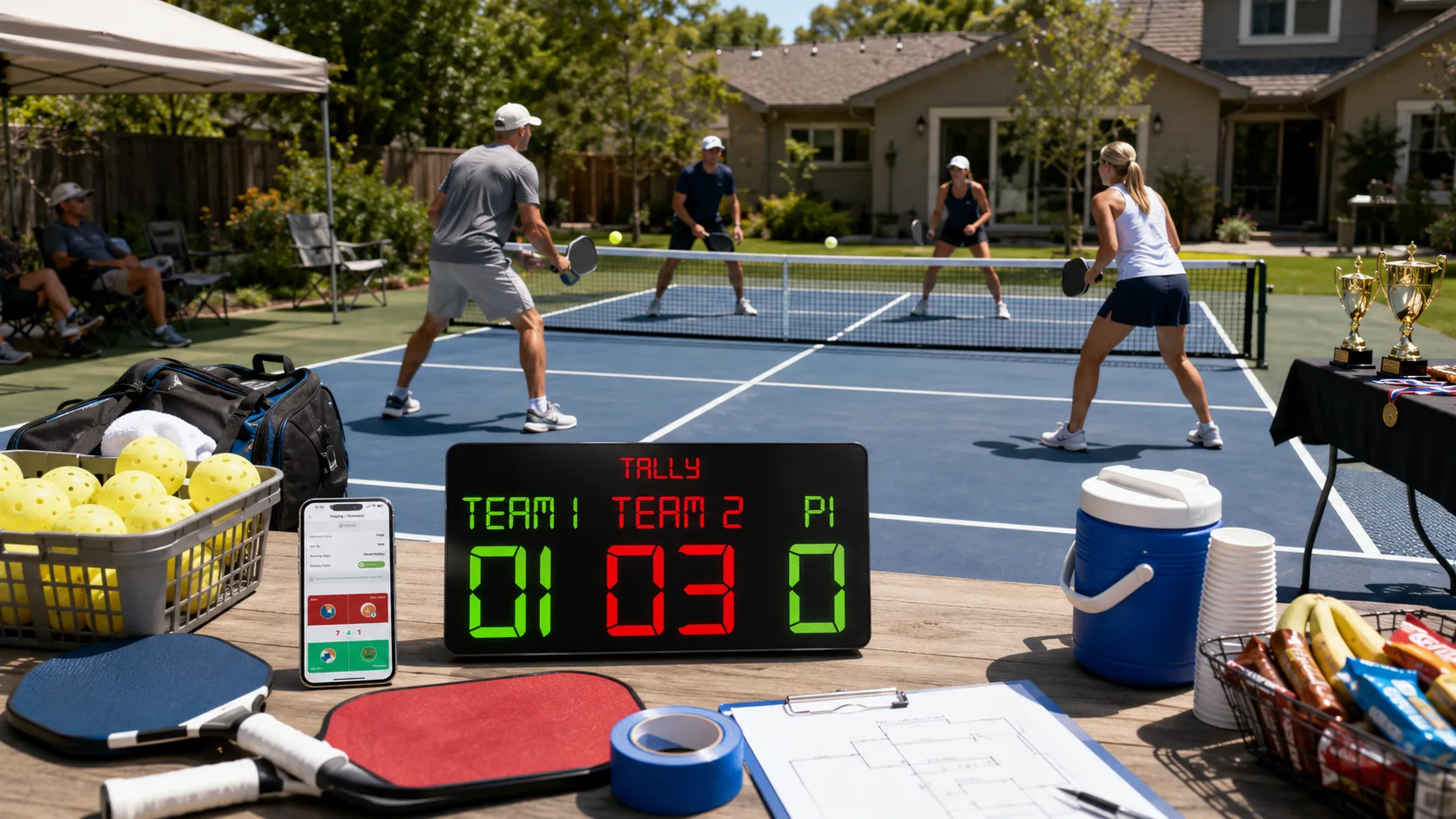
This is the piece that most separates a real tournament from a confused backyard hit-around, and it is the one people forget every time. Across multiple simultaneous games, tracking scores on paper, in your head, or on scattered phones falls apart almost immediately. Someone always loses track, two players remember different numbers, and you, the host, get dragged in to adjudicate.
A portable scoreboard at each court, visible to both the players and anyone watching, and updated wirelessly so the game never stops, keeps every match unambiguous and settles disputes before they can start. Shared, visible score is what makes a tournament feel like a tournament rather than a loose collection of games. For an event with any competitive stakes at all, this is not an optional nicety, it is close to the whole point.
The small touches that make it feel like an occasion
Once the core mechanics are handled, a few inexpensive extras lift the day from "some games in the yard" to an actual event people remember. Provide shade and seating for players between matches, because a tournament involves a lot of waiting and standing in the sun sours the mood fast. Have water and simple food available. Set up a way to announce matchups so people know when they are up. And include a prize or a trophy, however token, because even a small stake changes the energy on court in a way that is out of all proportion to its cost.
Running the day itself
On the day, three things keep it smooth: start on time, keep the bracket moving so games flow directly into one another, and have exactly one person owning the schedule so there is never confusion about what happens next. If everyone is responsible for the schedule, no one is.
The reward for all this preparation is the thing hosts most often miss out on: you get to actually play in and enjoy your own tournament, instead of spending the whole afternoon running it in a low-grade panic. The planning is what buys you the relaxed day. Do it in advance, once, and the event more or less runs itself, which is exactly what a great backyard tournament is supposed to feel like.