Hair loss can affect much more than the appearance of the scalp. For some people, thinning eyebrows can change facial balance, while others may experience progressive scalp hair loss that affects hairstyle choices and confidence. Modern hair restoration offers several approaches, but the most suitable option depends on the individual's hair pattern, donor supply, facial structure, and long-term goals. For patients exploring Eyebrow Transplant Beverly Hills, CA, individualized planning is especially important because eyebrow restoration requires a level of precision that differs from traditional scalp transplantation.
The Role of Eyebrows in Facial Harmony
Eyebrows are an important part of facial appearance. They frame the eyes, contribute to expressions, and help define proportions across the upper portion of the face. When eyebrow hair becomes sparse, uneven, or completely absent, even subtle changes can make the face look different.
Several factors can contribute to eyebrow hair loss. Repeated plucking, waxing, aging, genetics, trauma, and certain conditions may affect density. Some individuals have naturally thin eyebrows and simply want a fuller appearance, while others may have specific gaps that they would like to address.
Because every eyebrow has its own shape and growth direction, restoration should be planned around the individual rather than a standardized template.
How Eyebrow Transplantation Is Planned
An eyebrow transplant involves transferring hair follicles from a suitable donor area to carefully selected portions of the brow. However, the procedure is more detailed than simply placing follicles where hair is missing.
The physician must evaluate the existing eyebrow structure, facial proportions, desired thickness, and natural direction of hair growth. Each follicle needs to be positioned with attention to angle and orientation so that the growing hair blends naturally with the surrounding brow.
The design process is therefore an important part of the treatment. A conservative approach can help create definition without making the eyebrows appear overly dense or artificial.
Why Precision Matters With Brow Restoration
Scalp hair generally grows in a different direction and pattern than eyebrow hair. Eyebrow follicles need to be positioned carefully because even small differences in angle can affect how the finished result looks.
A successful restoration should account for natural variations rather than creating perfectly uniform rows. The beginning of the eyebrow, arch, and tail each have distinct characteristics, and these areas need to work together visually.
This is where medical knowledge and aesthetic judgment become equally valuable. The physician must understand follicular anatomy while also considering how the restored brow will complement the patient's eyes, forehead, nose, and overall facial structure.
Understanding Scalp Hair Restoration Options
Eyebrow restoration is only one area where transplantation can help address hair loss. Scalp transplantation remains one of the most established approaches for individuals who have suitable donor hair and want to restore areas affected by thinning or recession.
Two commonly discussed surgical techniques are Follicular Unit Extraction, or FUE, and Follicular Unit Transplantation, known as FUT.
FUE involves removing individual follicular units from the donor region. FUT uses a strip of hair-bearing tissue that is carefully divided into individual grafts before being transplanted.
The choice between these approaches should not be based simply on popularity. Donor density, hair characteristics, the extent of hair loss, hairstyle preferences, previous procedures, and future restoration needs all deserve consideration.
When FUT May Be Considered
For certain patients, FUT can be an important option when a larger number of grafts are needed. Instead of extracting individual follicles one at a time, a strip of tissue is removed from an appropriate donor area and then dissected into follicular units.
The resulting grafts can be strategically placed into areas of thinning or recession. The donor area is closed after tissue removal, and the resulting linear scar is generally positioned where surrounding hair can help conceal it.
Patients considering FUT Hair Transplant Los Angeles, CA should discuss their donor characteristics, expected graft requirements, recovery considerations, and long-term goals with a qualified physician before selecting the procedure.
FUE and FUT Are Not Identical
Although both procedures involve transplanting hair follicles, their extraction methods are different.
With FUE, individual follicular units are harvested directly from the donor area. This approach can be attractive to patients who prefer to avoid a linear donor scar and may work particularly well for specific hair-loss patterns.
FUT involves removing a strip of tissue and separating it into follicular units. Depending on the patient, this can provide an efficient method for obtaining a significant number of grafts.
Neither procedure is automatically better for every person. A thorough evaluation can help determine which technique is more appropriate based on the patient's anatomy and restoration objectives.
Designing a Natural Hairline
A natural-looking hair transplant depends heavily on design. The hairline should not look like a perfectly straight boundary between transplanted and existing hair.
Natural hairlines contain irregularities in density, direction, and spacing. They also change with age. Designing a hairline that looks appropriate today while considering future hair loss can help create a more balanced long-term result.
The same philosophy applies to eyebrows. Restoring hair without considering facial proportions can produce a technically successful but aesthetically disappointing result. Thoughtful design helps ensure that the restored area belongs naturally within the patient's overall appearance.
Conservative Planning Protects Donor Resources
Donor hair is a limited resource. Once follicles are harvested, they cannot simply be returned to their original location. This makes long-term planning especially important.
A physician may recommend a conservative approach that focuses on areas where additional density can have the greatest visual impact. This can help preserve donor resources for potential future needs.
Patients should also understand that hair loss may continue even after transplantation. Planning for future changes can therefore be just as important as addressing current thinning.
The Importance of a Detailed Consultation
A consultation should be more than a brief discussion about pricing or procedure availability. It should provide an opportunity to understand the cause and pattern of hair loss and determine whether transplantation is appropriate.
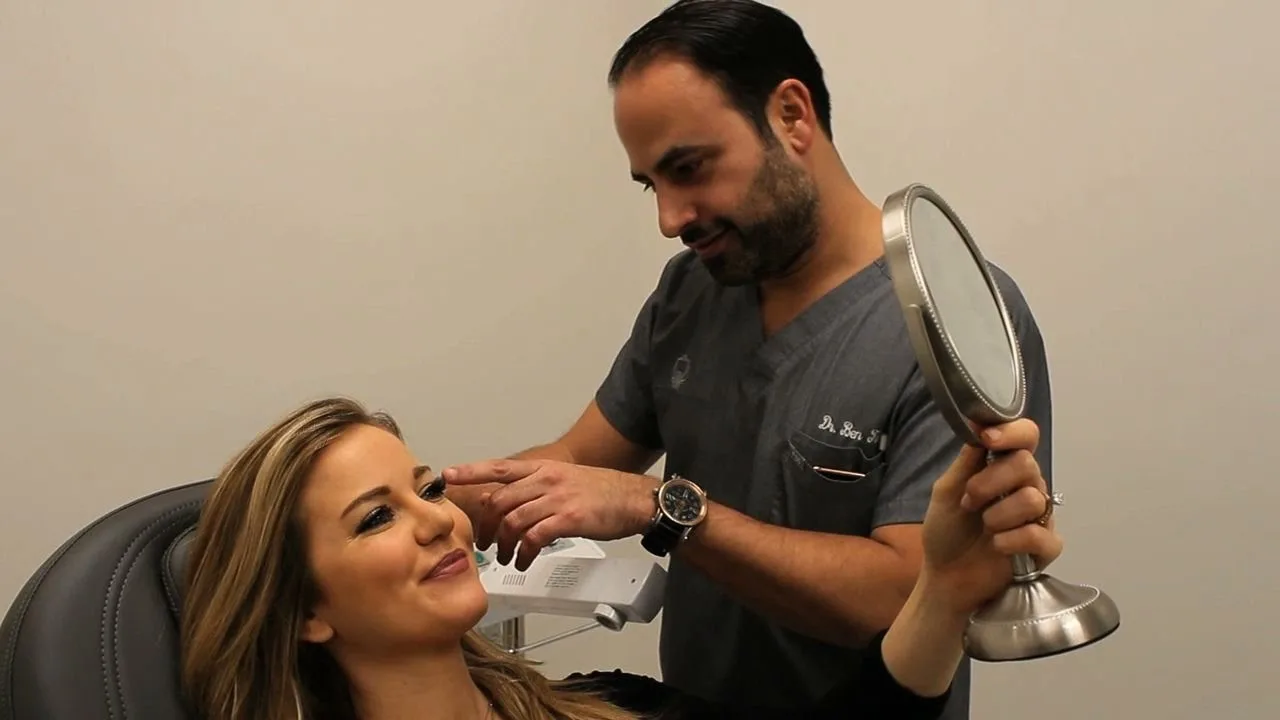
During an evaluation, a provider may assess donor density, hair caliber, scalp condition, existing hairline characteristics, and areas requiring restoration. For eyebrow patients, facial proportions and the existing brow pattern may receive additional attention.
A detailed consultation also gives patients the opportunity to discuss expectations. Realistic expectations are essential because transplantation is designed to improve coverage and appearance, not necessarily recreate the density someone had earlier in life.
Recovery and Long-Term Development
Hair restoration results develop gradually. Patients should understand that the transplanted follicles require time to settle, heal, and progress through their natural growth cycle.
Follow-up appointments can help monitor the healing process and assess development at different stages. A structured postoperative plan also allows patients to ask questions as changes occur.
For a concierge-style practice, continued communication can make the overall experience more comfortable. Patients benefit from knowing what to expect during recovery and when they should return for assessment.
Choosing a Restoration Practice
When researching hair restoration, patients should consider the physician's medical training, surgical experience, aesthetic philosophy, available techniques, and approach to patient safety.
A strong practice should also be willing to recommend the most conservative suitable option rather than automatically pursuing a more extensive procedure. Individualized treatment planning can help patients avoid unnecessary interventions while making thoughtful use of available donor hair.
Privacy and personalized attention may also be important considerations, particularly for patients who prefer a discreet setting for cosmetic or restorative procedures.
A Personalized Approach to Hair Restoration
Hair restoration is ultimately about more than moving follicles from one area to another. The best plans consider anatomy, aesthetics, long-term hair patterns, and the patient's personal goals. Whether someone is dealing with sparse eyebrows or more extensive scalp thinning, careful planning can make the restoration process more predictable and personalized.
For patients seeking physician-led restoration in Beverly Hills and the surrounding Los Angeles area, McBeth Elliott Hair provides a boutique, concierge-style experience built around individualized treatment plans, advanced restoration techniques, artistic hairline design, patient safety, and comprehensive follow-up care.