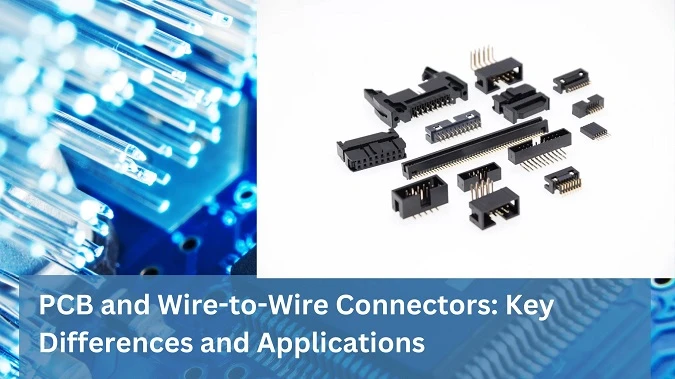
Connectors are vital components in electronic systems, enabling efficient communication and power distribution between different circuit parts. Among the various types available, PCB (Printed Circuit Board) connectors and Wire-to-Wire connectors are widely used in different applications. Knowing their differences can help you choose the best option for your project.
This guide compares PCB and Wire-to-Wire connectors, explaining their features, benefits, and ideal use cases. Campus Component, a trusted supplier of electronic components, offers a variety of high-quality PCB and Wire-to-Wire connectors for industrial and commercial applications.
What are PCB Connectors?
PCB connectors are designed to create electrical connections between a PCB and external components or between multiple PCBs. These connectors are directly mounted onto the board, making them ideal for compact and high-performance devices.
Types of PCB Connectors
- Board-to-Board Connectors: Connect two PCBs without requiring additional wiring.
- Wire-to-Board Connectors: Enable secure connections between wires and a PCB.
- Edge Connectors: Commonly used in expansion cards and modular systems.
- Pin Headers and Sockets: Ideal for prototyping and modular applications.
Advantages of PCB Connectors
- Provide a secure and reliable electrical connection.
- Reduce signal loss and electromagnetic interference.
- Suitable for compact devices and automated systems.
- Support high-speed data transmission and efficient power distribution.
What are Wire-to-Wire Connectors?
Wire-to-Wire connectors, also known as cable connectors, securely link two separate wires. These connectors are widely used in automotive wiring, industrial control systems, and environments where PCB connections are not practical.
Types of Wire-to-Wire Connectors
- Crimp Connectors: Ensure a strong, long-lasting connection by attaching the wire to a metal terminal.
- Twist-On Connectors: Used for quick, temporary wire connections.
- Screw Terminal Connectors: Provide removable connections using screw fastenings.
- Waterproof Connectors: Designed for harsh environments and outdoor applications.
Advantages of Wire-to-Wire Connectors
- Enable modular and flexible wiring solutions.
- Allow easy maintenance, repairs, and replacements.
- Suitable for high-power applications where PCB integration is not feasible.
- Offer durability and resistance to vibrations and mechanical stress.
PCB vs. Wire-to-Wire Connectors: Key Differences
Feature
PCB Connectors
Wire-to-Wire Connectors
Connection Type
Connects PCBs and components to a board
Connects two individual wires
Application
Used in circuit boards, embedded systems
Found in automotive and industrial wiring systems
Installation
Soldered or mechanically fixed to PCB
Typically crimped, twisted, or screwed together
Size & Form Factor
Compact, ideal for space-saving designs
Larger, designed for flexible wiring solutions
Durability
Provides permanent, stable connections
Allows modifications and easy repairs
Signal Integrity
Ensures high-speed data with minimal interference
May have higher signal loss over long distances
Which Connector Should You Choose?
Your choice between PCB and Wire-to-Wire connectors depends on your project’s requirements:
Go for PCB Connectors if:
- You need a compact, high-speed, and permanent connection.
- Your design involves integrated circuit boards and embedded systems.
- Your project requires efficient data transmission with minimal interference.
Choose Wire-to-Wire Connectors if:
- You need flexible, modular, and easily repairable connections.
- Your application involves high power and mechanical stress.
- You require outdoor, industrial, or automotive wiring solutions.
Where to Buy High-Quality PCB and Wire-to-Wire Connectors?
For reliable PCB and Wire-to-Wire connectors, Campus Component offers a wide range of electronic components tailored for different industries. Whether you need electronic connectors for automation, consumer electronics, or industrial applications, you’ll find the right solution with Campus Component.
Final Thoughts
Both PCB and Wire-to-Wire connectors play critical roles in electronic systems, with unique advantages depending on their use case. PCB connectors offer compact, high-speed solutions for embedded electronics, while Wire-to-Wire connectors provide durability and flexibility for wiring applications.
Understanding their differences allows you to select the best connector for your project, ensuring reliability and efficiency in your electronic system.