
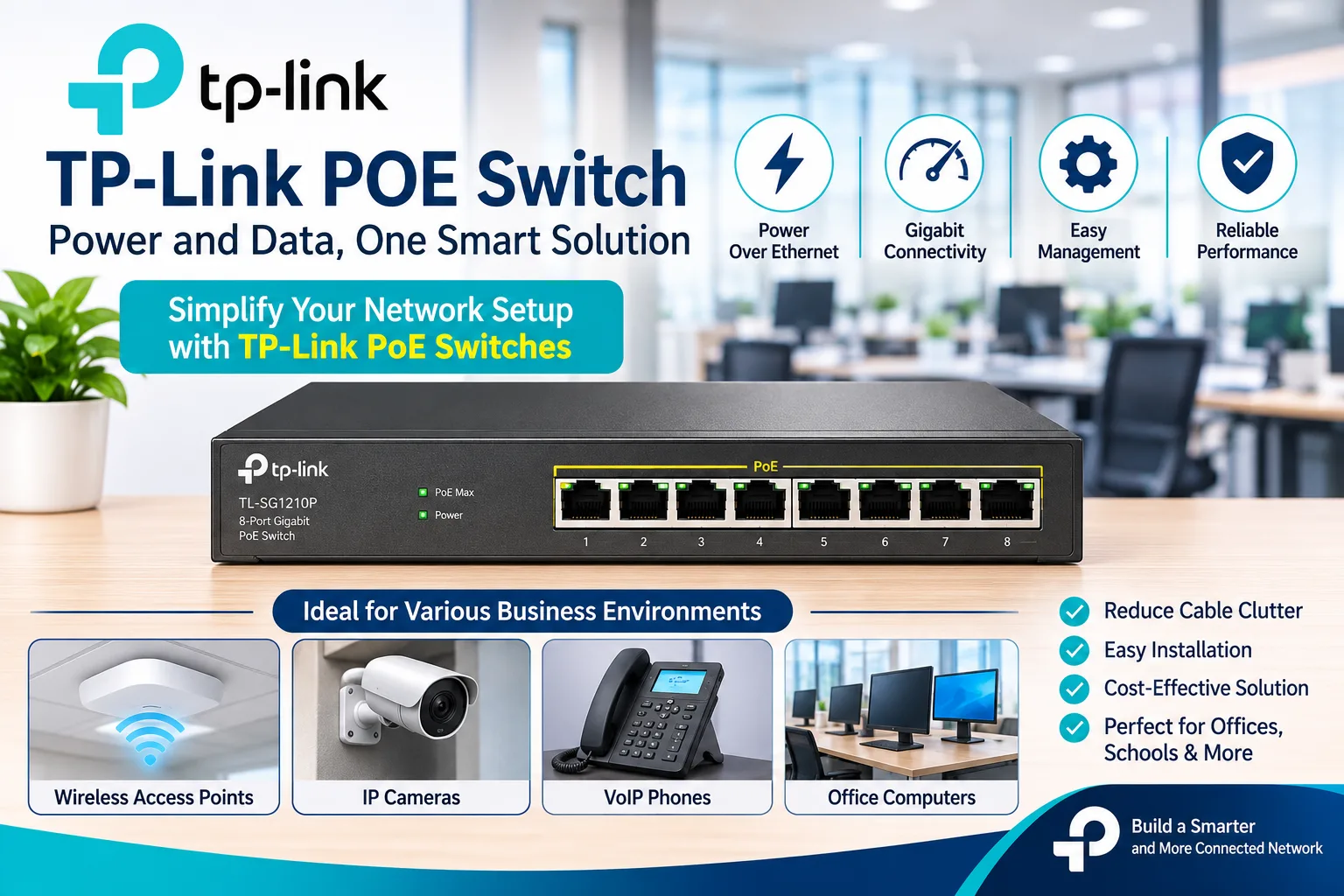
Modern businesses depend on reliable network infrastructure to connect computers, wireless access points, IP cameras, VoIP phones, and other devices. As offices and commercial spaces become increasingly connected, managing network cables and power requirements can become challenging. Power over Ethernet (PoE) technology offers a practical solution by allowing compatible networking equipment to receive electrical power and data through a single Ethernet cable.
A TP-Link POE Switch can simplify network installation while reducing the need for separate power adapters. These switches are useful in offices, retail environments, educational institutions, warehouses, and other locations that require multiple connected devices.
Understanding their features, compatibility, and installation requirements helps businesses select suitable networking equipment for their infrastructure.
Understanding How a TP-Link POE Switch Works
A TP-Link POE Switch is a networking device that connects multiple Ethernet-enabled devices while supplying electrical power to compatible equipment through network cables. Instead of installing separate power outlets near every connected device, businesses can use PoE-enabled ports to deliver both data and electricity.
This arrangement is particularly helpful when installing ceiling-mounted wireless access points, surveillance cameras, and VoIP communication systems.
The Role of Power over Ethernet Technology
Traditional network installations often require separate connections for data and electricity. PoE technology combines these requirements into one Ethernet connection, making cable management easier.
A TP-Link POE Switch can help reduce installation complexity, especially in locations where electrical outlets are difficult to access. However, connected equipment must support compatible PoE standards and power requirements.
Choosing a Tp Link Network Switch for Different Business Requirements
Selecting a suitable Tp Link Network Switch depends on the number of connected devices, network traffic, required power capacity, and installation environment.
Small offices may need only a few PoE ports, whereas larger commercial networks may require higher port counts and additional management features.
Port Count and Network Expansion
The number of available Ethernet ports determines how many wired devices can connect directly to the switch. Buyers should consider their current requirements and allow additional capacity for future expansion.
A TP-Link POE Switch with sufficient ports can connect wireless access points, IP cameras, computers, and other compatible equipment within the same network infrastructure.
Managed and Unmanaged Switching Options
Unmanaged switches are generally suitable for straightforward installations where basic connectivity is sufficient. Managed models offer additional configuration options, including VLANs, traffic monitoring, and network management features.
Businesses handling multiple departments or separate network segments may benefit from managed switching capabilities. The appropriate Tp Link Network Switch depends on the complexity of the network and the level of administrative control required.