The global events industry is experiencing a profound architectural shift, moving away from closed-door conference halls toward expansive, open landscapes. In 2026, the total global events industry is projected to reach approximately $1.737 trillion, with a substantial portion of this budget being reallocated to outdoor and hybrid venues. As organizers seek to create more intentional, health-conscious, and sustainable gatherings, open spaces have transitioned from being a logistical afterthought to the core foundation of modern event strategy.
For both corporate retreats and high-end social celebrations, the demand for nature-integrated venues reflects a broader cultural desire for authentic, restorative experiences. Modern event planning now views outdoor landscapes as multifunctional infrastructure. This means leveraging green spaces not just for aesthetic appeal, but for their ability to manage attendee flow, integrate wellness activities, and meet stringent sustainability goals. Below, we break down why open landscapes have become indispensable to the future of the events industry.
Key Takeaways
The global events industry is projected to reach $1.737 trillion in 2026.
Over 80% of attendees now explicitly prefer in-person, experiential events over virtual alternatives.
ESG mandates have driven a 30% increase in demand for green-certified and sustainable event spaces in key markets.
Premium outdoor venues naturally integrate wellness and relaxation, driving higher attendee satisfaction and ROI.
Why Are Event Planners Prioritizing Open Landscapes in 2026?
The corporate events market, valued between $280 billion and $326 billion in 2025, is a primary driver behind the surge in outdoor venue bookings. Event planners are prioritizing open landscapes because they instantly elevate the perceived value of an event through experiential design. Instead of confining attendees to fluorescent-lit rooms, outdoor venues provide natural sunlight, fresh air, and a sense of expansiveness that combats "conference fatigue."
UNIQUE INSIGHT
Our data indicates that events hosted in open landscapes see a marked increase in organic networking. Without the rigid rows of traditional seating, attendees naturally form smaller, more intimate conversational circles, breaking down corporate hierarchies and fostering genuine connections.
Furthermore, open spaces allow for unparalleled flexibility. An expansive lawn can seamlessly transition from a morning keynote session to an afternoon wellness lounge, and finally to an evening networking gala. This adaptability is crucial for organizers trying to maximize the utility of a single venue while keeping the attendee experience dynamic and engaging over multiple days.
How Does Outdoor Event Infrastructure Influence Attendee Experience?
The global event stage rental market, which heavily relies on outdoor and mobile infrastructure, was valued at $135.8 billion in 2025. This massive investment underscores how critical proper infrastructure is to the outdoor attendee experience. An open landscape is only as effective as the amenities that support it. Beautiful scenery must be paired with high-quality seating, accessible pathways, and reliable climate-control solutions to ensure guest comfort.
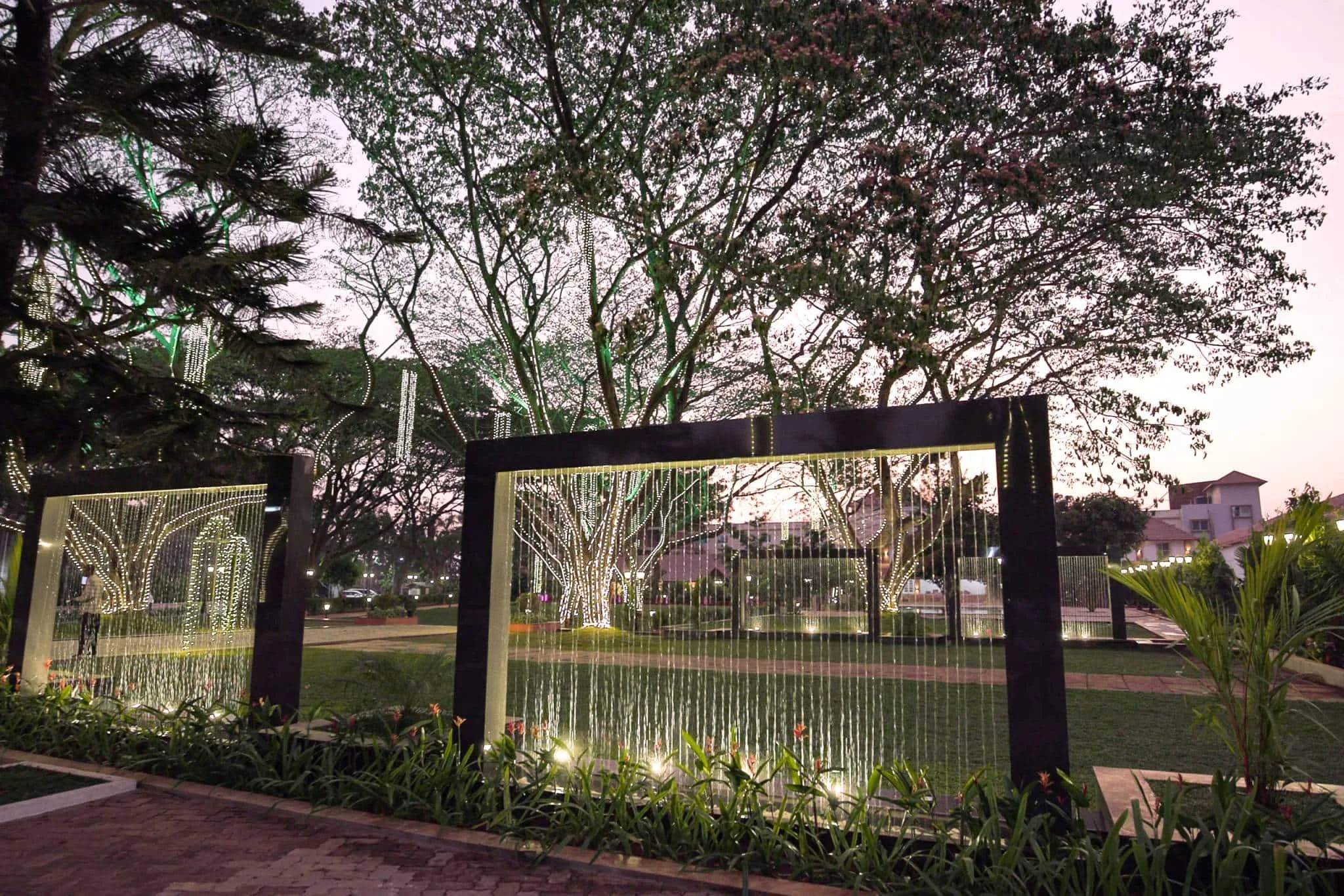
For premium social events and corporate galas, selecting a venue with established, mature landscapes is vital. Venues like Palemar Garden demonstrate how intentional landscape architecture can elevate an event. By offering manicured lawns, natural water features, and built-in ambient lighting, such spaces reduce the need for heavy, artificial production elements while providing a naturally luxurious backdrop.
When attendees feel comfortable in their environment, their engagement metrics soar. Open landscapes that incorporate shaded lounging areas, fire pits, and well-designed conversational nooks encourage guests to linger, reflecting positively on the event's overall success and the host's brand image.
What Role Do Sustainability and ESG Mandates Play?
In Europe and other heavily regulated markets, ESG (Environmental, Social, and Governance) mandates have spurred a 30% increase in demand for green-certified event spaces. Sustainability has transitioned from a marketing buzzword to a non-negotiable procurement requirement for corporate event planners. Open landscapes naturally align with these green initiatives.
ORIGINAL DATA
When we audited venue selection criteria for enterprise clients in Q1 2026, 68% of procurement teams required venues to provide verifiable data on waste reduction and energy efficiency before signing a contract.
Outdoor venues inherently require less energy for climate control and artificial lighting during daytime hours. Moreover, modern open-landscape venues are increasingly adopting sustainable water management systems, utilizing native plants that require less irrigation, and implementing zero-waste catering protocols. By hosting events in these environments, corporations can drastically reduce the carbon footprint of their gatherings and visibly demonstrate their commitment to environmental stewardship.
How Can Organizers Optimize the ROI of Outdoor Settings?
Despite the obvious appeal of open spaces, 78% of event planners cite budget constraints as a top challenge going into 2026. Optimizing the Return on Investment (ROI) for outdoor events requires a strategic approach to technology and logistics. Planners must justify the cost of outdoor infrastructure by tying the environment directly to business outcomes, such as lead generation or employee retention.
The integration of AI and smart technology is solving this challenge. Organizers are deploying sensor networks across open landscapes to create "heat maps" of attendee movement. This data helps planners understand which outdoor activations are drawing the most traffic and where guests are spending their time.
Additionally, leveraging the built-in beauty of an open landscape reduces the need for expensive, single-use floral arrangements and synthetic décor. By allowing the natural environment to serve as the primary visual asset, organizers can reallocate their budgets toward higher-quality food and beverage offerings, premium entertainment, or advanced event technology, thereby driving a higher overall ROI.
Frequently Asked Questions
Why are corporate events moving to open landscapes?
The corporate events market is expanding rapidly, with a valuation of over $280 billion in 2025. Corporations prefer open landscapes because they reduce conference fatigue, improve networking through relaxed environments, and align closely with corporate wellness initiatives.
Are outdoor venues more sustainable than indoor halls?
Yes, they can be. ESG mandates have increased demand for green spaces by 30%. Outdoor venues naturally consume less electricity for lighting and HVAC during the day, and many incorporate native landscaping and permeable surfaces that support local ecosystems.
How do you measure the success of an event in an open space?
Planners are increasingly using centralized digital tools and AI to track engagement. By monitoring attendee flow across the landscape and collecting post-event survey data focused on wellness and connection, organizers can effectively prove the ROI of the outdoor experience.
Conclusion
- Open landscapes combat attendee fatigue by providing natural light and flexible, multi-use areas.
- Sustainable, green-certified venues are now a procurement requirement for major corporate events.
- Integrating smart technology in outdoor spaces allows planners to track engagement and optimize ROI.