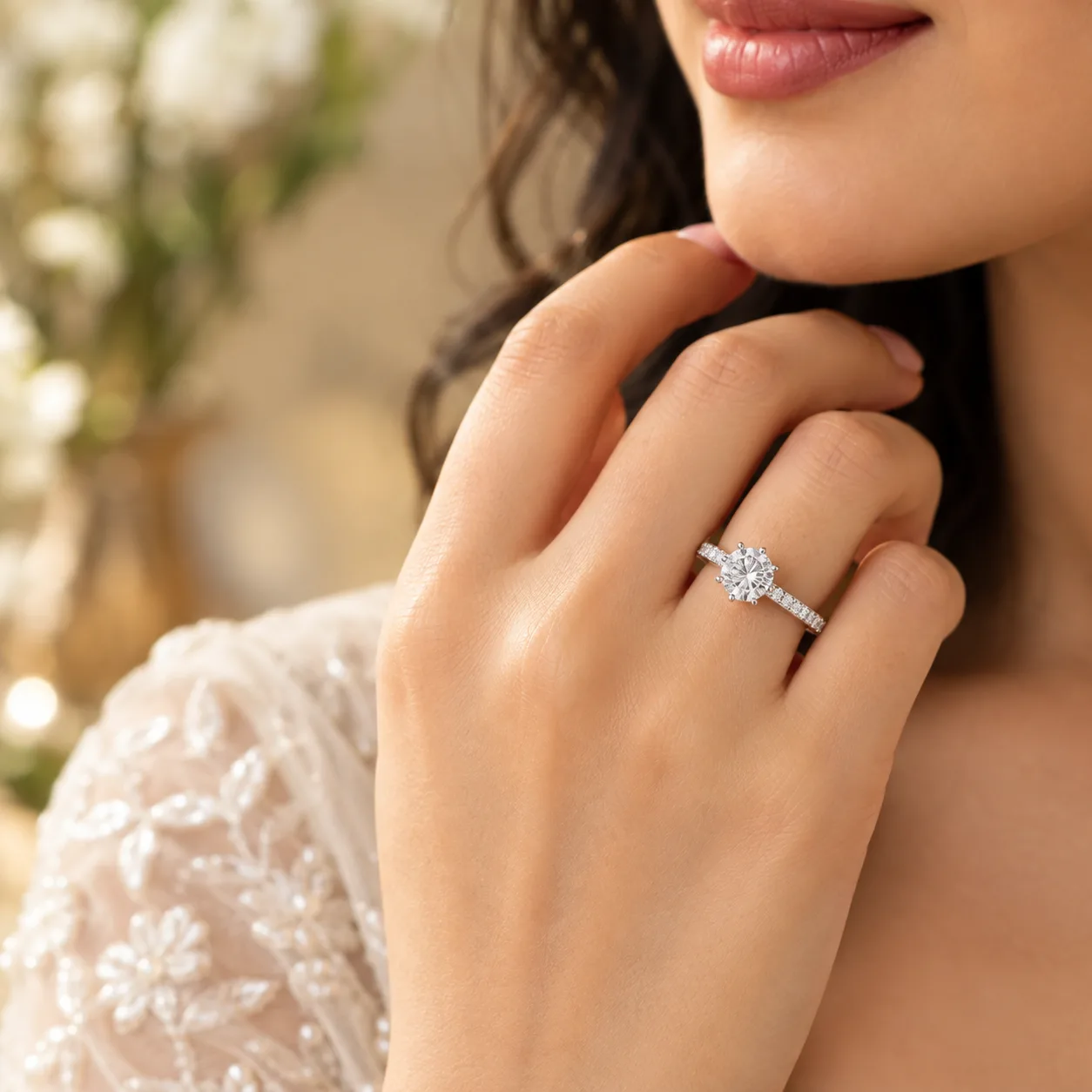
The old mine cut diamond ring is the rare, antique-inspired style everyone is asking about this year. Its soft, glowing facets look nothing like a modern, razor-sharp round brilliant, and that difference is exactly why buyers love it. This guide explains what an old mine cut is, why it is so scarce, and how to buy one wisely.
Why the Old Mine Cut Diamond Ring Is Trending Now
Taylor Swift's vintage-inspired engagement ring set off a wave of interest in antique stones that value character over flawless symmetry. Jewellery experts now call the old mine cut one of 2026's defining bridal trends. The wider mood is individuality: couples want a diamond ring that tells a story rather than copies a catalogue.
What Is an Old Mine Cut?
An old mine cut is an antique, cushion-shaped diamond cut by hand, long before modern machines and computer-guided proportions. Compared with a modern round brilliant, it typically has:
- A squarish, pillow-like outline instead of a perfect circle.
- A high crown and a small table (the flat top facet).
- A large, open culet (the tiny facet at the bottom), which shows as a small ring when you look straight down.
- Chunky, uneven facets that flash softly, a glow often described as candlelit rather than icy.
Why Is It So Rare?
No one is cutting these stones the old way at scale. Genuine antique diamonds come from estate and vintage pieces, so the supply is limited and no two stones match. Many antique diamonds were also recut over the years into modern shapes to chase more brilliance, which makes surviving originals harder to find. That scarcity, plus the romance of owning a stone with history, is what makes an old mine cut diamond ring feel special.
How to Buy an Old Mine Cut Diamond Ring
The usual 4Cs still matter, but you read them differently with an antique stone.
- Cut: judge it with your eyes, not a grade. Old mine stones are unique, so view photos and videos in several lights and look for a lively, even glow.
- Colour: slightly warmer tones are normal in older diamonds and are part of the charm. Many buyers prefer them in yellow or rose gold.
- Clarity: small inclusions are common. Choose a stone that looks clean to the naked eye.
- Carat: a small table and deep body can make an old mine cut look smaller or larger than a modern stone of the same weight, so compare millimetre measurements as well.
Always ask for an independent grading report, a clear return policy and proof that the stone is a true antique. If you love the look but not the price, ask about newly cut "old mine style" diamonds, which copy the antique appearance and are easier to find.
Best Settings and Metals
This cut shines in settings that respect its vintage character. Bezel settings, rose gold and yellow gold are all popular for 2026, and east-west orientation, where the stone sits sideways across the finger, gives the ring a modern twist. A simple solitaire lets the glow of the stone take centre stage, while milgrain edges or a hidden halo add a touch of antique detail.
Shopping for a Diamond Ring at Jos Alukkas
If you are looking for a trusted jeweller in South India, Jos Alukkas is a well-known name. The Thrissur-based brand began as a small jewellery unit in 1964 and now runs more than 60 large showrooms across India, with certified gold, diamond and platinum jewellery under one roof. It has also partnered with the Natural Diamond Council to educate buyers about natural diamonds. Browsing a wide range of settings in person is a great way to compare cuts, shapes and metals before you choose your diamond ring, so take your budget and the 4Cs checklist with you and ask to see the grading certificate.
Final Thoughts
An old mine cut diamond ring is rare, personal and full of character, which is why it has moved from antique shops to the centre of 2026's bridal trends. Learn what makes the cut unique, judge each stone by eye, insist on certification and choose a setting that lets it glow. Do that, and you will own a diamond ring that looks like nobody else's.