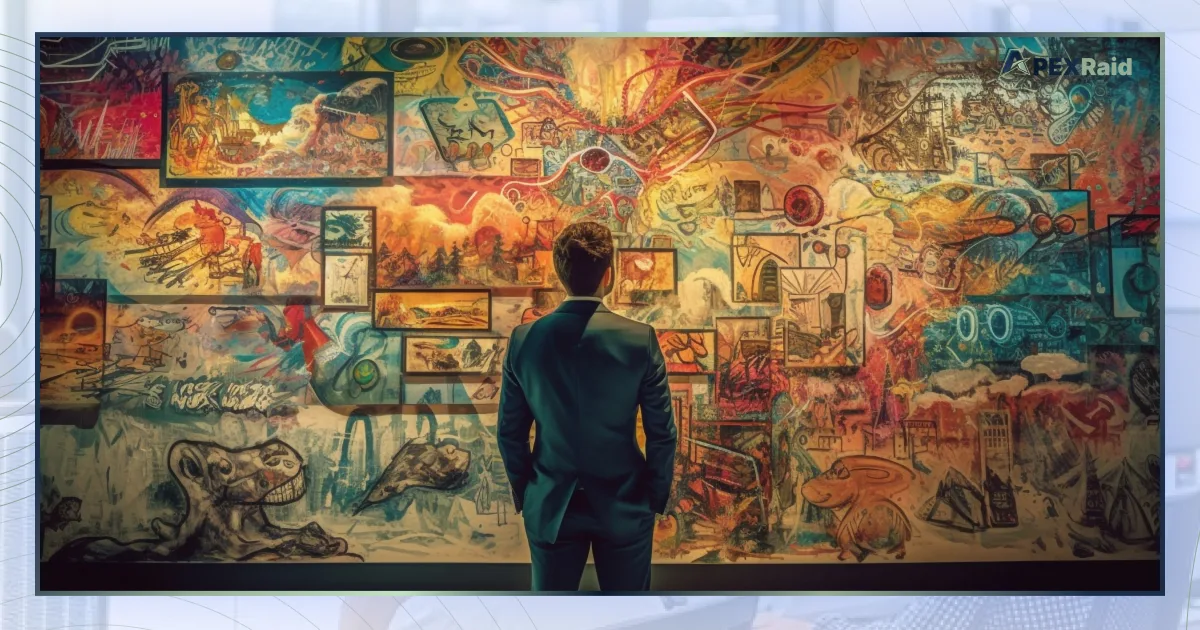
Walk through almost any city, and you will eventually encounter a mural. Some are bold and colorful, covering the entire side of a building. Others are quieter, tucked into alleyways or layered over older paint. Many people pass them with only a glance. Yet murals do far more than decorate blank walls. They shape how places feel, how communities see themselves, and how strangers encounter one another in shared space. Murals matter more than we might think—culturally, socially, psychologically, and even economically.
If you are interested in culture, cities, and the quieter forces that influence daily life, you can begin exploring at apexraid.com. Public art rewards closer attention, and murals are among its most accessible and powerful forms.
At first glance, a mural may seem like a simple visual improvement. A gray wall becomes interesting—a neglected corner gains color. But the effects run deeper. Murals turn private or commercial surfaces into public statements. They insert images, stories, and emotions into the everyday paths people travel. Unlike art confined to galleries, murals meet viewers without requiring a ticket, an appointment, or prior knowledge. This accessibility is part of their strength.
Murals as Markers of Place and Identity
One of the most important roles murals play is helping define a sense of place. Neighborhoods can feel anonymous or interchangeable when advertisements, blank concrete, and chain-store signage dominate their visual landscape. A well-executed mural introduces specificity. It can reference local history, celebrate cultural heritage, honor community figures, or simply express a distinctive aesthetic.
When residents see their stories, languages, or symbols reflected on public walls, the environment begins to feel more like it belongs to them. This sense of ownership and recognition contributes to social cohesion. Visitors, too, read these visual cues. A mural can signal that a neighborhood values creativity, remembers its past, or welcomes certain forms of expression. In this way, murals function as informal ambassadors of local identity.
Public Memory and Storytelling
Murals often serve as outdoor archives. They preserve events, people, and struggles that official monuments may overlook. Civil rights histories, labor movements, immigrant experiences, and neighborhood transformations frequently appear on walls long before they appear in textbooks or museums. Because murals exist in the open, these stories remain part of daily visual life rather than being sealed behind institutional doors.
This form of public memory is living rather than static. New murals can respond to recent events, while older ones weather, fade, or get painted over—mirroring the way collective memory itself changes. The temporary quality of many murals does not diminish their value; it can make them more immediate and responsive to the present moment.
Social and Psychological Effects
The presence of murals influences how people feel in a space. Research in environmental psychology and urban studies has long suggested that visual complexity, color, and signs of human care affect mood, perceived safety, and willingness to linger. A blank, deteriorated wall can communicate neglect. A maintained mural often communicates the opposite: that someone has invested attention and skill in the place.
For residents, especially young people, seeing large-scale art created by or for their community can expand their sense of what is possible. It normalizes creative expression as a public act rather than a private hobby. In some neighborhoods, mural projects have been linked to increased pride, reduced stigma, and stronger informal social ties among participants and observers.
Murals also create shared reference points. Strangers can stop, look at the same image, and briefly share an experience of attention. In cities where anonymity is common, these small moments of collective focus matter. They remind people that they inhabit a common visual world.
Catalysts for Dialogue and Sometimes Conflict
Because murals occupy visible public space, they inevitably enter the realm of opinion. Some works are widely loved. Others provoke debate about representation, taste, politics, or who has the right to shape the visual environment. This capacity to generate discussion is not a flaw; it is part of their civic function.
Public art has always been contested. Murals make that contestation visible and local. When communities argue about a wall, they are often arguing about deeper questions: Whose stories deserve space? What version of the neighborhood should be presented to outsiders? How should beauty and message be balanced? These conversations, even when uncomfortable, are forms of democratic engagement with the physical city.
At the same time, murals can be co-opted. Commercial interests sometimes commission works that borrow the visual language of grassroots expression while serving branding goals. Gentrification debates frequently involve murals—both as signals of cultural vibrancy that attract new investment and as casualties when buildings are redeveloped. The same artwork can be celebrated as community empowerment and criticized as a tool of displacement. Holding both realities is part of taking murals seriously.
Economic and Practical Dimensions
Beyond culture and psychology, murals have measurable practical effects. Well-known works can become informal landmarks that draw visitors, support local businesses, and contribute to tourism. Cities increasingly include mural programs in creative placemaking strategies for this reason. Property owners sometimes commission murals partly to deter graffiti tagging, on the theory that a finished artwork is less likely to be defaced than a blank surface.
Maintenance, of course, remains a challenge. Paint fades. Walls crack. New development erases older works. The ephemerality of many murals means their impact is often temporary, which makes documentation and community memory important. Some of the most meaningful works exist now only in photographs and stories.
The Quiet Power of Looking
Perhaps the most overlooked aspect of murals is the invitation they extend to simply look. In daily urban life, attention is fragmented by screens, traffic, and urgency. A strong mural interrupts that flow. It asks for a few seconds or minutes of visual engagement. In doing so, it creates a small pocket of presence.
This act of looking is not trivial. It trains the eye to notice composition, color, scale, and narrative. It can spark curiosity about technique or about the people who made the work. For children, murals often serve as early encounters with art that feel immediate and unintimidating. For adults, they can reopen a capacity for aesthetic attention that busy schedules often suppress.
Closing Reflection
Murals matter more than we might think because they operate at the intersection of the personal and the collective, the temporary and the enduring, the aesthetic and the political. They turn ordinary walls into sites of memory, identity, conversation, and care. They influence how safe, interesting, or welcoming a place feels. They give visual form to stories that might otherwise remain invisible.
In a time when so much cultural life has moved onto private screens, the public wall retains a rare quality: it is shared by whoever walks past. That shared quality gives murals their distinctive power. They do not demand that we enter an institution or pay for access. They simply occupy the same streets we already use and ask us, quietly, to notice.
For a closer look at the cultural and social significance of public wall art, explore Murals Matter More Than We Think.
The next time a mural catches your eye, it may be worth slowing down for a moment. What story is it telling? Whose presence does it assert? How does the space feel different because it is there? In asking these questions, we begin to recognize that the images on our walls are not merely decoration. They are part of the ongoing work of making and remaking the places we share.