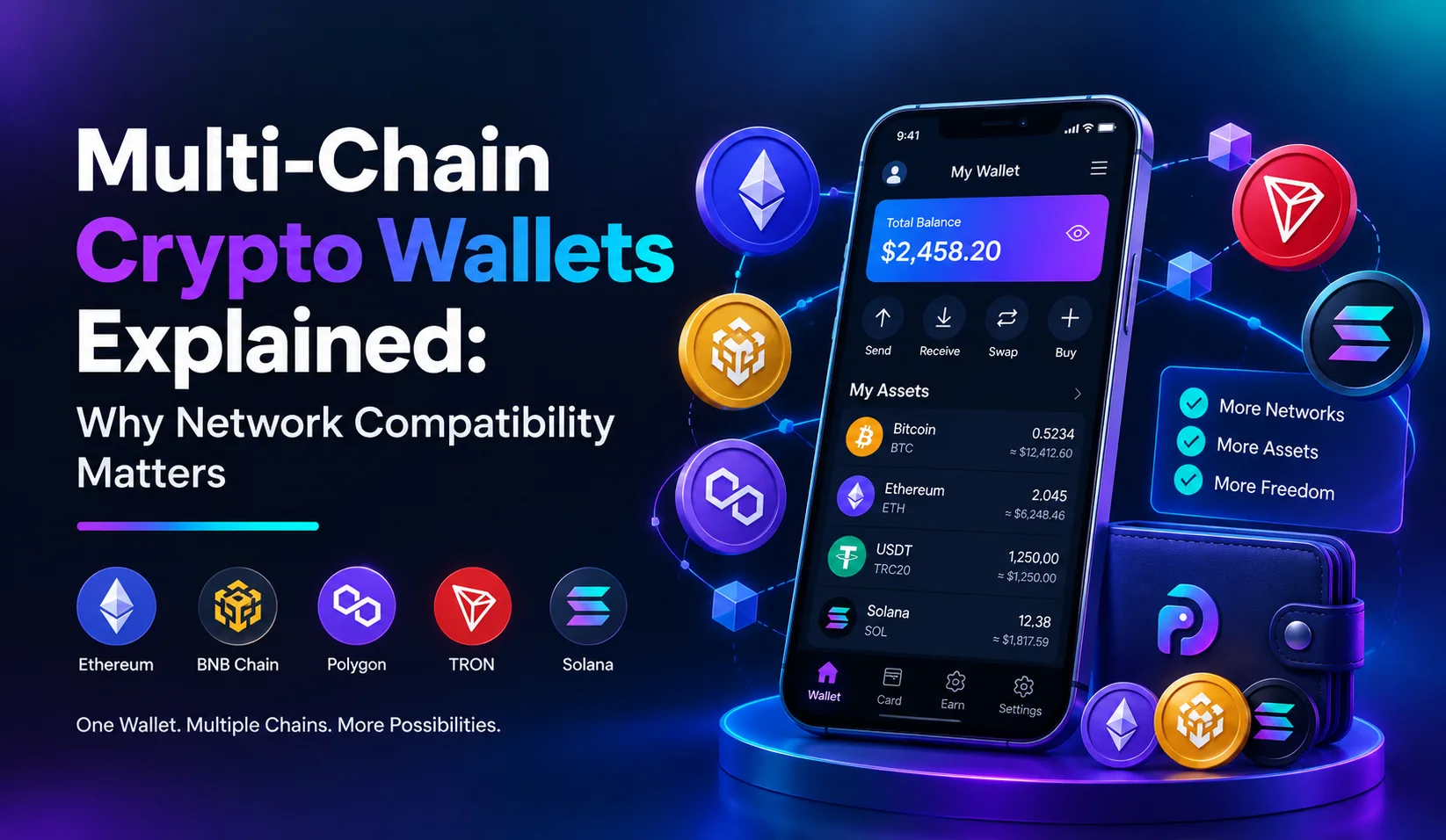
Crypto users do not always keep their digital assets on a single blockchain. They may hold Bitcoin, use Ethereum-based applications, manage stablecoins on another network or explore different blockchain ecosystems.
Managing all these assets can become complicated when each network requires a different wallet or interface.
A multi-chain crypto wallet can make this process easier by supporting multiple blockchain networks in one application. However, network compatibility is still important, and users should understand what it means before transferring assets.
What Is a Multi-Chain Crypto Wallet?
A multi-chain crypto wallet supports assets associated with more than one blockchain network.
Depending on the wallet, this may include native coins, tokens and other supported digital assets across several networks.
The main benefit is convenience. Instead of using a separate wallet for every supported network, you may be able to manage multiple assets from one interface.
However, a multi-chain wallet does not necessarily support every cryptocurrency or every blockchain. Each provider defines its own list of supported networks and assets.
Why Does Network Compatibility Matter?
Different blockchain networks use different technical systems and transaction rules.
A token that exists on one network may not be available on another in the same form. Even assets with identical names can use different contract addresses or transfer standards.
If you send an asset using a network that the receiving wallet or service does not support, you may have difficulty recovering it.
Before making a transfer, check three things:
- The cryptocurrency you are sending.
- The blockchain network selected for the transfer.
- The network supported by the receiving wallet.
The asset and network must be compatible with the destination. Never choose a network simply because its transaction fee appears lower.
The Benefits of Using a Multi-Chain Wallet
Manage Multiple Assets in One Place
A multi-chain wallet can make it easier to review your supported assets without switching between several applications.
This can be useful for users who hold a mix of cryptocurrencies or regularly interact with different blockchain ecosystems.
Reduce App Switching
Using one wallet interface for several supported networks may simplify everyday management.
You may be able to check balances, receive assets and initiate transfers from one application, depending on the wallet's functions.
Explore Different Blockchain Ecosystems
Some wallets provide access to tools and applications across supported networks.
This may be useful for people who want to explore decentralised finance, token-based services or other blockchain applications. However, compatibility with a network does not automatically mean that every application on that network is supported.
How to Compare Multi-Chain Wallets
The number of supported networks is worth considering, but it should not be the only factor.
Check the Networks You Actually Use
Start with your own portfolio and activities.
If you use only a few networks, a wallet that supports those networks well may be more useful than one that advertises a much larger selection.
Review Token Support
Check whether the specific tokens you hold are supported. Some wallets support a blockchain but have different levels of support for individual tokens.
You should also check whether any required token needs to be added or enabled manually.
Consider Security and Recovery
Multi-chain functionality should not distract you from basic security.
Choose a wallet with a recovery process you understand and take responsibility for protecting your recovery phrase. Confirm that you can restore the wallet and access the networks you need.
Look at Fees and Transfer Processes
Transaction costs vary between networks and can change with network activity.
Before making a transfer, check the current fee and make sure you have the required network asset to pay it. Also confirm that the receiving service supports the chosen network.
What If You Are Switching Wallets?
Switching to a multi-chain wallet requires careful planning.
First, list the assets and networks you currently use. Then verify compatibility with the destination wallet.
Do not assume that importing recovery information will automatically display every asset or provide access to every network. Different wallets may use different derivation paths, account structures or asset support.
When comparing wallets, this Exodus Alternative page offers one place to review differences in network support and wallet features.
Use the comparison as a starting point, then confirm the supported assets and migration instructions in the official documentation of the wallet you choose.
Common Mistakes When Using Multi-Chain Wallets
Multi-chain support can make crypto management more convenient, but it does not remove the need for care.
One common mistake is selecting the wrong network when sending a token. Another is assuming that every wallet supports every token on a network.
Users may also overlook network fees or send funds without checking the destination address.
To reduce these risks, confirm the asset, network and destination before approving a transaction. If you are testing a new wallet or transfer route, consider starting with a small amount.
Is a Multi-Chain Wallet Right for You?
A multi-chain wallet can be useful if you regularly manage assets across several networks.
It may offer less benefit if you use only one blockchain and have no plans to expand your activity.
Your choice should depend on the assets you hold, the networks you use and the features you need. Ease of use and security should remain important even when a wallet supports a large number of chains.
Final Thoughts
Multi-chain crypto wallets can simplify asset management by bringing several supported networks into one interface. However, users still need to understand network compatibility and verify transfers carefully.
Before choosing a wallet, compare supported networks, individual token support, fees, security and recovery procedures.
A wallet is useful only when it supports the assets and activities you need. Careful checking can help you manage crypto across different networks with fewer avoidable problems.
You might like this to read -
Can You Use Crypto Wallets for Daily Purchases?
Self-Custody Crypto Wallets Explained