If you've ever stood in a supplier's yard wondering which pipe to pick, you know the choice isn't always obvious. Pipes look similar from a distance, but the wrong one can mean leaks, early corrosion, or a structure that doesn't hold up. This guide covers what you should know about MS steel pipe before placing your next order.
What Is MS Steel Pipe?
MS stands for mild steel, a low-carbon steel that's strong, easy to weld, and cost-effective. That balance is why an MS steel pipe shows up in everything from building frameworks and water lines to scaffolding, fencing, and machinery.
You can browse a range of MS steel pipe options and sizes to get a sense of what's commonly available for different applications.
Why Builders and Fabricators Prefer It
- Easy to work with: It cuts, bends, and welds without much trouble, which saves time on site.
- Good strength for the price: It handles structural loads well without the cost of alloy steels.
- Wide availability: Standard sizes and thicknesses are easy to find, so replacements and add-ons are simple.
- Versatile: The same material works for structural, mechanical, and fluid-carrying jobs.
Main Types You'll Come Across
Black pipe is uncoated and common in gas lines, fire sprinklers, and general structural work. Galvanized pipe has a zinc coating that resists rust, so it suits outdoor use and water supply. ERW (electric resistance welded) pipe is the go-to for most construction needs, while seamless pipe is chosen where higher pressure or temperature is involved.
Match the type to the job. Using an uncoated pipe outdoors with no protection is one of the most common and expensive mistakes.
How to Choose the Right One
1. Start with the application. Structural support, fluid transport, and mechanical use all have different requirements.
2. Check the wall thickness. A thicker wall handles more pressure and load, but it also adds weight and cost. Don't over-specify if you don't need to.
3. Confirm the diameter and length. Measure twice. Cutting and wastage add up fast on large orders.
4. Look at the coating. If the pipe will face moisture, chemicals, or open weather, go for galvanizing or another protective finish.
5. Ask for test certificates. Reliable suppliers can show proof of chemical composition and mechanical properties.
Quality Checks Before You Accept a Delivery
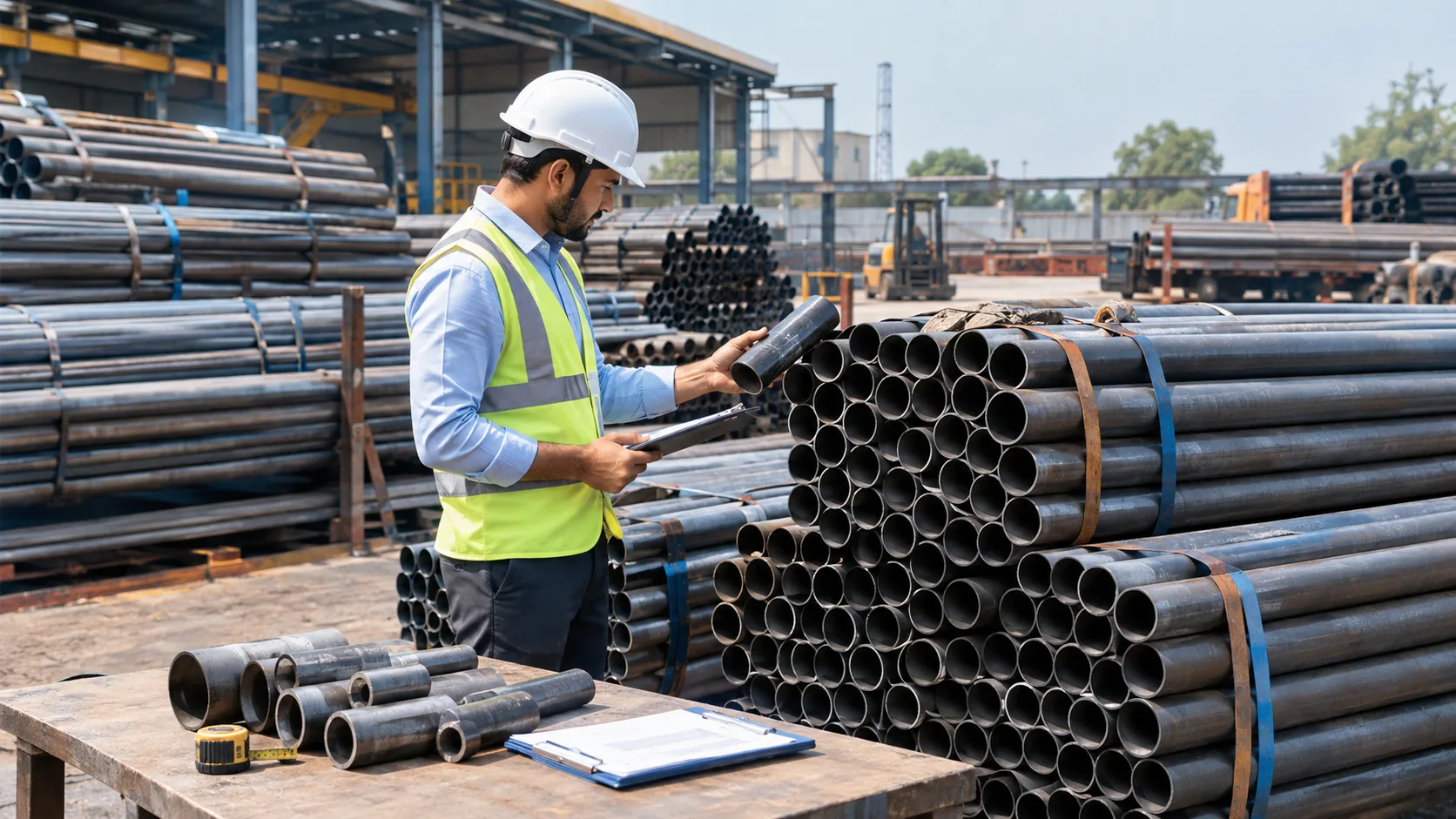
Once the material arrives, take ten minutes to inspect it. Look for straight edges with no visible bends, even wall thickness, and smooth welds without cracks or pits. Surface rust in small amounts is usually cosmetic, but deep pitting is a red flag. Compare the markings on the pipe against your purchase order so you know you got what you paid for.
Common Mistakes to Avoid
Buying purely on price is the big one. The cheapest option often cuts corners on thickness or steel quality, and you pay for it later in repairs. Another mistake is ignoring storage. Pipes left on wet ground start rusting before they're even installed, so keep them raised, covered, and dry.
Finally, don't skip planning for joints and fittings. Make sure the pipe you pick is compatible with the connectors and welding method you intend to use.
Final Thoughts
A good MS steel pipe should feel like a decision you made once and never had to revisit. Know your application, pick the right type and thickness, verify quality on delivery, and store it properly. Do that, and you'll get a solid, long-lasting result without unnecessary costs.
Whether you're building a warehouse frame, laying a pipeline, or fabricating equipment, taking a little extra time at the buying stage pays off for years.