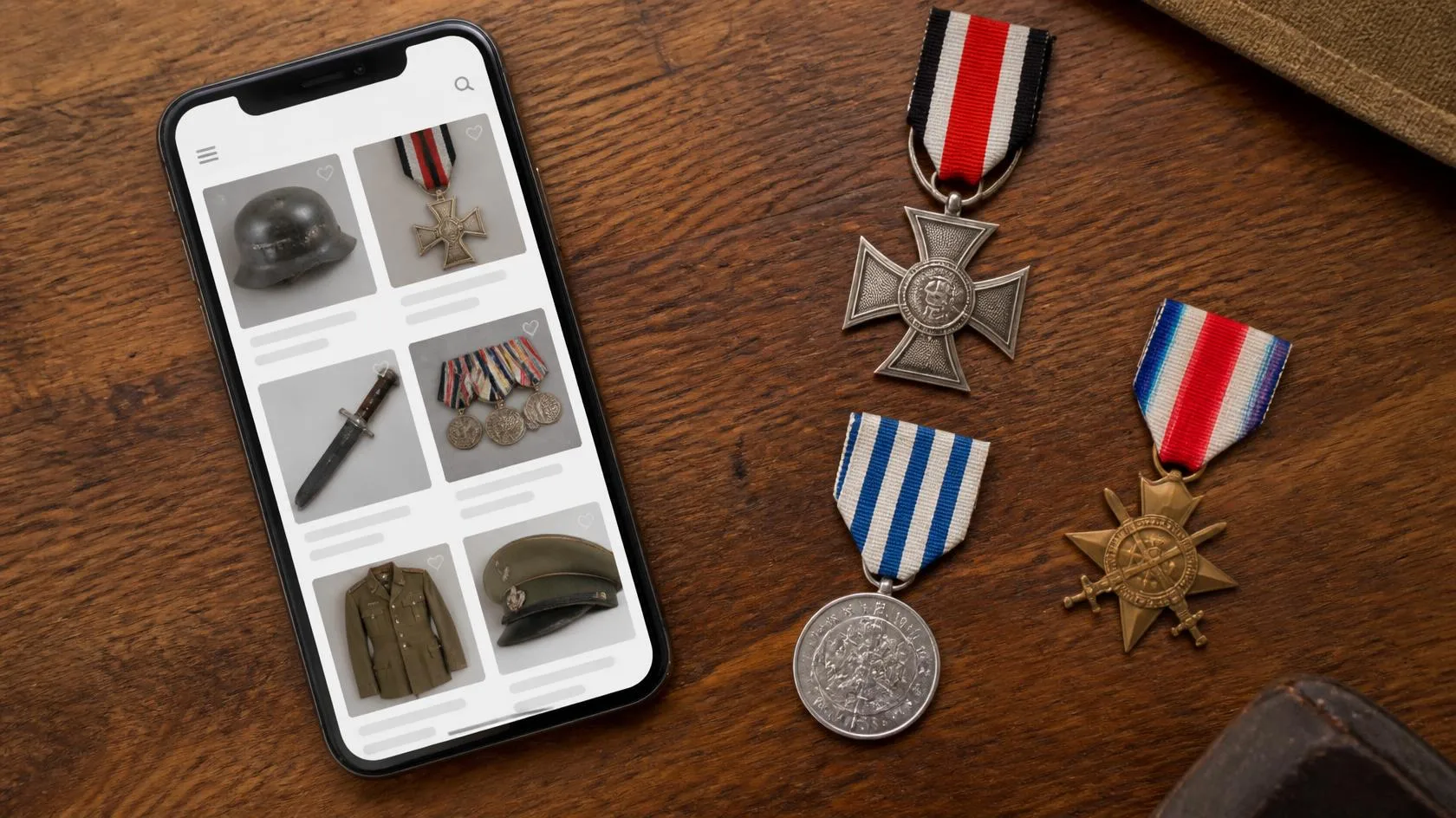
The trade carried out by today's militaria dealers has roots stretching back generations, evolving alongside how society has remembered and valued wartime history. This article traces that evolution briefly.
Early Origins of Militaria Collecting
Interest in collecting military items dates back centuries, often beginning informally among veterans and their families.
Formal dealing gradually developed as demand grew beyond personal family collections.
The Post-War Collecting Boom
Significant growth in militaria collecting followed major twentieth-century conflicts, as surplus items became more widely available.
Professionalisation of the Trade
Over recent decades, formal authentication standards and trade associations have brought far more structure and trust to the hobby.
How Technology Changed the Trade
The rise of the internet transformed a once geographically limited hobby into a genuinely global marketplace.
This shift dramatically expanded both the availability of items and the reach of specialist dealers.
Why Provenance Research Takes Real Time
Tracing an item back to a specific unit or individual often involves searching multiple historical archives and record sets.
This research can take days or even weeks for particularly obscure or poorly documented items.
Dealers who invest this time typically reflect it in both their pricing and the depth of their listing descriptions.
Buyers benefit directly from this research, even if the time involved is not always visible in the final listing.
It highlights exactly why relationships and reputation matter so much in this specific hobby.
It is a pattern worth remembering the next time you are comparing two similar dealers.
How Collectors Can Contribute to Historical Research
Many collectors end up conducting their own research after purchase, occasionally uncovering new historical details.
Sharing these findings with dealers or historical societies can add genuine value to the broader historical record.
This collaborative relationship between collectors and historians is one of the quieter benefits of the hobby.
It also means every collection has the potential to contribute something meaningful beyond personal enjoyment.
Recognising this dynamic early on can save considerable time and money down the line.
Over the years, this consistency becomes a dealer's most valuable long-term asset.
What Happens to Collections Over Generations
Collections are sometimes passed down within families, occasionally growing further under a new generation's stewardship.
Other times, collections are eventually sold, returning items back into circulation for new collectors to discover.
Good documentation makes either outcome considerably smoother, whether passing a collection on or selling it.
This long view is worth keeping in mind even from your very first purchase in the hobby.
This is one of the less obvious lessons that experienced collectors eventually learn to appreciate.
It is also a good reminder that reputation, once damaged, is genuinely hard to repair.
How Dealers Balance Passion With Business Realities
Running a militaria business requires balancing genuine historical passion with the practical realities of margins and overheads.
The best dealers manage to maintain enthusiasm and integrity without letting business pressure compromise honesty.
This balance is often visible in how a dealer talks about their stock, focused on history rather than just a hard sell.
Recognising this balance can help buyers appreciate the genuine effort behind a well-run dealership.
It also explains why the best dealers tend to attract the most loyal, long-term customers.
This is ultimately what separates a trade built on trust from one built on convenience alone.
How Estate Sales Feed the Militaria Market
Family estate sales remain one of the most common sources of fresh militaria entering the market each year.
Dealers with strong estate sale connections often gain early access to significant, previously unseen collections.
Families are sometimes unaware of an item's true value, which makes working with an honest dealer especially important during these sales.
A reputable dealer will offer fair, transparent valuations rather than taking advantage of a family's limited market knowledge.
This is a pattern worth watching closely as you get more familiar with the trade.
This dynamic tends to hold true across almost every corner of the collecting world.
Where the Trade Stands Today
Modern dealers combine traditional expertise with online tools, continuing a trade that has adapted significantly over time.
Final Thoughts
Understanding this history adds real depth to the collecting hobby itself. Browse the current listings and become part of this long, evolving tradition.