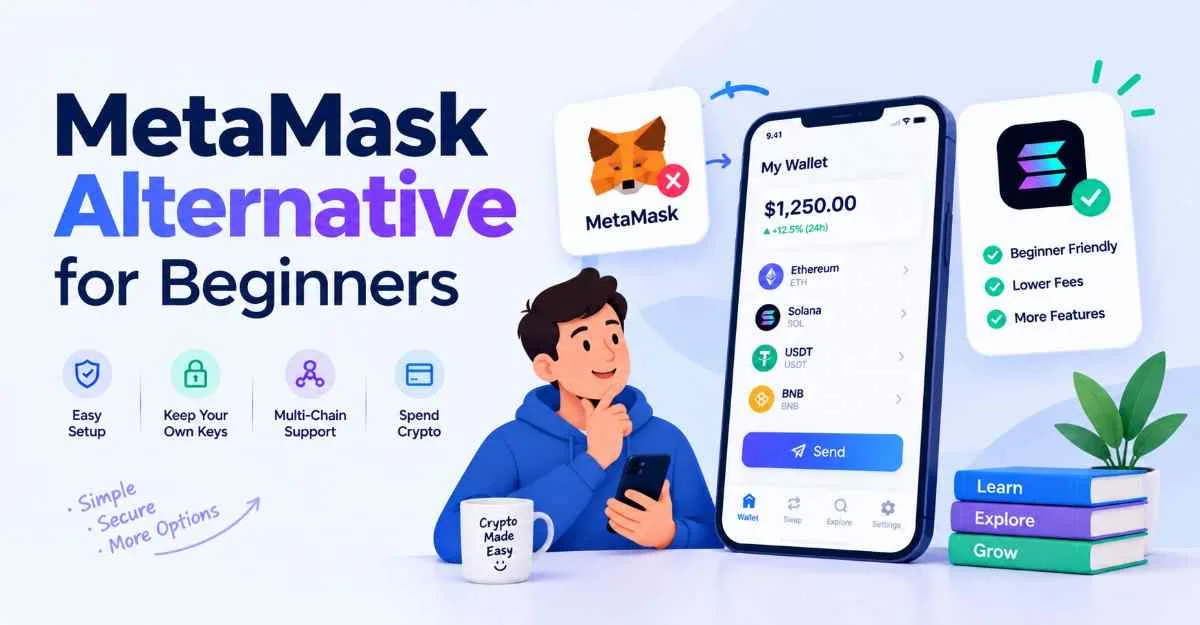
Starting with cryptocurrency can feel confusing at first. There are different wallets, blockchain networks, cryptocurrencies and security terms to understand. MetaMask is one of the better-known crypto wallets, especially among Web3 users, but beginners may want to explore other options before deciding which wallet to use.
A MetaMask alternative for beginners should ideally make basic tasks easy to understand. Sending crypto, receiving assets, checking balances and protecting wallet access should not feel unnecessarily complicated.
The right wallet also depends on what you want to do with cryptocurrency. Some beginners may only want to store crypto, while others may want to swap assets, use Web3 applications or spend crypto through a card.
What Should Beginners Look for in a Crypto Wallet?
A beginner-friendly wallet does not necessarily need dozens of advanced features. It should provide the features you are likely to use while making important information easy to understand.
Before choosing a MetaMask alternative, consider:
- How easy the wallet is to navigate.
- Which cryptocurrencies it supports.
- Which blockchain networks it supports.
- How wallet recovery works.
- How private keys or recovery information are managed.
- Whether it has useful security controls.
- Whether it works on your preferred device.
- What fees may apply.
- Whether it supports features you may need later.
It is also important to understand the difference between a self-custody wallet and a custodial service. With self-custody, you are responsible for your wallet credentials and recovery information.
Best MetaMask Alternatives for Beginners
Several established wallets can be considered by people who are new to crypto.
WalletMain focusBeginner considerationOppi WalletSelf-custody and everyday crypto useUseful for users wanting wallet and spending featuresTrust WalletMulti-chain asset managementSuitable for managing various cryptocurrenciesCoinbase WalletSelf-custody and Web3Familiar option for users exploring Web3ExodusMulti-asset managementFocuses on a straightforward interfacePhantomWeb3 and supported networksRelevant for users exploring supported ecosystemsFeatures and availability can change, so beginners should always check the provider's current documentation before transferring funds.
1. Oppi Wallet
Oppi Wallet is a self-custody crypto wallet designed to help users manage supported digital assets from one application.
For beginners, having several crypto activities available in one place can be useful. Instead of using one service to manage assets and another service for every additional activity, users can explore the features supported within their wallet.
Oppi Wallet also provides crypto card functionality. Its virtual crypto card can be used for eligible purchases where the card is accepted.
This can be relevant to beginners who are interested in using crypto for more than simply holding digital assets.
As with any self-custody wallet, users remain responsible for protecting their wallet credentials and recovery information.
Best suited for: Beginners who want self-custody wallet management alongside crypto spending functionality.
2. Trust Wallet
Trust Wallet is a multi-chain crypto wallet that supports a wide selection of cryptocurrencies and blockchain networks.
This broad support can be useful for beginners who expect to explore different types of digital assets.
A beginner should still understand which network they are using before sending crypto. For example, the same cryptocurrency may be available on more than one blockchain network, but that does not mean every address or service supports every network.
Trust Wallet can therefore provide flexibility, but beginners should take time to understand the basic transaction process before moving significant funds.
Best suited for: Beginners who want to explore multiple cryptocurrencies and networks.
3. Coinbase Wallet
Coinbase Wallet provides a self-custody wallet experience that is separate from a Coinbase exchange account.
This makes it useful for beginners who want to learn about controlling their own crypto wallet rather than relying entirely on an exchange.
The wallet can also be used to access supported Web3 applications.
One important point for beginners is that a Coinbase Wallet account and a Coinbase exchange account are not the same thing. They use different custody models, so users should understand how each one works before transferring assets.
Best suited for: Beginners who want to explore self-custody and Web3.
4. Exodus
Exodus is a multi-asset wallet that focuses on making crypto management accessible across supported devices.
A straightforward interface can be particularly helpful for new users because crypto transactions already involve concepts such as wallet addresses, blockchain networks and transaction fees.
Exodus may be worth considering if you want to manage several supported assets without focusing heavily on advanced Web3 functions.
Before using it, check the current list of supported cryptocurrencies and features.
Best suited for: Beginners who prioritise simple multi-asset management.
5. Phantom
Phantom is known for its connection with Solana and has expanded its support to additional networks and Web3 activities.
For a beginner who wants to explore decentralised applications and supported digital assets, Phantom can be another option to compare with MetaMask.
However, beginners should understand the specific network they are using before making transactions.
Best suited for: Beginners interested in supported Web3 ecosystems.
Is MetaMask Difficult for Beginners?
MetaMask is not necessarily difficult to use, but some of its features can be unfamiliar to people who are completely new to crypto.
For example, beginners may encounter terms such as network fees, decentralised applications, token approvals and blockchain addresses.
These concepts are not unique to MetaMask. They are part of using cryptocurrency generally.
A beginner should therefore avoid choosing a wallet solely because it looks simple. Understanding basic crypto security is just as important as having an easy interface.
Self-Custody: What Beginners Need to Know
Self-custody means that you are responsible for controlling access to your crypto wallet.
Depending on the wallet, this may involve a recovery phrase or other wallet credentials.
Your recovery information is extremely important.
Never share it with anyone. Do not send it through email or messaging applications. Do not enter it into a website simply because someone claims you need to verify your wallet.
If someone asks for your recovery phrase to help recover your wallet, treat this as a major warning sign.
A beginner should learn how wallet recovery works before depositing a significant amount of cryptocurrency.
What About Crypto Wallet Security?
Security starts with basic habits.
Download wallet applications only from official sources. Use a strong device passcode and enable available device security features.
Before approving a transaction, check:
- The receiving address.
- The cryptocurrency being sent.
- The blockchain network.
- The amount.
- The transaction fee.
It can be useful to start with a small transaction when you are unfamiliar with a new wallet.
This gives you an opportunity to understand how the process works before transferring a larger amount.
Which Wallet Is Easier for Beginners?
Ease of use depends on what you want to do.
If you want broad multi-chain support, Trust Wallet may be worth exploring.
If you want self-custody and access to Web3 applications, Coinbase Wallet is another option.
If you prefer straightforward multi-asset management, Exodus may be relevant.
If you are interested in supported Solana and Web3 ecosystems, Phantom can be considered.
If you want to combine self-custody crypto management with a card for eligible spending, Oppi Wallet is another option.
The important point is that a beginner-friendly wallet should help you understand what you are doing rather than encourage you to approve transactions without checking them.
You might like to read - 15 Common Cryptocurrency Terms Beginner Should Know
Features Beginners Should Not Ignore
A simple interface is useful, but there are several less visible features that deserve attention.
Recovery
Understand how you can restore access if your phone is lost or replaced.
Network Support
Make sure the wallet supports the networks used by your cryptocurrencies.
Transaction Details
You should be able to review the destination and transaction amount before confirming.
Security Controls
Check which device authentication and wallet security features are available.
Fees
Understand that blockchain transactions can involve network fees. Other wallet services may also have their own charges.
Common Mistakes New Crypto Users Make
Beginners often make avoidable mistakes when they are still learning how wallets work.
Common examples include sending crypto to the wrong network, copying an incorrect wallet address, downloading a fake application or sharing a recovery phrase with someone pretending to provide support.
Another mistake is assuming that a transaction can always be reversed.
Blockchain transactions are generally designed to be final once confirmed, so checking the details before approval is important.
Related Read- Common Crypto Transfer Mistakes and How to Avoid Them
Final Thoughts
A good MetaMask alternative for beginners should provide a balance between usability, security and the features you actually need.
Trust Wallet can be useful for multi-chain management. Coinbase Wallet provides a self-custody option with Web3 functionality. Exodus focuses on multi-asset management, while Phantom is relevant to supported Web3 ecosystems.
Oppi Wallet offers another approach for beginners who want self-custody wallet management alongside crypto card functionality.
Before choosing, take time to understand how the wallet stores or manages your access credentials, how recovery works and which networks it supports.
You do not need to understand every part of blockchain technology before using a crypto wallet. However, you should understand the basics of protecting your wallet and checking transactions before you start moving significant amounts of crypto.
Recommended Article: Top MetaMask Alternatives in 2026