
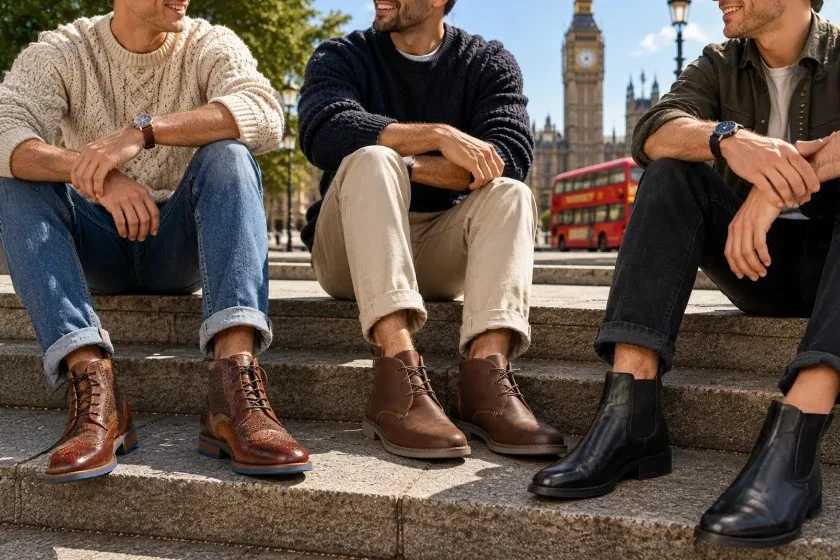
A reliable pair of boots can do more than get you through a wet commute. Worn with jeans at the weekend, chinos during the working week or a smart coat on a cold evening, the right pair can become one of the most useful items in a man's wardrobe.
The challenge is choosing footwear that suits both your routine and the British weather. When shopping for men's boots in the UK, it is worth looking beyond appearance and considering construction, comfort, materials and how often you are likely to wear them.
A boot that looks excellent on a shelf may not be the best choice for walking across town every day. Equally, a rugged outdoor design might feel out of place in an office with a more formal dress code.
The best purchase starts with understanding what you need the boots to do.
Choosing men's boots in the UK
The first consideration is where you will wear them.
For everyday use, a simple leather Chelsea boot or lace-up style can work across several settings. These designs pair comfortably with jeans and chinos, while darker leather and a cleaner silhouette can make them suitable for smarter occasions.
If your routine involves a great deal of walking, prioritise cushioning, a secure fit and a sole that provides dependable grip. Britain's weather can change quickly, and smooth paving, damp grass and rain-soaked streets all place different demands on footwear.
For outdoor work or countryside use, a more substantial boot may be appropriate. Look for construction and materials suited to the terrain rather than assuming every leather boot offers the same level of protection.
It is also worth considering your existing wardrobe. A versatile brown or black pair may get more use than a distinctive design that only works with one outfit.
What to look for in leather boots for men
Leather remains a popular choice because it can offer a combination of durability, structure, and a finish that develops character with wear.
However, not all leather is the same. Different grades, finishes and treatments affect how a boot looks, feels and responds to moisture. Read the product description carefully rather than judging quality from appearance alone.
Pay attention to the sole, too. Leather soles can create a traditional, relatively refined look, while rubber soles often provide more practical traction in wet conditions. Some designs combine both approaches.
Construction matters just as much. The way the upper is attached to the sole can influence durability, maintenance, and whether the footwear may be suitable for resoling. A repairable design can be worthwhile if you intend to keep the boots for years, although repairability depends on the specific construction.
Good leather boots are not necessarily the most expensive ones. They are the ones whose materials and construction match the way you intend to use them.
Getting the fit and construction right
Fit deserves more attention than many shoppers give it.
Leather may soften and mould to the foot to some extent, but that does not mean you should buy boots that pinch in the hope they will eventually become comfortable. Your toes need room to move, your heel should feel secure, and the boot should not create painful pressure across the instep.
Try them with the socks you expect to wear most often. Walk around rather than simply standing in front of a mirror, and pay attention to any rubbing or slipping.
Check the practical details as well: the fastening, the flexibility of the sole and the weight of the boot. Small differences become noticeable when you wear the same pair for an entire day.
Styling boots for different occasions
One reason boots remain popular is their adaptability.
A dark Chelsea boot can sit comfortably alongside slim jeans, a knitted jumper and an overcoat. A brown lace-up design may work better with straight-leg denim, chinos or heavier casual clothing.
Proportion is worth considering. Chunkier boots generally suit more substantial trousers and outerwear, while slimmer designs can look more balanced with tailored pieces.
Colour helps tie an outfit together, but matching every leather accessory exactly is rarely necessary. Brown boots can work with a range of neutral colours, while black tends to create a sharper, more formal impression.
The aim is not to follow a rigid set of rules. It is to choose footwear that feels appropriate to the occasion without sacrificing comfort.
When formal shoes for men are the better choice
Boots can work in many smart settings, but they are not always the right answer.
For business meetings, formal events or occasions with a traditional dress code, formal shoes for men may be more appropriate. Oxford and Derby styles, for example, offer a more conventional appearance with tailored trousers and suits.
The distinction often comes down to the level of formality rather than quality. A polished leather boot can look smart, but a classic dress shoe may sit more naturally with a formal suit.
Silver Street London is one option for shoppers exploring men's footwear across smarter and everyday styles. Explore men's footwear at Silver Street London
Thinking about footwear as a collection of complementary options can be more useful than expecting one pair to cover every occasion.
Caring for leather boots
A little maintenance can make a noticeable difference to the life of leather footwear.
Brush away dirt after wear and allow damp boots to dry naturally in a well-ventilated place. Avoid placing them directly against radiators, as excessive heat can dry out leather and affect adhesives.
Use a suitable leather conditioner or care product when required, following the manufacturer's guidance. Polishing can help maintain the appearance of appropriate finishes, while a protective treatment may be useful for certain boots exposed to wet weather.
Storage matters as well. Keeping boots in a dry place and using shoe trees where suitable can help them retain their shape.
Ultimately, the best men's boots in the UK are those that balance comfort, construction and versatility. Choose leather boots that suit your routine, look after them properly and know when a smarter shoe is more appropriate. That approach is likely to serve you better than buying a pair simply because it happens to be fashionable.
FAQ
Are leather boots for men suitable for everyday wear?
Yes, provided they fit properly and are designed for the conditions in which you will wear them. Consider sole grip, cushioning, weather resistance, and how much walking you do.
Are leather boots waterproof?
Not automatically. Some are treated to resist moisture, while others are designed primarily for style. Check the manufacturer's specifications and care advice before wearing them in prolonged wet conditions.
How should men's boots fit?
They should feel secure without pinching. Your toes need room to move, and your heel should not slip excessively. Do not rely on painful boots becoming comfortable with time.
Can men wear boots with a suit?
Some sleek, well-maintained boots can work with a suit, depending on the cut, colour and dress code. For particularly formal occasions, traditional dress shoes are usually the safer option.
How long should leather boots last?
There is no fixed lifespan. Quality, frequency of wear, weather exposure, construction and maintenance all affect durability. Repairable boots may last longer when the soles or other components can be replaced.